
Short Answer for Travelers
Respectful Sámi culture experiences in Kiruna focus on learning directly from Sámi people, supporting Sámi-led businesses, understanding Indigenous history and avoiding stereotypical tourism. Ethical experiences include reindeer herding education, joik, storytelling and authentic duodji rather than costume photos or mass-tourism attractions.
Quick Answer
The Sámi are the Indigenous people of northern Scandinavia and the Kola Peninsula, with a living culture centered around language, reindeer herding, storytelling, handicraft and connection to the Arctic landscape. Respectful tourism in Kiruna means choosing Sámi-led experiences, asking before taking photos and understanding that Sámi culture is modern, diverse and not a tourist costume.
- Best experiences: Sámi-led tours and reindeer herding education.
- Most important rule: ask before photographing people.
- Avoid: fake “dress like Sámi” experiences.
- Authentic handicraft is called duodji.
- The traditional clothing is called gákti.
- Kiruna is located in Swedish Sápmi.
Who Are the Sámi? Understanding Sápmi
The Sámi are the Indigenous people of northern Europe, with a continuous Arctic presence that predates the modern nation-states of Scandinavia by thousands of years. Their traditional homeland, called Sápmi, stretches across northern Norway, Sweden, Finland and the Kola Peninsula in Russia.
Today, the Sámi are a living and modern Indigenous culture. Sámi people work as reindeer herders, artists, teachers, engineers, politicians, guides, writers and musicians while maintaining strong cultural traditions connected to language, storytelling, handicraft and Arctic land use.
When visiting Kiruna, it is important to understand that you are traveling in Swedish Sápmi. Respectful tourism means treating Sámi culture as a living culture, not a tourist attraction or historical costume.
| Topic | Key Fact |
|---|---|
| Indigenous homeland | Sápmi stretches across Norway, Sweden, Finland and Russia. |
| Main livelihoods | Reindeer herding, fishing, handicraft and modern professions. |
| Traditional clothing | Gákti. |
| Traditional handicraft | Duodji. |
| Traditional vocal art | Joik. |
| Important visitor rule | Always ask before photographing people. |
The name "Lapp" – why it is not used
You may still encounter the terms "Lapp" or "Laplander" in older texts or outdated tourism material. Many Sámi people consider these terms offensive because of their historical associations. Use "Sámi" when referring to the people and "Sápmi" when discussing the Indigenous homeland.
A Brief History: Colonization, Assimilation, and Resilience
For centuries, the governments of Sweden, Norway, Finland and Russia pursued assimilation policies aimed at weakening Sámi language, religion and culture. Sámi children were sent to boarding schools, traditional spiritual practices were suppressed and land was increasingly taken for mining, forestry, railways and hydroelectric development.
In Sweden, assimilation policies continued well into the twentieth century. Many Sámi families still carry intergenerational trauma from these periods of forced cultural suppression and language loss.
Despite this, Sámi culture survived and evolved. Modern Sámi political movements strengthened during the 1960s and 1970s, and the Sámi Parliament in Sweden was established in 1993. Today, land rights, Indigenous rights, climate change and cultural preservation remain major issues across Sápmi.
Modern Sámi Life: Beyond Stereotypes
Modern Sámi life is far more diverse than many tourists expect. Sámi people live in villages, towns and major cities. Some work full-time with reindeer herding, while others work in education, healthcare, law, media, politics, tourism and technology.
Contemporary Sámi culture includes film, literature, music, visual art and political activism. Artists like Mari Boine, Maxida Märak and Amanda Kernell have helped bring Sámi perspectives to international audiences while also addressing Indigenous rights, environmental issues and cultural identity.
It is important not to reduce Sámi culture to reindeer and traditional clothing alone. Reindeer herding remains culturally important, but Sámi identity is broader than tourism stereotypes.
Reindeer Herding: The Heart of Sámi Culture
Reindeer herding remains one of the strongest cultural foundations of Sámi life. Reindeer migrate seasonally between forests and mountain areas, and herding families follow these migration routes throughout the year.
Reindeer are semi-domesticated animals, not pets. They are central to Sámi identity, land use, food traditions and cultural continuity. Climate change, infrastructure projects and land fragmentation increasingly threaten traditional migration routes and grazing patterns.
Respectful reindeer experiences should always include Sámi cultural education, not only feeding or photographing animals.
Joik and Storytelling
Joik is one of the oldest vocal traditions in Europe. It is often described as a form of singing, but joik is more accurately understood as an expression of connection to a person, place, animal or memory.
Traditional joik usually uses only the human voice without instruments. Some joiks are deeply personal or spiritual. During assimilation periods, joik was discouraged or banned in schools and churches, yet it survived and remains an important cultural tradition today.
If you experience joik during a Sámi-led evening or tour, listen respectfully and always ask before recording audio or video.
Duodji: Sámi Handicraft
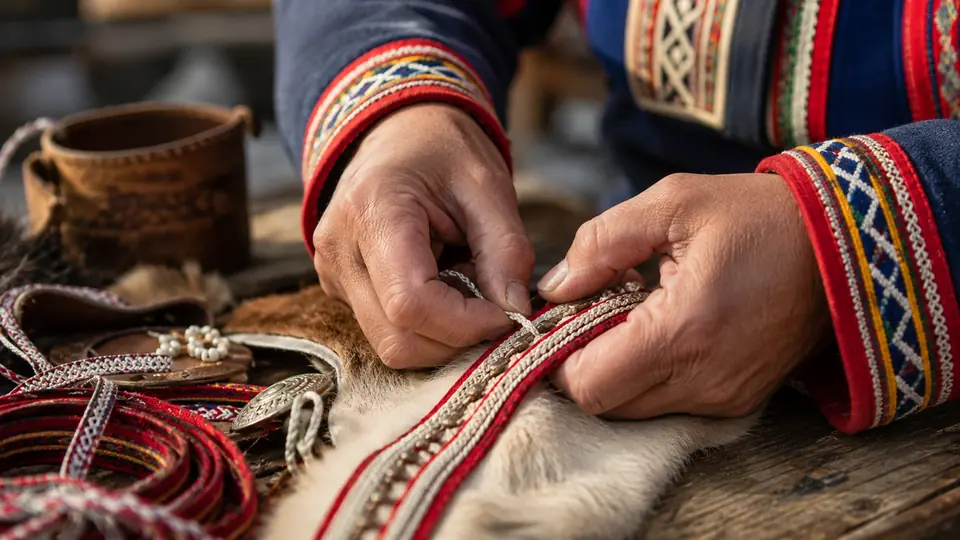
Duodji refers to traditional Sámi handicraft made from natural Arctic materials such as reindeer antler, birch wood, leather, wool and tin thread. Duodji combines practical use, artistic skill and cultural identity.
Authentic duodji is handmade and often passed through generations of knowledge. Buying authentic duodji supports Sámi artists and families directly.
Visitors should understand that many fake “Sámi souvenirs” sold in tourist shops are mass-produced outside Sápmi and have no connection to Sámi makers.
The Gákti: Traditional Sámi Clothing
The gákti is traditional Sámi clothing worn during celebrations, ceremonies, festivals and cultural events. Different colors, patterns and accessories often reflect family, regional identity and heritage.
The gákti is not a tourist costume. Wearing it for entertainment or photo props is widely considered disrespectful.
Never wear gákti as a tourist costume
Avoid any tourism operation that offers “dress like a Sámi” photography. The gákti carries cultural and personal meaning similar to ceremonial or traditional Indigenous clothing in other parts of the world.
Ethical Tourism: Red Flags and Green Flags
| Green Flag (Ethical) | Red Flag (Avoid) |
|---|---|
| Sámi-owned or Sámi-led experiences. | Non-Sámi operators selling “authentic Sámi culture.” |
| Education about history and contemporary life. | Only animal selfies or staged tourist photos. |
| Small groups and respectful pacing. | Large rushed bus-tour experiences. |
| Clear photography rules. | Encouraging intrusive photography. |
| Authentic duodji with identified makers. | Cheap imported “Sámi-style” souvenirs. |
| Respectful storytelling and dialogue. | Stereotypes and simplified cultural performances. |
Why Respectful Sámi Tourism Matters
Respectful tourism helps support Indigenous representation, cultural preservation and economic sustainability inside Sámi communities. Ethical tourism also helps reduce stereotypes that have historically affected Indigenous cultures across the Arctic.
Choosing Sámi-led operators means that Sámi people control how their own culture is presented. It also ensures that tourism income supports local communities, artists and reindeer-herding families rather than external companies using Sámi imagery only for marketing.
Responsible tourism in Sápmi is not about guilt. It is about awareness, respect and making informed choices as a visitor in an Indigenous homeland.
How to Choose an Ethical Sámi Experience
- Choose Sámi-owned or Sámi-led operators.
- Look for educational context, not only animal interaction.
- Avoid costume-photo experiences.
- Ask where handicrafts are made.
- Prefer smaller groups and slower experiences.
- Support operators discussing modern Sámi life, not only stereotypes.
| Do | Do Not |
|---|---|
| Book Sámi-led experiences. | Wear gákti as a costume. |
| Ask before taking photos. | Photograph children without permission. |
| Buy authentic duodji. | Buy fake “Sámi souvenirs”. |
| Listen respectfully during joik. | Interrupt or record without permission. |
Sámi-Led Tours Near Kiruna
The Kiruna region has several respected Sámi-led experiences focused on reindeer herding, storytelling, joik and Indigenous education.
Nutti Sámi Siida
Nutti Sámi Siida near Jukkasjärvi is one of the best-known Sámi-owned visitor experiences in Swedish Lapland. Guests can learn about reindeer herding, Sámi food traditions and cultural history in a respectful setting.
Sámi Cultural Evenings
Some cultural evenings near Kiruna and Icehotel include joik, storytelling and traditional food. Always verify that experiences are actually guided or developed by Sámi operators.
Photography Ethics: Always Ask
Never photograph Sámi people, children, homes, reindeer work or ceremonies without permission. This is one of the most important rules for respectful tourism in Sápmi.
Sámi people are not museum exhibits or tourist props. Asking permission before taking photos is basic respect.
This also applies to joik performances, ceremonies and private moments around fires or inside lávvu tents.
What to Avoid: Cultural Tourism Traps
- “Dress like a Sámi” tourist photography.
- Fake “Sámi villages” operated without Sámi involvement.
- Mass-tourism reindeer attractions without cultural education.
- Cheap imported souvenirs sold as Sámi handicraft.
- Tourism built entirely around stereotypes and staged performances.
Ethical tourism sometimes costs more and requires more research. That is part of supporting real Indigenous businesses rather than exploitative tourism models.
Buying Duodji: What to Look For
Authentic duodji uses traditional materials such as reindeer antler, birch wood, wool, leather and tin thread. Handmade work is priced higher because it reflects real craftsmanship and cultural knowledge.
Whenever possible, buy directly from Sámi makers or from trusted Sámi-led cultural centers. Ask who made the item and where it comes from.
| Authentic Duodji | Tourist Souvenir Warning Signs |
|---|---|
| Handmade and signed. | Mass-produced with no maker information. |
| Natural materials. | Plastic and generic “Arctic” decorations. |
| Sold by Sámi artists or trusted centers. | Sold in generic souvenir shops. |
| Higher prices reflecting craftsmanship. | Extremely cheap “Sámi-style” products. |
The Sámi Languages
There is not one single Sámi language. Several Sámi languages exist across Sápmi, including North Sámi, Lule Sámi and South Sámi. Many are endangered because of historical assimilation policies.
Today, language revitalization is an important part of Sámi cultural preservation through schools, media, literature and public cultural programs.
Learning a few simple words is appreciated:
- Bures – Hello.
- Giitu – Thank you.
- Deerádit – Goodbye.
Sámi Rights and the Sámi Parliament
Sámi people are recognized as an Indigenous people with special rights connected to land use, traditional livelihoods and cultural preservation.
The Sámi Parliament in Sweden (Sametinget) is located in Kiruna and functions both as a publicly elected body and a government agency.
Major modern issues include land rights, mining development, wind farms, climate change and protection of reindeer migration routes.
Understanding these issues helps visitors see Sámi culture as contemporary and political, not only historical or touristic.
Visiting with Children: Teaching Respect
Visiting Sápmi with children can be an excellent way to teach respect for Indigenous cultures and Arctic life.
- Teach children to ask before taking photos.
- Explain that reindeer are not pets.
- Teach children not to treat gákti as dress-up clothing.
- Encourage respectful listening during storytelling and joik.
- Choose smaller educational experiences rather than rushed attractions.
Final Reflections: Tourism as Respect
Respectful tourism in Sápmi is about awareness, listening and supporting Indigenous voices directly. Small visitor choices matter: where you book, what you buy and how you behave all influence the tourism industry around Sámi culture.
When travelers choose ethical experiences, they help support Indigenous businesses, artists, storytellers and reindeer-herding families while also encouraging more respectful tourism standards across the Arctic.
Sámi culture is living, modern and resilient. Experiencing it respectfully makes your visit to Kiruna far more meaningful than simply collecting tourist photos.
Experience Sámi Culture Respectfully
We work with Sámi-led operators in the Kiruna region that focus on respectful cultural education, small groups and authentic experiences connected to reindeer herding, storytelling and Arctic life.