What Are the Most Common Mistakes Tourists Make in Kiruna?
The biggest mistakes are expecting guaranteed Northern Lights, staying too few nights, dressing for normal winter instead of Arctic cold, booking key winter tours too late, ignoring cloud cover, underestimating winter transport and overplanning every day. Kiruna is easy to enjoy when you build in flexibility, dress for standing still outdoors and treat weather as part of the itinerary rather than a disruption.
1. Expecting Guaranteed Northern Lights
The Northern Lights are one of the main reasons people visit Kiruna, but they are never guaranteed. You need darkness, enough aurora activity and a clear enough sky at the same time. A strong aurora forecast is not useful if thick cloud blocks the view.
Better approach
Treat aurora viewing as a weather-dependent opportunity rather than a fixed appointment. Give yourself several evenings, check both aurora and cloud forecasts, and stay flexible about where you watch from.
Best rule: do not judge an aurora evening by KP index alone. Cloud cover can be the deciding factor between seeing the sky and seeing nothing.
Use the official NOAA aurora forecast together with SMHI weather forecasts.
2. Staying Too Few Nights
A one-night aurora trip leaves almost no margin for clouds, weak activity, travel delays or bad timing. The current Kiruna planning guidance uses three nights as a sensible minimum for an aurora-focused stay, with four to five nights giving better flexibility.
Better approach
If Northern Lights are important, plan several nights instead of building the trip around one evening. A longer stay also reduces the pressure to force every daytime activity into a tightly packed schedule.
See How Many Days Do You Need in Kiruna? for a fuller trip-length comparison.
3. Dressing for Normal Winter Instead of Arctic Cold
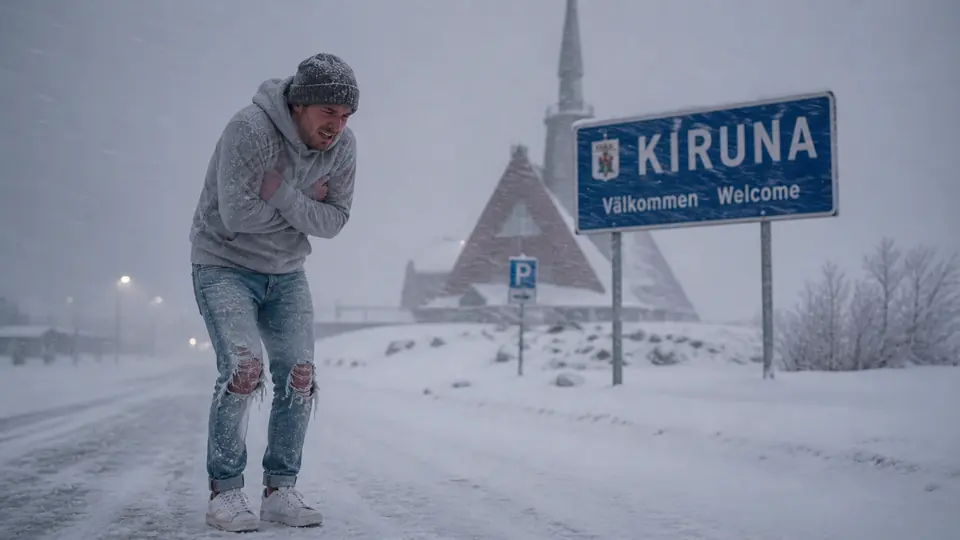
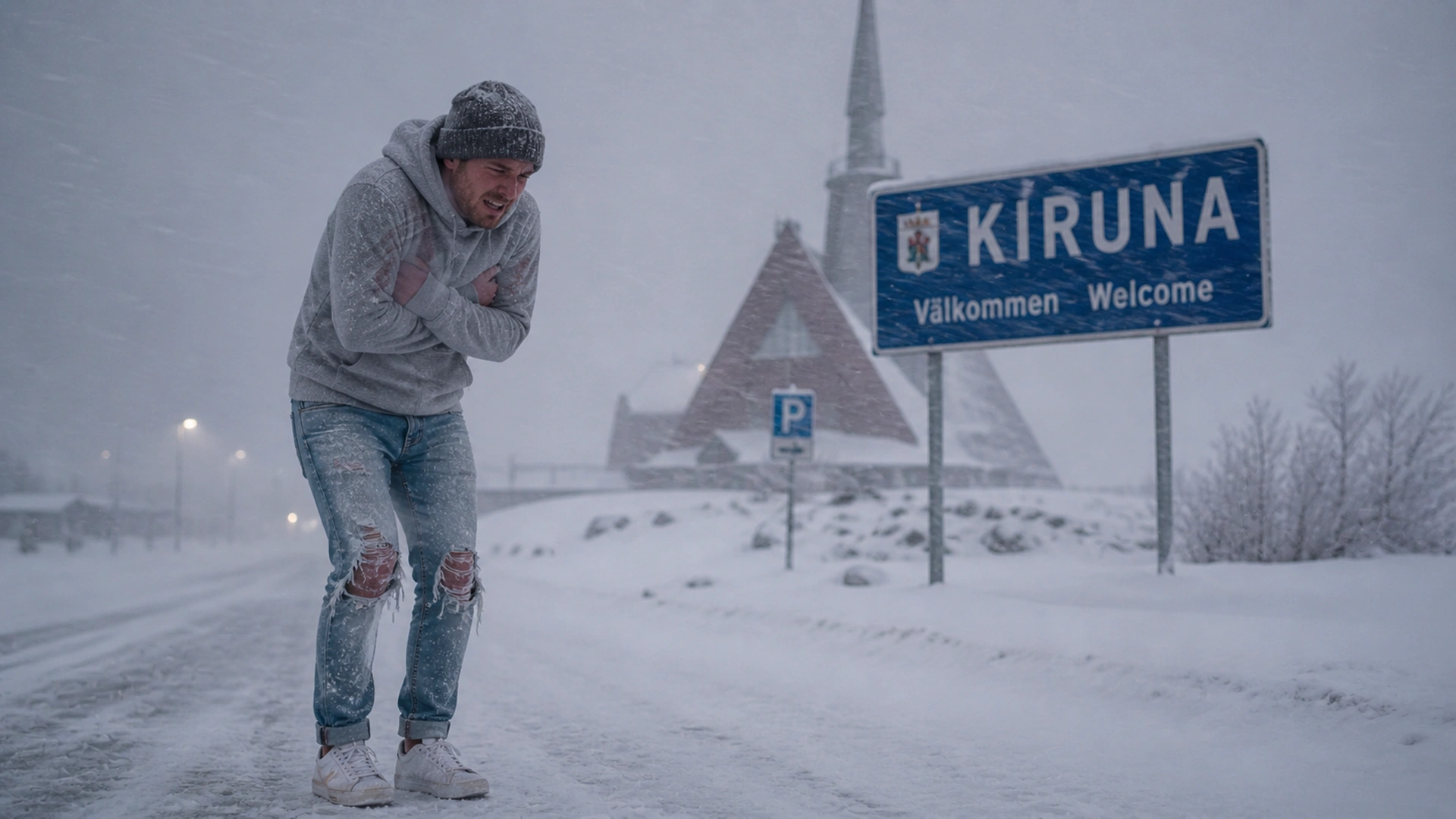
Many first-time visitors dress for walking between shops rather than standing outdoors at night. That difference matters. Aurora watching and winter activities can involve long periods with very little movement.
Better approach
- Use thermal base layers next to the skin.
- Add an insulating mid-layer.
- Wear a wind-resistant outer layer.
- Protect hands, feet, neck and face carefully.
- Avoid relying on fashion boots, thin gloves or cotton jeans as your main cold-weather protection.
Local planning rule: dress for the coldest and least active part of the day, not for the short walk from the hotel to a restaurant.
For a complete clothing system, see What to Wear in Swedish Lapland.
4. Booking Important Winter Tours Too Late
Popular winter activities have limited capacity. Small-group Northern Lights tours, dog sledding and snowmobile experiences can become unavailable during busy periods if you wait until arrival.
Better approach
Book the experiences that matter most before you travel, then leave some free time around them. See Why Book Kiruna Tours in Advance?.
5. Underestimating Winter Driving and Transport
Snow, ice, darkness and longer stopping distances can make winter travel more demanding than visitors expect. A route that looks straightforward on a map can feel very different in Arctic conditions.
Better approach
If you are not comfortable with winter driving, use trains, transfers, public transport or guided activities where practical. If you do drive, allow extra time and check current road conditions through Trafikverket.
Travelers planning without a rental car should also read Kiruna Without a Car.
6. Watching the KP Index but Ignoring Cloud Cover
A common aurora-planning mistake is focusing on one number. KP can describe geomagnetic activity, but it does not tell you whether clouds are blocking your view.
Better approach
Check cloud forecasts as carefully as aurora forecasts. In practice, a clearer sky can be more useful than a stronger forecast hidden behind complete overcast.
| Check | What It Tells You | Why It Matters |
|---|---|---|
| Aurora forecast | Potential geomagnetic activity | Helps estimate whether aurora activity may be present |
| Cloud forecast | How much of the sky may be covered | Cloud can prevent you from seeing aurora even when activity is strong |
| Local conditions | What the sky is actually doing where you are | Conditions can vary between nearby areas |
7. Misunderstanding Polar Night and Winter Daylight
Winter daylight in Kiruna is very different from a normal city break farther south. Around the darkest part of winter, daylight is limited and the sun remains below the horizon during the polar-night period.
Better approach
Plan daylight-dependent sightseeing for the brightest part of the day and use darker hours for activities that benefit from Arctic night. Limited daylight is part of the experience, but the itinerary should be built around it.
8. Treating Kiruna and Abisko as the Same Destination
Kiruna and Abisko complement each other, but they are not interchangeable. Kiruna is the larger regional base with more services, accommodation choices and activities. Abisko is more nature-focused, with direct access to Abisko National Park and mountain scenery.
Better approach
Choose the base that fits your daily itinerary. Compare them directly in Kiruna vs Abisko for Northern Lights.
9. Assuming You Need Cash Everywhere
Sweden is largely cashless, and hotels, restaurants, shops and tour providers commonly accept card payments. Bringing large amounts of cash is usually unnecessary for a Kiruna trip.
Better approach
Travel with a working payment card and a backup payment method rather than planning around cash. Check with a specific provider in advance if you are unsure about payment methods.
10. Treating Sámi Culture as a Tourist Theme
Sámi culture is a living Indigenous culture, not simply an Arctic attraction. Visitors can make a poor impression by reducing Sámi people, traditions or reindeer herding to stereotypes or staged expectations.
Better approach
Choose respectful experiences, listen to how Sámi hosts and organizations describe their own culture, and avoid assuming that every reindeer-related activity represents Sámi culture. For authoritative background, consult Sametinget, the Sámi Parliament in Sweden.
11. Overplanning Every Hour
A tightly packed itinerary can work against you in Kiruna. Weather, winter roads, darkness and activity timing all make flexibility valuable.
Better approach
Plan one main daytime experience, allow realistic travel and recovery time, and avoid filling every evening if Northern Lights are a priority. For a balanced structure, use our Kiruna Winter Itinerary.
12. Forgetting What Cold Does to Electronics
Cold conditions can reduce battery performance, especially during long outdoor sessions. Phones and camera batteries may lose charge faster than expected.
Better approach
Carry spare batteries or a power bank, keep batteries warm inside clothing when possible, and avoid relying on a single phone battery for navigation, photography and communication during a long winter evening.
Kiruna Mistake-Proof Checklist
| Before the Trip | During the Trip |
|---|---|
| Book key winter activities early | Check both aurora activity and cloud cover |
| Plan several nights for aurora flexibility | Dress for standing still outdoors |
| Build your itinerary around winter daylight | Allow extra travel time in snow and ice |
| Choose Kiruna or Abisko based on daily plans | Keep at least some evenings flexible |
| Prepare cards, batteries and backup power | Adjust plans when weather changes |
What First-Time Visitors Usually Get Wrong
Kiruna is not difficult to visit, but it rewards realistic planning. The biggest problems usually come from expecting certainty in a destination where weather, darkness and winter conditions influence almost every day. Visitors who stay long enough, dress properly and leave room to adapt usually have a much smoother trip.
Plan a Better Kiruna Trip
Use these guides to build a realistic itinerary before you arrive.