Where Is Sápmi and the Kiruna Region?
The map below shows Kiruna within Sápmi, the traditional homeland of the Sámi people across northern Sweden, Norway, Finland and Russia.
What Is Sápmi?
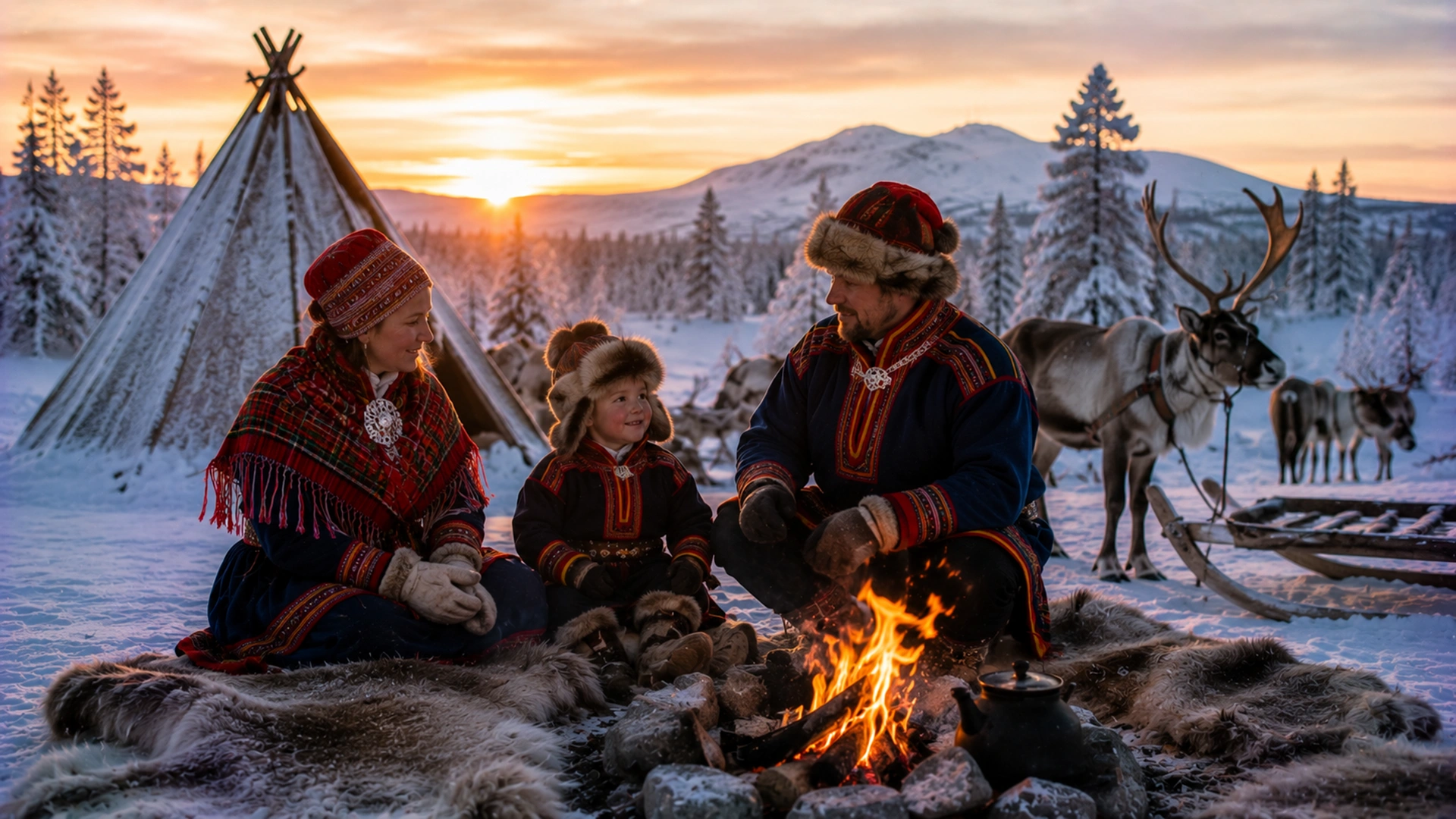
Sápmi is the traditional cultural homeland of the Sámi people. It stretches across northern Norway, Sweden, Finland and the Kola Peninsula in Russia. Sápmi is not a modern nation state with one border. It is a cultural and historical region that existed long before today’s national borders.
For visitors in Kiruna, this matters because Swedish Lapland is not empty wilderness. Rivers, valleys, forests and mountains are also cultural landscapes connected to movement, grazing, fishing, family history and Indigenous knowledge.
Understanding Sápmi helps travelers see Arctic landscapes differently. A mountain area may also be a migration route. A frozen river may be connected to generations of travel, fishing and seasonal movement. Sámi culture is therefore connected to land, not only to museums or performances.
Sápmi is best understood as a living Indigenous homeland rather than a tourism concept or historical theme.
Who Are the Sámi People?
The Sámi are recognised as an Indigenous people of northern Europe. Their history in northern Scandinavia predates the modern borders of Sweden, Norway, Finland and Russia.
Historically, Sámi communities developed detailed knowledge of Arctic and sub-Arctic environments through fishing, hunting, gathering, trade, craft traditions and reindeer-related livelihoods.
There is no single Sámi lifestyle. Some Sámi people work with reindeer herding, while others work in education, politics, media, tourism, healthcare, design, research, law or business. Modern Sámi life includes both traditional knowledge and contemporary Arctic society.
| Common Assumption | More Accurate Reality | Why It Matters |
|---|---|---|
| “Sámi culture belongs to the past.” | Sámi culture is modern and living. | Visitors should avoid treating Indigenous culture as historical decoration. |
| “All Sámi people herd reindeer.” | Only a minority work directly with reindeer today. | Sámi life includes many professions and identities. |
| “Sámi culture means reindeer only.” | Language, food, politics, music and craft are also central. | This avoids reducing culture to one tourism image. |
| “Traditional means old-fashioned.” | Tradition and modern life exist together. | Sámi culture continues to evolve today. |
Why Sámi Culture Matters in Kiruna
Kiruna sits within Sápmi and is surrounded by landscapes connected to reindeer herding communities, seasonal movement and Indigenous land use. At the same time, the region is shaped by mining, tourism, railways, roads and Arctic development.
This makes Kiruna one of the most interesting places in Sweden for understanding how Indigenous culture, modern industry and tourism interact in real life.
Many visitors arrive for Northern Lights, dog sledding, Icehotel or winter scenery. Those experiences happen inside a landscape with deeper cultural meaning and long human history.
Local Insight
The strongest Sámi cultural experiences are usually calm, educational and personal rather than theatrical. Good guides explain not only reindeer and food, but also land, weather, language, history and modern Arctic life.
Why Reindeer Herding Matters
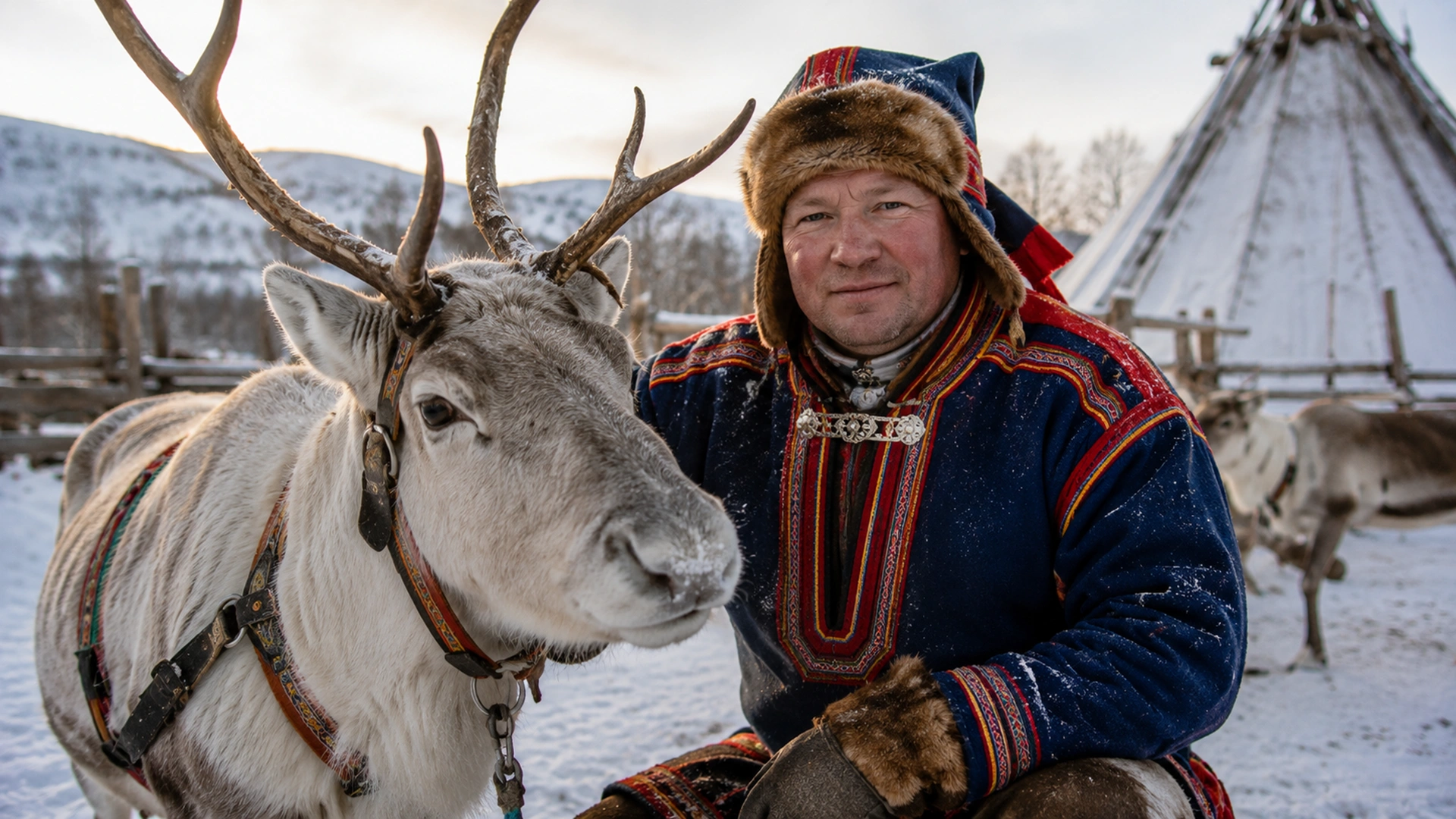
Reindeer herding is one of the most visible parts of Sámi culture in Swedish Lapland, but it is also one of the most misunderstood. It is not simply a winter attraction. It is a specialised livelihood connected to land, weather, grazing, migration and generations of knowledge.
Only a minority of Sámi people work directly with reindeer herding today, but reindeer remain culturally important because they shaped food traditions, clothing, trade, transport and seasonal movement across Sápmi.
In the Kiruna region, grazing conditions can be affected by roads, mining, railways, forestry, tourism and climate change. A landscape that feels beautiful to visitors may still create challenges for herding communities.
| Topic | Reality | Visitor Guidance |
|---|---|---|
| Reindeer | They are working semi-domesticated animals. | Do not approach without permission. |
| Photography | Herding situations involve real work and livelihoods. | Always ask before close photography. |
| Drones | Drones can disturb animals. | Do not fly drones near reindeer. |
| Road crossings | Reindeer often move near roads in winter. | Drive slowly and carefully. |
| Tourism | Good tours focus on education and context. | Choose respectful Sámi-led experiences. |
Seasonal Life in the Arctic
Traditional Sámi knowledge is strongly connected to seasons. The Arctic year is not simply divided into summer and winter. Snow quality, freeze-thaw cycles, ice, wind, grazing access and daylight all affect movement and work differently throughout the year.
For visitors, this explains why Swedish Lapland changes dramatically between December, February and April even though all three months may involve snow.
Seasonal understanding is especially important in reindeer herding because snow conditions directly affect whether reindeer can access food beneath the snow.
Sámi Languages
There is no single Sámi language. Sámi languages are a group of related Indigenous languages spoken across different parts of Sápmi. Northern Sámi is the most widely spoken and is the language visitors are most likely to encounter in northern Sweden, Norway and Finland.
Many Sámi languages were historically threatened by assimilation policies and school systems that discouraged Indigenous language use. Modern language revitalisation is therefore connected to identity, education, culture and community life.
Visitors may notice Sámi place names throughout Swedish Lapland. These names often describe landscape features, animals, migration routes, weather conditions or important cultural locations. Understanding even a few Northern Sámi words can provide additional insight into the culture and history of the region.
| Northern Sámi Word | Meaning | Context |
|---|---|---|
| Bures | Hello | Common greeting used across Northern Sámi communities. |
| Giitu | Thank you | A respectful and useful phrase visitors may hear during cultural experiences. |
| Mana dearvan | Goodbye | Traditional farewell. |
| Duodji | Sámi handicraft | Traditional handmade items connected to culture, identity and Arctic knowledge. |
| Gákti | Traditional Sámi clothing | Clothing with regional, family and cultural significance. |
| Lavvu | Traditional Sámi tent | Portable shelter often associated with seasonal movement and outdoor gatherings. |
| Goahti | Traditional Sámi dwelling | Another traditional form of shelter used in different regions and situations. |
| Sápmi | The traditional Sámi homeland | The cultural region spanning northern Sweden, Norway, Finland and Russia. |
| Siida | Reindeer herding community | A group of families connected through shared grazing areas and herding traditions. |
| Bidus | Traditional reindeer stew | One of the best-known Sámi dishes in northern Scandinavia. |
Local Insight
You do not need to learn Northern Sámi before visiting Kiruna, but recognising words such as Bures, Duodji, Gákti and Siida can make cultural experiences easier to understand and appreciate. Many visitors are surprised by how often these terms appear during museum visits, reindeer experiences and discussions about modern Sámi life.
Gákti: Traditional Sámi Clothing
Gákti is traditional Sámi clothing with regional, family and personal meaning. Colors, belts, patterns and accessories may reflect local identity and cultural background.
Visitors should not treat gákti as a costume or tourist outfit. Respectful experiences explain its meaning instead of turning it into entertainment or dress-up photography.
Many travelers notice the colors first. Sámi communities often notice context instead: where the clothing comes from, who wears it and whether it is being represented respectfully.
Duodji: Sámi Handicraft and Traditional Knowledge
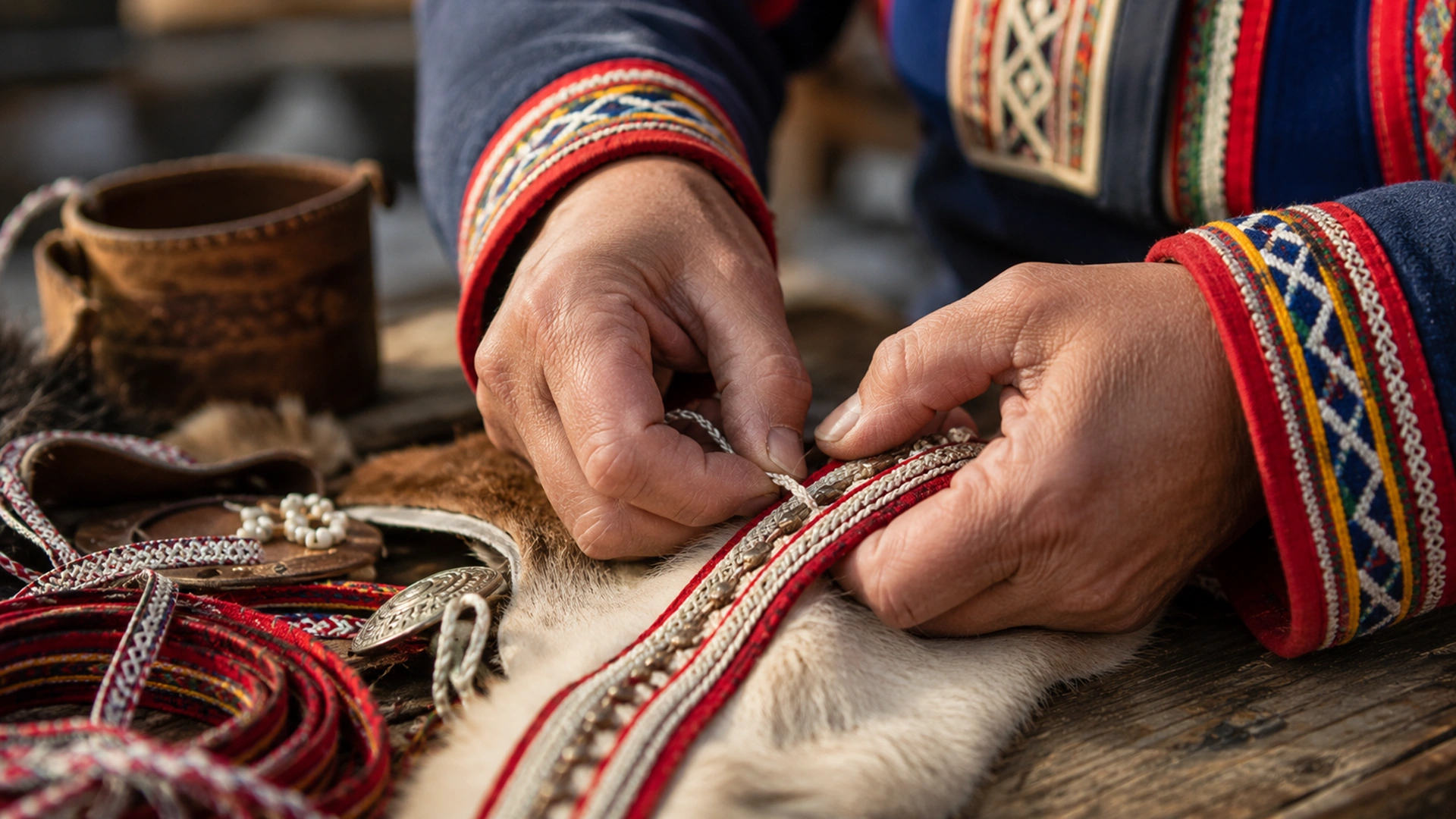
Duodji is Sámi handicraft connected to identity, materials and practical Arctic knowledge. Traditional materials may include reindeer horn, leather, wool, birch and silver.
Authentic duodji is handmade and connected to Sámi makers. Mass-produced souvenirs using “Sámi-style” patterns are not the same thing.
When shopping, visitors should ask who made the item and where it comes from. Genuine duodji supports Sámi artisans and cultural continuity.
Sámi Food Traditions
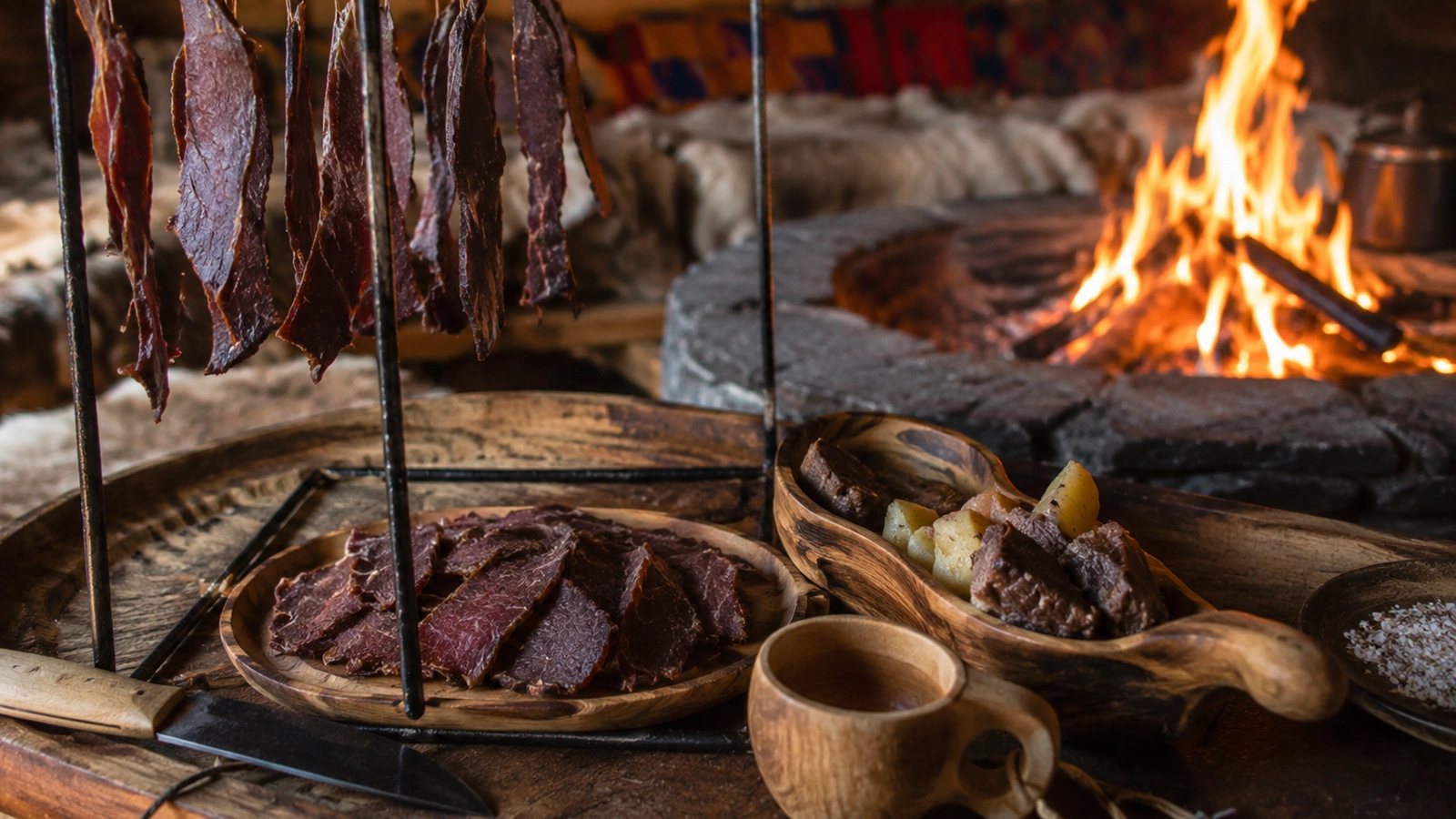
Sámi food traditions developed from Arctic landscapes and seasonal resources. Reindeer meat, fish, berries and preserved foods remain important parts of local food culture.
Good cultural food experiences explain where ingredients come from and how food relates to climate, survival and seasonal movement rather than presenting Arctic cuisine only as something exotic.
Cloudberries, lingonberries, smoked fish and reindeer dishes are especially associated with northern Sweden and Sámi food traditions.
Joik and Sámi Music
Joik is one of the oldest musical traditions in Europe. It is often connected to people, places, memories or emotions rather than simply describing them from the outside.
Modern Sámi musicians continue using joik in contemporary forms including folk, pop, electronic music and experimental sound.
For visitors, understanding the meaning behind joik usually matters more than hearing a short performance without context.
History, Colonisation and Rights
Sámi history includes resilience and adaptation, but also colonisation, assimilation and discrimination. State expansion, schools, language suppression and land regulation affected Sámi communities across northern Scandinavia.
These histories still matter because they influence political debates, language revitalisation, land use and Indigenous rights discussions today.
Visitors do not need to understand every legal detail, but they should recognise that Sámi culture is connected to real contemporary issues, not only to tourism.
Ethical Sámi Tourism in Kiruna
Ethical Sámi tourism gives Sámi people a genuine voice and avoids using Indigenous culture only as decoration or marketing.
Good experiences explain who is guiding, what visitors will learn and how the activity connects to real life in the region.
| Respectful Experience | Weak Experience | Why It Matters |
|---|---|---|
| Sámi-led or culturally connected guiding. | Uses Sámi visuals without context. | Representation and voice matter. |
| Explains modern life as well as history. | Presents Sámi culture as frozen in the past. | Sámi culture is living and contemporary. |
| Provides photography guidance. | Encourages staged costume photos. | Respect protects meaning and privacy. |
| Discusses land and seasonal realities honestly. | Focuses only on tourist spectacle. | Context creates deeper understanding. |
How to Experience Sámi Culture Respectfully
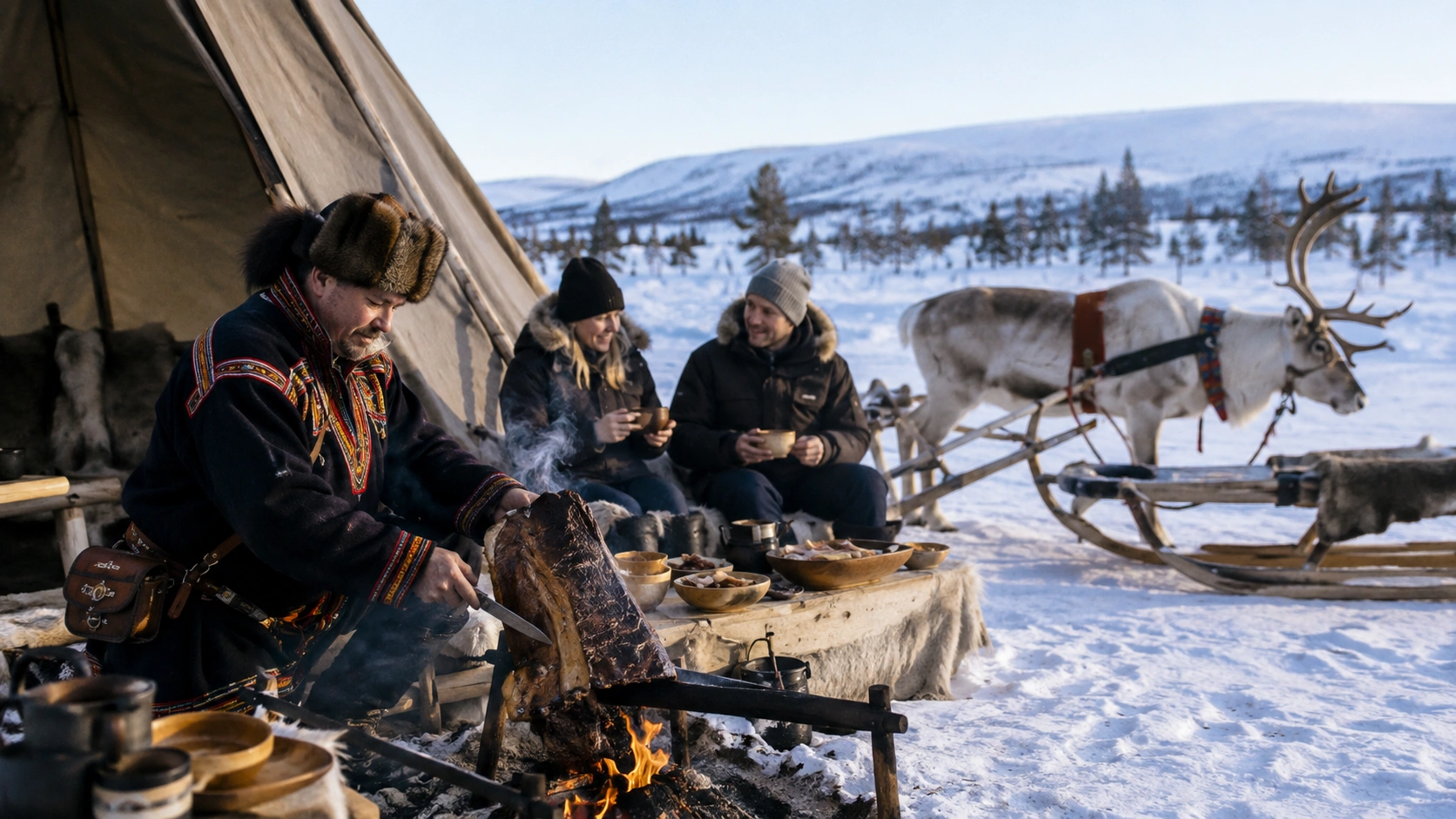
Respectful Visitor Checklist
- Choose Sámi-led tours whenever possible.
- Ask before photographing people, gákti or private spaces.
- Do not approach reindeer without permission.
- Avoid flying drones near animals or herding areas.
- Buy genuine duodji from known Sámi makers.
- Listen more than you perform for social media photos.
- Understand that Sápmi is a living homeland.
- Approach cultural experiences with curiosity and patience.
Common Visitor Mistakes
The most common mistake is reducing Sámi culture to reindeer photography. Reindeer are important, but Sámi culture also includes language, politics, music, family history, education, food and modern Arctic life.
Another mistake is assuming that all “Sámi-style” souvenirs are authentic. Visitors should distinguish genuine duodji from imitation products using Indigenous-inspired designs without maker context.
Intrusive photography is another common problem. Close photographs of people, children, gákti or working situations should never be taken casually without permission.
Modern Sámi Life
Modern Sámi life is diverse. Some people live in mountain or forest communities, while others live in towns and cities across northern Scandinavia.
Sámi communities today include artists, teachers, lawyers, politicians, journalists, entrepreneurs, researchers, musicians and tourism professionals.
This matters because Indigenous cultures are often presented as historical rather than contemporary. Sámi culture remains an active part of modern northern society.
Climate Change and Land Use
Climate change affects the Arctic rapidly. Freeze-thaw cycles, unstable snow and ice crusts can make grazing more difficult for reindeer.
Mining, roads, railways, energy projects, forestry and tourism development can also affect migration routes and land use.
For visitors, this is an important reminder that Arctic landscapes are not empty space. They are cultural and working environments connected to real communities and livelihoods.
Final Verdict
The best way to experience Sámi culture in Swedish Lapland is with respect, curiosity and realistic expectations. Visitors should see Sámi culture as a living Indigenous culture connected to language, land, history, food, music, reindeer herding and modern Arctic life rather than as a tourism performance.
The strongest experiences are usually those where Sámi people speak for themselves, context is clear and visitors leave with greater understanding rather than only photographs.
In Kiruna, respectful tourism means listening carefully, choosing experiences thoughtfully and understanding that the Arctic landscape is also part of Sápmi.