Short Answer for Travelers
Choose snowshoe hiking in Kiruna if you want a calm Arctic winter activity focused on nature, silence and atmosphere rather than speed or engines. Most beginner-friendly tours are easy to moderate and work well for photography, forest walks and possible Northern Lights evenings. February and March are usually the best months because snow conditions, daylight and temperatures balance well.
Quick Answer
Snowshoe hiking in Kiruna is one of the best winter activities for travelers who want quiet Arctic nature without technical skill requirements or engine noise. The strongest season usually runs from December to March, while February and March often offer the best balance of snow, daylight and comfort. Most tours are beginner-friendly and focus more on atmosphere, winter landscapes and nature interpretation than physical performance.
- Best for: quiet nature experiences, photography and beginners.
- Best months: February and March.
- Main advantage: calm access to snowy Arctic landscapes.
- Main limitation: slower pace and physical walking effort.
- Best aurora strategy: treat Northern Lights as a bonus, not a guarantee.
- Best beginner choice: guided daytime snowshoe tours.
- Not ideal for: travelers wanting speed or very low-effort sightseeing.
What Is Snowshoe Hiking?
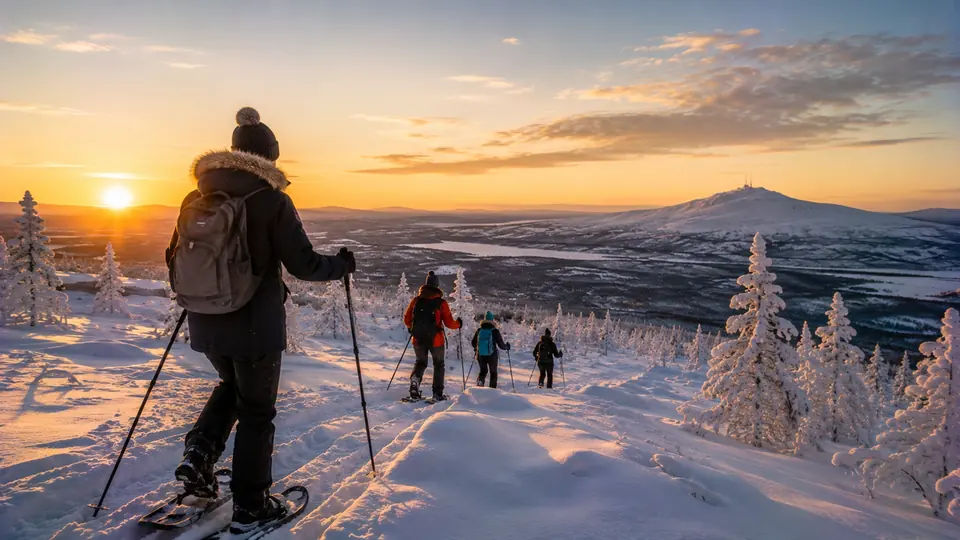
Snowshoe hiking is winter walking with wide snowshoes attached to your boots. The snowshoes spread your weight across a larger surface, helping you move through soft or deep snow without sinking as much as normal winter boots would.
Modern snowshoes are much easier to use than many first-time visitors expect. Most people understand the basic movement within a few minutes. The walking pace is slower than normal hiking, but beginner-friendly terrain usually requires no technical experience.
The activity is not designed for speed or adrenaline. Its main strength is access. Snowshoes allow you to move quietly into forests, snowy open terrain and winter landscapes where ordinary walking would be difficult during Arctic winter.
Snowshoe hiking is best understood as a calm nature experience rather than a sport. The value comes from atmosphere, silence, winter scenery and slow movement through snow-covered landscapes.
Why Kiruna Works Well for Snowshoe Hiking
Kiruna is especially suitable for snowshoe hiking because winter is long, snow cover is often stable and large areas of forest and open terrain become accessible once snow arrives. Frozen rivers, snowy forest trails and low Arctic hills create varied but beginner-friendly terrain.
The region also works well for travelers who want a winter activity without engine noise, skiing technique or high-speed movement. Snowshoeing combines physical movement with quiet observation of winter nature.
Local Insight
Many visitors initially underestimate snowshoe hiking because it sounds simple. In reality, the silence, snow texture, blue winter light and feeling of leaving roads behind often become some of the strongest memories from Kiruna.
Snowshoe Hiking Compared With Other Winter Activities
| Activity | Best For | Main Advantage | Main Limitation | Difficulty |
|---|---|---|---|---|
| Snowshoe hiking | Quiet nature, photography and beginners | Silent and nature-focused | Slower pace and walking effort | Easy to moderate |
| Snowmobile tour | Adventure and distance | Covers terrain quickly | Wind chill and engine noise | Easy to moderate |
| Dog sledding | Traditional Arctic atmosphere | Animal interaction and silence | Passengers can become cold while sitting still | Easy for passengers |
| Scenic Arctic tour | Low physical effort | Comfortable and accessible | Less immersive in nature | Easy |
Best Time for Snowshoe Hiking in Kiruna
The main snowshoe hiking season around Kiruna usually runs from December to March. February and March are often considered the strongest months because snow conditions, daylight and temperatures balance well for most travelers.
| Month | Conditions | Best For | Practical Note |
|---|---|---|---|
| November | Early winter and variable snow | Flexible travelers | Some routes may not be fully prepared |
| December | Dark and atmospheric | Polar night mood and aurora evenings | Limited daylight and colder conditions |
| January | Deep Arctic winter | Classic winter scenery | Can become extremely cold |
| February | Stable winter with more daylight | Balanced conditions | One of the best overall months |
| March | Bright snow and longer days | Photography and families | Often more comfortable than midwinter |
| April | Spring winter and changing snow | Late-season outdoor trips | Conditions become more variable |
How Difficult Is Snowshoe Hiking?
Most guided snowshoe hikes in Kiruna are easy to moderate and suitable for beginners with normal mobility. You do not need technical experience, but you should expect slower movement than normal hiking and some physical effort in snow.
Most beginners can handle snowshoe hiking in Kiruna, but deep snow, winter clothing and cold conditions make it more physically tiring than ordinary walking.
Deep snow, uphill sections and very cold temperatures can increase the effort level. However, most beginner-friendly tours move at a calm pace with regular breaks.
Best Snowshoe Experience by Traveler Type
| Traveler Type | Best Snowshoe Option | Main Reason |
|---|---|---|
| First-time winter visitor | Short guided daytime walk | Easy pace and good visibility |
| Photographers | Sunset or blue-hour tours | Strong winter light and snowy foregrounds |
| Couples | Evening forest walk | Quiet atmosphere and dark skies |
| Families | Short routes with warm breaks | More manageable for children |
| Aurora-focused travelers | Evening snowshoe tour | Access to darker areas away from town |
What to Wear for Snowshoe Hiking
Snowshoe hiking creates body heat while walking, but breaks and photography stops can feel cold quickly. The goal is to stay warm without sweating too heavily.
| Clothing Layer | Recommended Choice | Why It Matters |
|---|---|---|
| Base layer | Merino wool or thermal synthetic | Moves moisture away from skin |
| Mid layer | Fleece or wool | Provides adjustable warmth |
| Outer layer | Wind-resistant winter clothing | Blocks snow and wind |
| Feet | Insulated winter boots | Cold feet are common during stops |
| Hands | Mittens plus liner gloves | Better warmth during cold conditions |
| Head and face | Hat and neck warmer | Protects exposed skin |
Managing Cold During Snowshoe Tours
Snowshoe hiking creates a specific Arctic winter challenge: you become warm while moving, then cool quickly during breaks, photography stops or aurora waiting.
Many visitors make the mistake of dressing too heavily at the start, sweating during the walk and then becoming cold later when activity slows down.
The best strategy is adjustable layering rather than maximum insulation from the beginning of the tour.
Good guides usually manage pace and break timing carefully, but visitors still need breathable clothing and realistic cold-weather expectations.
Guided vs Self-Guided Snowshoe Hiking
Self-guided snowshoe hiking can work for experienced winter travelers with proper equipment and route judgement. For most visitors, guided tours are safer and more practical because Arctic conditions are easy to underestimate.
| Factor | Guided Tour | Self-Guided |
|---|---|---|
| Route safety | Guide selects suitable terrain | You judge conditions yourself |
| Equipment | Usually included | You rent or bring equipment |
| Nature interpretation | Guide explains tracks and environment | Depends on your own knowledge |
| Weather adaptation | Guide adjusts route if needed | You handle weather decisions yourself |
| Best for | First-time visitors and families | Experienced winter hikers |
Northern Lights Snowshoe Tours
Snowshoe hiking works naturally with Northern Lights viewing because groups can move quietly into darker snowy areas away from roads and artificial light.
Snowshoe hiking is excellent for atmosphere and dark-sky access, but it is not the most reliable Northern Lights strategy because groups usually stay within limited walking distance.
Aurora visibility still depends completely on cloud cover and solar activity. The advantage of snowshoeing is the atmosphere itself: even if aurora activity is weak, the winter landscape and silence still create a memorable evening.
Is Snowshoe Hiking Family Friendly?
Snowshoe hiking can work very well for families when the route, duration and temperature are appropriate. Older children often enjoy animal tracks, snowy forest paths and walking with headlamps during winter evenings.
Very young children may struggle with cold, slower movement and deep snow conditions. Families usually benefit from shorter routes and planned warm breaks.
Weather, Snow Conditions and Route Changes
Snowshoe tours may be adjusted because of severe cold, wind, heavy snowfall, unstable snow conditions or poor visibility. Responsible operators adapt routes instead of forcing conditions that no longer make sense.
Arctic weather changes quickly around Kiruna during winter. Forest routes may feel calm while nearby open terrain experiences much stronger wind exposure.
Local Insight: Winter Conditions Change Fast
A route that feels comfortable at the beginning of a tour can become significantly colder after sunset or during changing wind conditions. Flexible route planning is part of safe Arctic guiding.
Respecting Arctic Nature and Reindeer Areas
Snowshoe hiking takes place within Arctic environments that are ecologically sensitive and often connected to Sámi reindeer herding areas. Visitors should stay on suitable routes, follow guide instructions and avoid disturbing animals.
Reindeer are not tourist decorations. During winter they conserve energy carefully, and unnecessary disturbance can create stress.
Responsible winter tourism in Kiruna means respecting both nature and the people who use these landscapes year-round.
Common Snowshoe Hiking Mistakes
- Wearing cotton base layers that trap moisture.
- Using city shoes instead of insulated winter boots.
- Dressing too warmly and sweating early in the walk.
- Expecting the pace to feel like normal hiking.
- Assuming aurora tours guarantee Northern Lights.
- Choosing self-guided routes without winter experience.
- Underestimating cold during breaks and photography stops.
- Ignoring battery protection for phones and cameras.
Who Might Not Enjoy Snowshoe Hiking?
Snowshoe hiking is not ideal for every traveler. Some visitors prefer faster or less physical winter activities.
| Traveler Type | Possible Issue | Better Alternative |
|---|---|---|
| Travelers wanting speed | Snowshoeing is intentionally slow | Snowmobile tours |
| Guests with mobility limitations | Walking effort in snow | Scenic Arctic tours |
| Travelers disliking cold exposure | Outdoor winter conditions | Indoor experiences |
| Visitors expecting guaranteed wildlife | Wildlife sightings are unpredictable | Animal-focused tours |
| Guests wanting low-effort sightseeing | Physical movement required | Vehicle-based tours |
Final Verdict
Snowshoe hiking in Kiruna is worth it for travelers who want quiet Arctic nature, winter atmosphere and a slower pace rather than speed or engines.
Its strongest value is not distance covered. Its strongest value is the experience itself: silence, snowy forest, blue winter light, animal tracks and movement through Arctic landscapes at human pace.
For many visitors, snowshoe hiking becomes one of the most memorable winter activities because it feels calm, authentic and closely connected to the environment around Kiruna.
Planning Checklist
- Choose February or March for the best balance of daylight and winter conditions.
- Use guided tours if you are unfamiliar with Arctic winter environments.
- Dress in breathable layers instead of maximum insulation.
- Bring insulated boots, mittens and battery protection.
- Expect slower movement than normal hiking.
- Treat Northern Lights as a bonus rather than a guarantee.
- Plan warm indoor time after longer evening tours.
Short Answer for Travelers
Choose snowshoe hiking in Kiruna if you want a calm Arctic winter activity focused on nature, silence and atmosphere rather than speed or engines. Most beginner-friendly tours are easy to moderate and work well for photography, forest walks and possible Northern Lights evenings. February and March are usually the best months because snow conditions, daylight and temperatures balance well.
Quick Answer
Snowshoe hiking in Kiruna is one of the best winter activities for travelers who want quiet Arctic nature without technical skill requirements or engine noise. The strongest season usually runs from December to March, while February and March often offer the best balance of snow, daylight and comfort. Most tours are beginner-friendly and focus more on atmosphere, winter landscapes and nature interpretation than physical performance.
- Best for: quiet nature experiences, photography and beginners.
- Best months: February and March.
- Main advantage: calm access to snowy Arctic landscapes.
- Main limitation: slower pace and physical walking effort.
- Best aurora strategy: treat Northern Lights as a bonus, not a guarantee.
- Best beginner choice: guided daytime snowshoe tours.
- Not ideal for: travelers wanting speed or very low-effort sightseeing.
What Is Snowshoe Hiking?
Snowshoe hiking is winter walking with wide snowshoes attached to your boots. The snowshoes spread your weight across a larger surface, helping you move through soft or deep snow without sinking as much as normal winter boots would.
Modern snowshoes are much easier to use than many first-time visitors expect. Most people understand the basic movement within a few minutes. The walking pace is slower than normal hiking, but beginner-friendly terrain usually requires no technical experience.
The activity is not designed for speed or adrenaline. Its main strength is access. Snowshoes allow you to move quietly into forests, snowy open terrain and winter landscapes where ordinary walking would be difficult during Arctic winter.
Snowshoe hiking is best understood as a calm nature experience rather than a sport. The value comes from atmosphere, silence, winter scenery and slow movement through snow-covered landscapes.
Why Kiruna Works Well for Snowshoe Hiking
Kiruna is especially suitable for snowshoe hiking because winter is long, snow cover is often stable and large areas of forest and open terrain become accessible once snow arrives. Frozen rivers, snowy forest trails and low Arctic hills create varied but beginner-friendly terrain.
The region also works well for travelers who want a winter activity without engine noise, skiing technique or high-speed movement. Snowshoeing combines physical movement with quiet observation of winter nature.
Local Insight
Many visitors initially underestimate snowshoe hiking because it sounds simple. In reality, the silence, snow texture, blue winter light and feeling of leaving roads behind often become some of the strongest memories from Kiruna.
Snowshoe Hiking Compared With Other Winter Activities
| Activity | Best For | Main Advantage | Main Limitation | Difficulty |
|---|---|---|---|---|
| Snowshoe hiking | Quiet nature, photography and beginners | Silent and nature-focused | Slower pace and walking effort | Easy to moderate |
| Snowmobile tour | Adventure and distance | Covers terrain quickly | Wind chill and engine noise | Easy to moderate |
| Dog sledding | Traditional Arctic atmosphere | Animal interaction and silence | Passengers can become cold while sitting still | Easy for passengers |
| Scenic Arctic tour | Low physical effort | Comfortable and accessible | Less immersive in nature | Easy |
Best Time for Snowshoe Hiking in Kiruna
The main snowshoe hiking season around Kiruna usually runs from December to March. February and March are often considered the strongest months because snow conditions, daylight and temperatures balance well for most travelers.
| Month | Conditions | Best For | Practical Note |
|---|---|---|---|
| November | Early winter and variable snow | Flexible travelers | Some routes may not be fully prepared |
| December | Dark and atmospheric | Polar night mood and aurora evenings | Limited daylight and colder conditions |
| January | Deep Arctic winter | Classic winter scenery | Can become extremely cold |
| February | Stable winter with more daylight | Balanced conditions | One of the best overall months |
| March | Bright snow and longer days | Photography and families | Often more comfortable than midwinter |
| April | Spring winter and changing snow | Late-season outdoor trips | Conditions become more variable |
How Difficult Is Snowshoe Hiking?
Most guided snowshoe hikes in Kiruna are easy to moderate and suitable for beginners with normal mobility. You do not need technical experience, but you should expect slower movement than normal hiking and some physical effort in snow.
Most beginners can handle snowshoe hiking in Kiruna, but deep snow, winter clothing and cold conditions make it more physically tiring than ordinary walking.
Deep snow, uphill sections and very cold temperatures can increase the effort level. However, most beginner-friendly tours move at a calm pace with regular breaks.
Best Snowshoe Experience by Traveler Type
| Traveler Type | Best Snowshoe Option | Main Reason |
|---|---|---|
| First-time winter visitor | Short guided daytime walk | Easy pace and good visibility |
| Photographers | Sunset or blue-hour tours | Strong winter light and snowy foregrounds |
| Couples | Evening forest walk | Quiet atmosphere and dark skies |
| Families | Short routes with warm breaks | More manageable for children |
| Aurora-focused travelers | Evening snowshoe tour | Access to darker areas away from town |
What to Wear for Snowshoe Hiking
Snowshoe hiking creates body heat while walking, but breaks and photography stops can feel cold quickly. The goal is to stay warm without sweating too heavily.
| Clothing Layer | Recommended Choice | Why It Matters |
|---|---|---|
| Base layer | Merino wool or thermal synthetic | Moves moisture away from skin |
| Mid layer | Fleece or wool | Provides adjustable warmth |
| Outer layer | Wind-resistant winter clothing | Blocks snow and wind |
| Feet | Insulated winter boots | Cold feet are common during stops |
| Hands | Mittens plus liner gloves | Better warmth during cold conditions |
| Head and face | Hat and neck warmer | Protects exposed skin |
Managing Cold During Snowshoe Tours
Snowshoe hiking creates a specific Arctic winter challenge: you become warm while moving, then cool quickly during breaks, photography stops or aurora waiting.
Many visitors make the mistake of dressing too heavily at the start, sweating during the walk and then becoming cold later when activity slows down.
The best strategy is adjustable layering rather than maximum insulation from the beginning of the tour.
Good guides usually manage pace and break timing carefully, but visitors still need breathable clothing and realistic cold-weather expectations.
Guided vs Self-Guided Snowshoe Hiking
Self-guided snowshoe hiking can work for experienced winter travelers with proper equipment and route judgement. For most visitors, guided tours are safer and more practical because Arctic conditions are easy to underestimate.
| Factor | Guided Tour | Self-Guided |
|---|---|---|
| Route safety | Guide selects suitable terrain | You judge conditions yourself |
| Equipment | Usually included | You rent or bring equipment |
| Nature interpretation | Guide explains tracks and environment | Depends on your own knowledge |
| Weather adaptation | Guide adjusts route if needed | You handle weather decisions yourself |
| Best for | First-time visitors and families | Experienced winter hikers |
Northern Lights Snowshoe Tours
Snowshoe hiking works naturally with Northern Lights viewing because groups can move quietly into darker snowy areas away from roads and artificial light.
Snowshoe hiking is excellent for atmosphere and dark-sky access, but it is not the most reliable Northern Lights strategy because groups usually stay within limited walking distance.
Aurora visibility still depends completely on cloud cover and solar activity. The advantage of snowshoeing is the atmosphere itself: even if aurora activity is weak, the winter landscape and silence still create a memorable evening.
Is Snowshoe Hiking Family Friendly?
Snowshoe hiking can work very well for families when the route, duration and temperature are appropriate. Older children often enjoy animal tracks, snowy forest paths and walking with headlamps during winter evenings.
Very young children may struggle with cold, slower movement and deep snow conditions. Families usually benefit from shorter routes and planned warm breaks.
Weather, Snow Conditions and Route Changes
Snowshoe tours may be adjusted because of severe cold, wind, heavy snowfall, unstable snow conditions or poor visibility. Responsible operators adapt routes instead of forcing conditions that no longer make sense.
Arctic weather changes quickly around Kiruna during winter. Forest routes may feel calm while nearby open terrain experiences much stronger wind exposure.
Local Insight: Winter Conditions Change Fast
A route that feels comfortable at the beginning of a tour can become significantly colder after sunset or during changing wind conditions. Flexible route planning is part of safe Arctic guiding.
Respecting Arctic Nature and Reindeer Areas
Snowshoe hiking takes place within Arctic environments that are ecologically sensitive and often connected to Sámi reindeer herding areas. Visitors should stay on suitable routes, follow guide instructions and avoid disturbing animals.
Reindeer are not tourist decorations. During winter they conserve energy carefully, and unnecessary disturbance can create stress.
Responsible winter tourism in Kiruna means respecting both nature and the people who use these landscapes year-round.
Common Snowshoe Hiking Mistakes
- Wearing cotton base layers that trap moisture.
- Using city shoes instead of insulated winter boots.
- Dressing too warmly and sweating early in the walk.
- Expecting the pace to feel like normal hiking.
- Assuming aurora tours guarantee Northern Lights.
- Choosing self-guided routes without winter experience.
- Underestimating cold during breaks and photography stops.
- Ignoring battery protection for phones and cameras.
Who Might Not Enjoy Snowshoe Hiking?
Snowshoe hiking is not ideal for every traveler. Some visitors prefer faster or less physical winter activities.
| Traveler Type | Possible Issue | Better Alternative |
|---|---|---|
| Travelers wanting speed | Snowshoeing is intentionally slow | Snowmobile tours |
| Guests with mobility limitations | Walking effort in snow | Scenic Arctic tours |
| Travelers disliking cold exposure | Outdoor winter conditions | Indoor experiences |
| Visitors expecting guaranteed wildlife | Wildlife sightings are unpredictable | Animal-focused tours |
| Guests wanting low-effort sightseeing | Physical movement required | Vehicle-based tours |
Final Verdict
Snowshoe hiking in Kiruna is worth it for travelers who want quiet Arctic nature, winter atmosphere and a slower pace rather than speed or engines.
Its strongest value is not distance covered. Its strongest value is the experience itself: silence, snowy forest, blue winter light, animal tracks and movement through Arctic landscapes at human pace.
For many visitors, snowshoe hiking becomes one of the most memorable winter activities because it feels calm, authentic and closely connected to the environment around Kiruna.
Planning Checklist
- Choose February or March for the best balance of daylight and winter conditions.
- Use guided tours if you are unfamiliar with Arctic winter environments.
- Dress in breathable layers instead of maximum insulation.
- Bring insulated boots, mittens and battery protection.
- Expect slower movement than normal hiking.
- Treat Northern Lights as a bonus rather than a guarantee.
- Plan warm indoor time after longer evening tours.