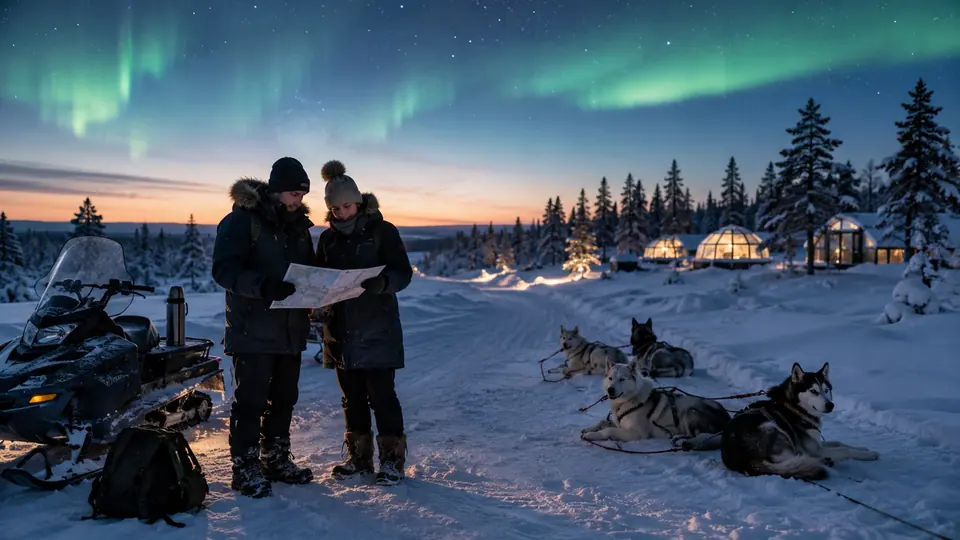
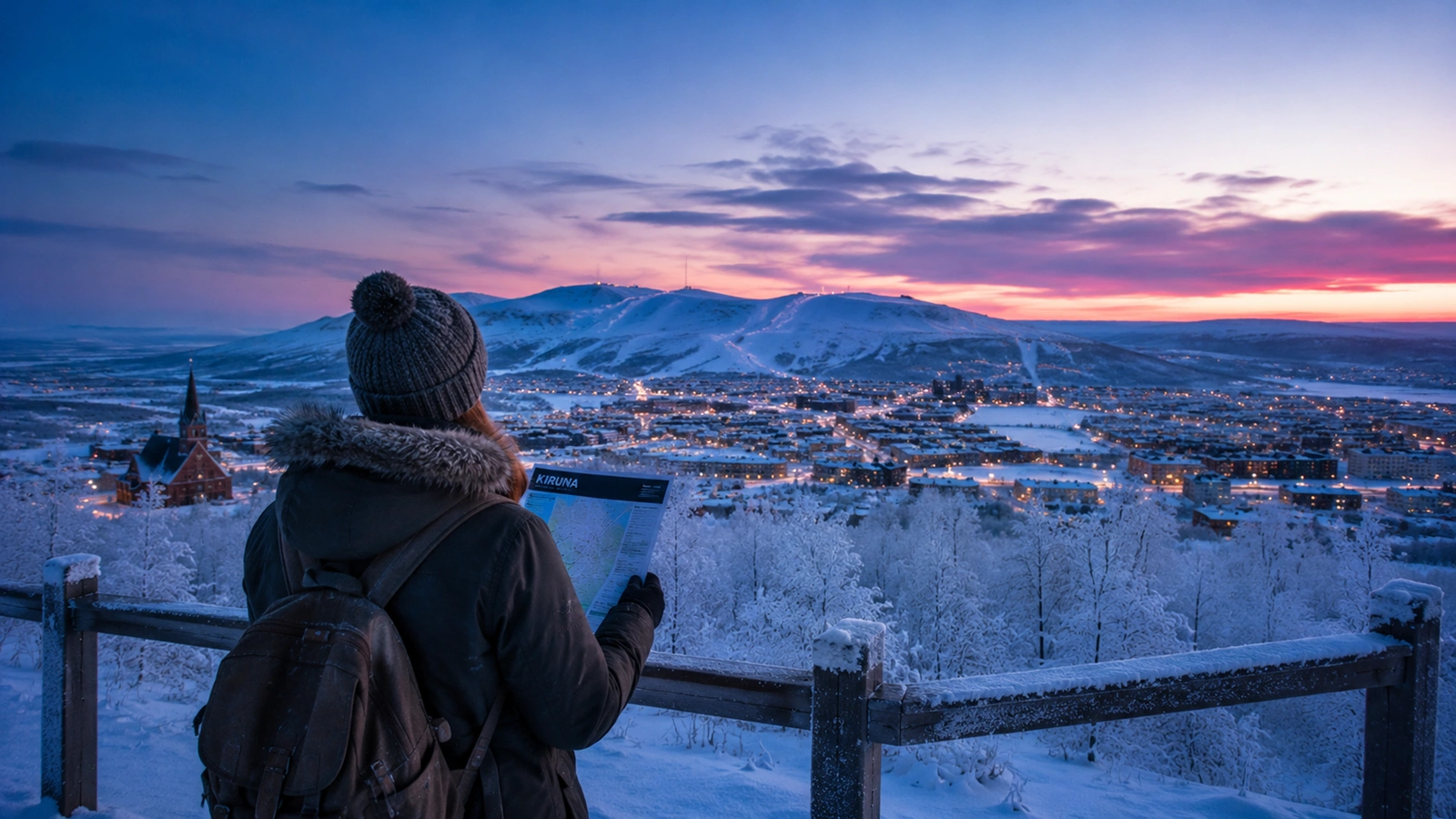
This guide explains how to plan 3, 4, 5 or 7 days in Kiruna during winter, including realistic pacing for Northern Lights, Icehotel, dog sledding, snowmobile tours, Abisko day trips, family travel, photography and Arctic winter logistics.
Many visitors focus too heavily on individual activities and underestimate weather, transport times and recovery needs. The strongest itineraries combine flexibility with a small number of carefully chosen experiences rather than trying to fill every hour of the trip.
How Many Days Do You Need in Kiruna in Winter?
For most travelers, four days is the ideal length of a Kiruna winter trip. It provides enough time for multiple Northern Lights opportunities, a visit to Icehotel, one or two major Arctic activities and realistic recovery time between late evenings and cold outdoor experiences.
Three days can work for visitors with limited time, but it leaves little flexibility if weather conditions are poor or flights are delayed. Five days is often the best option for photographers because it allows additional aurora attempts, blue-hour photography and the possibility of including Abisko. Seven days is ideal for travelers wanting a deeper Swedish Lapland experience with time for Kiruna, Jukkasjärvi, Abisko and optional Narvik excursions.
Northern Lights can never be guaranteed. Because cloud cover can affect visibility, travelers who consider aurora viewing a major goal should plan at least three nights in the region.
Why Recovery Time Matters in Arctic Winter Travel
One of the biggest mistakes first-time visitors make is underestimating Arctic fatigue. Heavy winter clothing, icy conditions, repeated late aurora evenings and long periods outdoors often make winter itineraries feel more demanding than expected.
A well-balanced Kiruna itinerary includes warm indoor breaks, slower mornings after aurora nights and enough flexibility to adjust plans around weather conditions.
Before traveling, read our Winter Clothing Guide for Swedish Lapland to better understand layering, winter boots and Arctic temperature management.
Local Insight: Arctic Days Often Feel Longer Than Expected
Many visitors arrive expecting to fit multiple activities into every day. In reality, winter travel is slower. Changing clothing, transfers between locations, darkness and cold weather all require more time than travelers often anticipate.
The most enjoyable itineraries usually include one major activity per day rather than trying to combine several long tours into the same schedule.
Best Kiruna Itinerary by Travel Style
- Best for first-time visitors: 4 days with two aurora evenings and one major activity per day.
- Best for photographers: 5 days with additional weather flexibility and an Abisko day trip.
- Best for families: 4 days with warm breaks and manageable activity lengths.
- Best for budget travelers: 4 days using public transport and self-guided sightseeing where possible.
- Best for deep Arctic travel: 7 days including Kiruna, Jukkasjärvi, Abisko and optional Narvik.
Best Itinerary by Budget Level
| Budget Level | Recommended Travel Style |
|---|---|
| Budget | 4 days using public transport, kitchen accommodation and one paid activity. |
| Mid-range | 4–5 days with guided aurora tours, hotel accommodation and one premium activity. |
| Premium | 5–7 days with glass igloo accommodation, private tours and flexible weather planning. |
Best Months for a Kiruna Winter Itinerary
Conditions in Kiruna vary significantly between December and March. Darkness, snow quality, daylight hours and temperatures all influence how an itinerary feels in practice.
| Month | Best For | Main Limitation |
|---|---|---|
| December | Polar night atmosphere and long aurora evenings | Very limited daylight |
| January | Deep winter scenery and reliable snow conditions | Coldest temperatures of the season |
| February | Best balance of darkness, snow and daylight | Higher accommodation demand |
| March | Photography, blue hour and easier outdoor conditions | Shorter dark hours for aurora viewing |
Travelers visiting in December should also read our Polar Night in Kiruna Guide to better understand seasonal daylight conditions.
Winter Weather Can Change Plans Quickly
Cloud cover, snowfall, wind and occasional transport disruptions can all affect winter travel in Swedish Lapland. Strong itineraries always include flexibility.
Rather than relying on a single aurora forecast, spread Northern Lights opportunities across multiple evenings. This significantly increases the likelihood of seeing the lights during your trip.
Before planning dedicated aurora nights, read our Northern Lights Forecast Guide to better understand weather conditions, KP values and realistic aurora expectations.
Kiruna Winter Itinerary Comparison Table
| Itinerary | Ideal Traveler | Minimum Nights | Main Advantage | Main Limitation |
|---|---|---|---|---|
| 3-Day Aurora Focus | Couples and short-stay visitors | 2 nights | Efficient and focused | Limited weather flexibility |
| 4-Day Family Trip | Families with children | 3 nights | Comfortable pacing | Less time for Abisko and Narvik |
| 5-Day Photography Trip | Photographers and content creators | 4 nights | More aurora opportunities | Requires additional planning |
| 7-Day Ultimate Arctic Trip | Travelers exploring the wider region | 6 nights | Includes Abisko and Narvik | Higher overall cost |
| 4-Day Budget Trip | Cost-conscious travelers | 3 nights | Lower overall spending | Less comfort and flexibility |
Best overall itinerary: 4 days
Best for photographers: 5 days
Best for families: 4 days
Best for deep exploration: 7 days
Minimum stay for Northern Lights: 3 nights
3-Day Aurora-Focused Itinerary
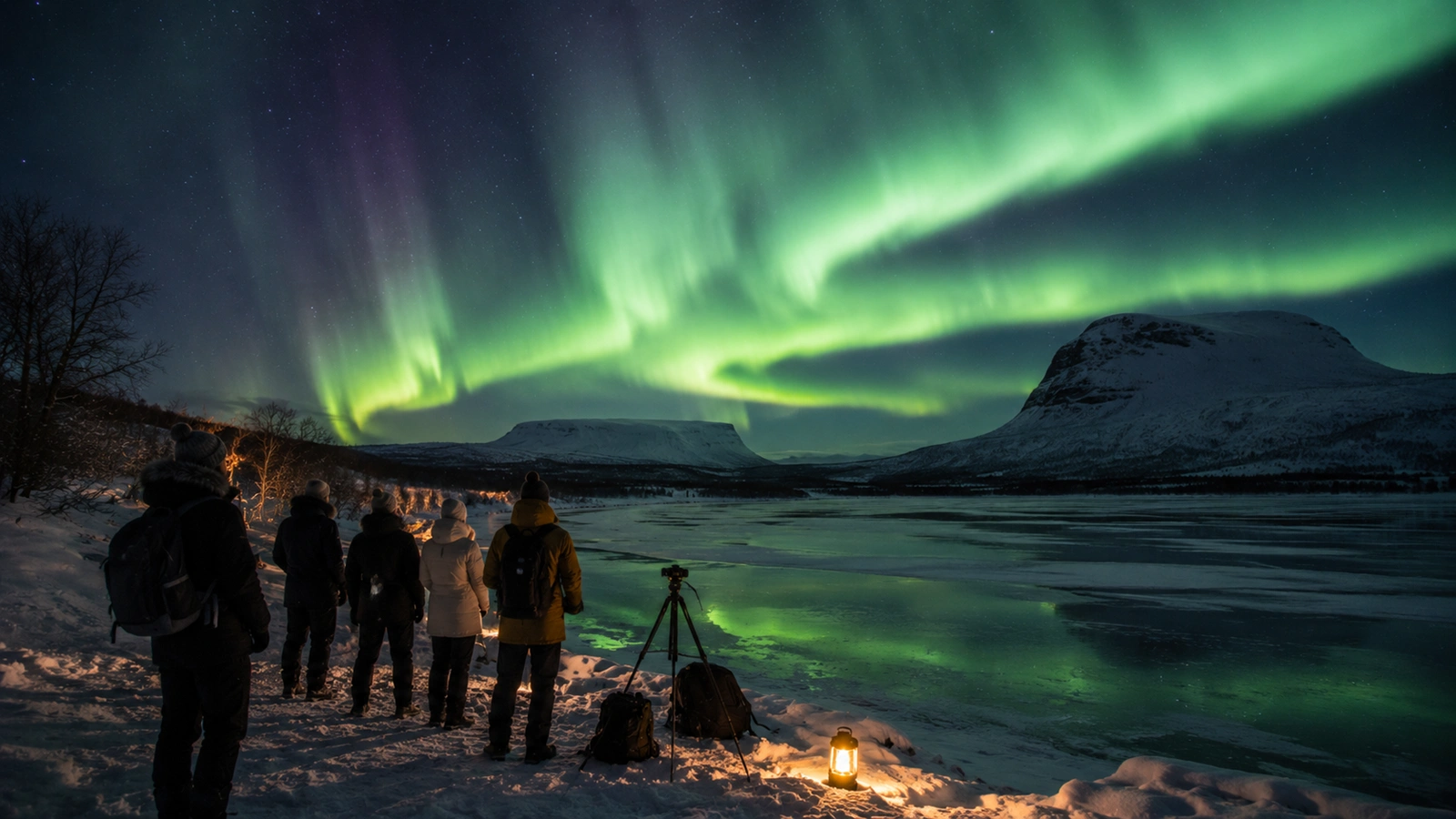
A three-day itinerary works best for travelers with limited vacation time who primarily want to experience the Northern Lights and one or two classic Arctic activities. The main advantage is efficiency. The disadvantage is reduced flexibility if weather conditions are poor.
Because cloud cover can affect aurora visibility, travelers following a three-day itinerary should prioritize multiple Northern Lights opportunities rather than relying on a single evening.
Day 1 – Arrival and First Aurora Opportunity
Arrive in Kiruna and transfer to your accommodation. Most visitors choose accommodation in Kiruna city, Jukkasjärvi or a nearby wilderness property. Spend the afternoon settling in and preparing winter clothing for the evening.
The first evening should be dedicated to a Northern Lights experience. Guided tours are often the easiest option for first-time visitors because local guides can adapt locations based on weather and cloud conditions.
Day 2 – Icehotel and Winter Activity
Spend the morning visiting Icehotel in Jukkasjärvi. The hotel can be visited as a day trip and offers a unique introduction to Arctic architecture, ice art and local tourism history.
In the afternoon, choose one major winter activity such as dog sledding, snowmobiling or a Sami culture experience. Avoid scheduling multiple long tours on the same day.
Keep the evening available for a second Northern Lights opportunity. Weather conditions often change significantly from one day to the next.
Day 3 – Final Activity and Departure
Use the final morning for a shorter activity, sightseeing in Kiruna or a visit to the church and city center. Allow enough time for airport or train transfers before departure.
Local Tip: A three-day itinerary is most successful when expectations remain realistic. Northern Lights are never guaranteed, so flexibility is more important than trying to schedule every hour.
4-Day Family Itinerary
For most families, four days provides the best balance between activities, recovery time and flexibility. Children often enjoy Arctic experiences more when itineraries include warm indoor breaks and shorter evening commitments.
Families should avoid treating every day as a full activity day. Winter clothing, darkness and transport times can make younger travelers tired much faster than expected.
Day 1 – Arrival and Easy Introduction
Arrive in Kiruna and settle into family-friendly accommodation. Spend the evening exploring the local area rather than booking a demanding activity immediately after arrival.
If conditions are favorable, consider a short aurora viewing session close to accommodation instead of a long late-night excursion.
Day 2 – Icehotel and Jukkasjärvi
Visit Icehotel and Jukkasjärvi during the day. Families often enjoy the ice art displays, sculptures and winter atmosphere. The indoor facilities and restaurant also provide comfortable opportunities to warm up.
The evening can be used for a family-friendly Northern Lights activity with heated transport and shorter outdoor periods.
Day 3 – Dog Sledding or Sami Experience
Choose one major family activity. Dog sledding is usually one of the most memorable experiences for children visiting Swedish Lapland. Families interested in local culture may prefer a Sami experience with reindeer feeding and storytelling.
Leave the evening flexible for either recovery time or another aurora attempt depending on weather conditions.
Day 4 – Relaxed Morning and Departure
Use the final morning for a relaxed breakfast, local sightseeing or souvenir shopping before transferring to the airport or train station.
Family Planning Note: Children often enjoy Arctic travel most when there is one major activity per day. Overloading the itinerary usually reduces enjoyment rather than increasing it.
5-Day Photography Itinerary
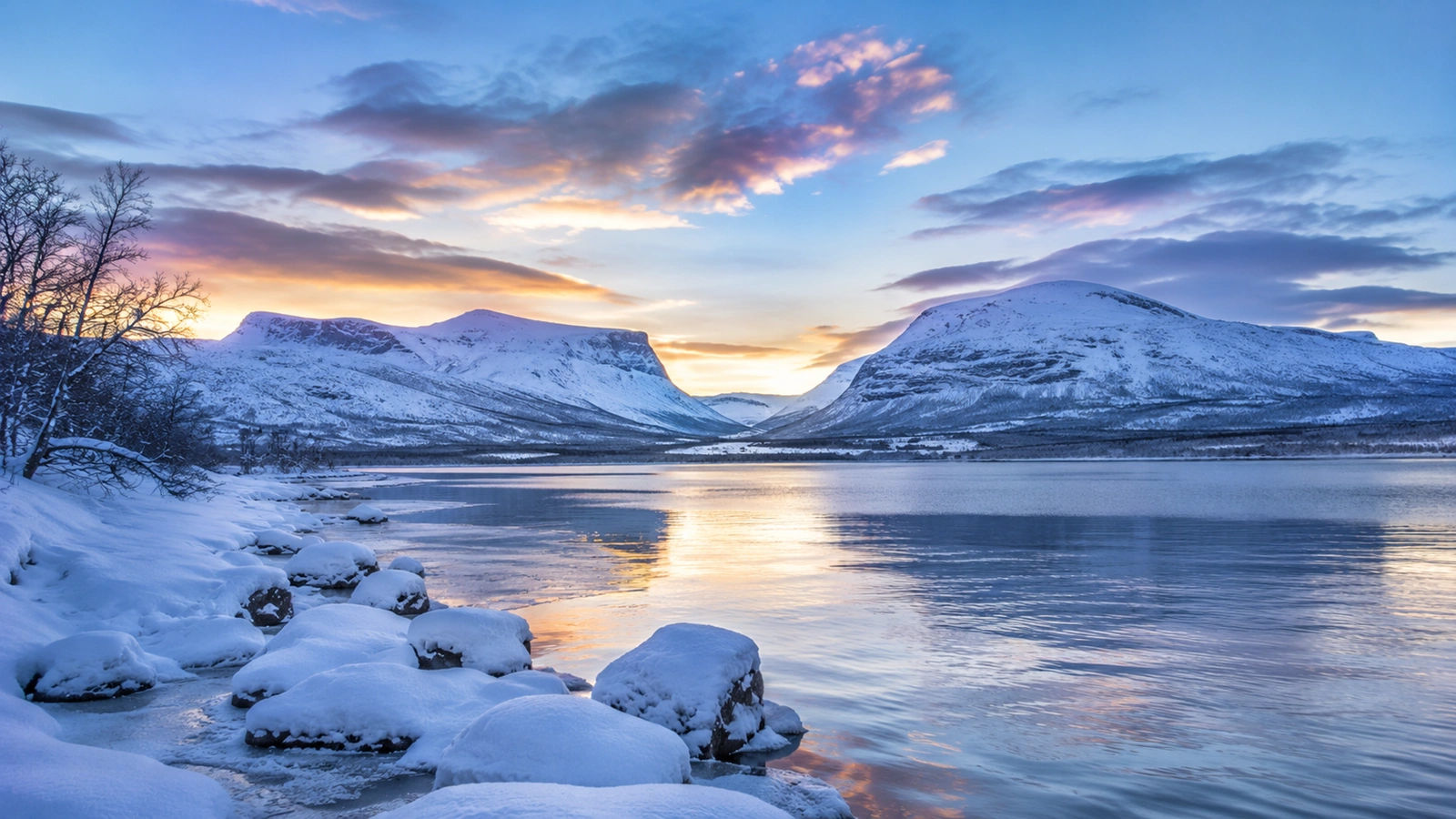
A five-day itinerary is often the best option for photographers and content creators. Unlike shorter trips, it provides enough flexibility to adapt to changing weather, multiple aurora opportunities and additional locations such as Abisko and Lake Torneträsk.
Photography-focused travelers benefit from having spare evenings available. The strongest aurora displays do not always occur on the first clear night, and weather conditions can change rapidly across Swedish Lapland.
Day 1 – Arrival and Location Scouting
Arrive in Kiruna and spend the remaining daylight hours scouting photography locations. Identify foregrounds, road access points and potential aurora compositions before darkness arrives.
Use the evening for a first aurora attempt. The goal is not necessarily to capture perfect images but to familiarize yourself with camera settings and local conditions.
Day 2 – Blue Hour and Aurora Photography
Dedicate the daytime to blue-hour landscapes, winter scenery and environmental photography. Depending on the month, useful daylight may be limited, making planning especially important.
Use the evening for a second aurora session at a different location. Diversifying locations increases the variety of final images.
Day 3 – Abisko Day Trip
Take the train to Abisko and spend the day photographing the national park area, Lake Torneträsk and surrounding mountain scenery.
Abisko is internationally known for relatively stable weather patterns and often attracts photographers seeking clearer skies. While conditions vary, it can be a valuable addition to a photography-focused itinerary.
Stay for an evening aurora session if conditions are promising before returning to Kiruna.
Day 4 – Icehotel and Creative Subjects
Visit Icehotel and focus on architectural, documentary and detail photography. The combination of ice art, lighting and Arctic design creates photographic opportunities that differ significantly from landscape work.
Reserve the evening for another aurora session, ideally using lessons learned from previous nights.
Day 5 – Flexible Weather Day and Departure
The final day acts as a valuable weather buffer. If previous days delivered poor conditions, use the remaining time for additional photography before departure.
Photography Tip: Carry multiple batteries and keep spare batteries inside inner clothing layers. Arctic temperatures can reduce battery performance much faster than most visitors expect.
7-Day Ultimate Arctic Itinerary
Seven days allows travelers to experience Kiruna and the wider region at a much slower pace. This itinerary is ideal for visitors who want more than a checklist of activities and prefer a broader Arctic travel experience.
The additional time makes it possible to include Abisko, Jukkasjärvi and potentially Narvik without turning the trip into a rushed series of transfers.
Day 1 – Arrival and Orientation
Arrive in Kiruna, settle into accommodation and spend the evening exploring the local area. If conditions allow, enjoy a relaxed first aurora session without strict expectations.
Day 2 – Icehotel and Jukkasjärvi
Spend a full day in Jukkasjärvi. Visit Icehotel, explore the surrounding area and take time to experience the destination rather than treating it as a short stop.
Keep the evening available for Northern Lights viewing.
Day 3 – Kiruna City and Local History
Use the day to learn more about Kiruna itself. Visit the church, explore the new city center and learn about the ongoing city transformation connected to the mining industry.
Many visitors skip this part of the region, but understanding Kiruna's history often adds context to the rest of the trip.
Day 4 – Abisko
Travel to Abisko and spend the day exploring the national park area. Depending on interests, activities may include photography, snowshoeing, winter hiking or simply enjoying the mountain environment.
Abisko is also one of the strongest locations in the region for additional aurora opportunities.
Day 5 – Flexible Exploration Day
Use this day according to weather conditions. Some travelers return to Abisko, while others choose additional winter activities such as dog sledding or snowmobiling.
The key advantage of a seven-day itinerary is flexibility rather than trying to maximize the number of booked tours.
Day 6 – Optional Narvik Extension
If rail schedules and weather conditions are favorable, this can be the ideal day for a Narvik excursion. The journey offers mountain scenery, changing landscapes and access to the Norwegian coast.
Travelers not interested in Narvik can instead use the day as an additional weather buffer.
Day 7 – Final Experience and Departure
Use the final morning for a relaxed activity, additional sightseeing or last-minute photography before departure.
Planning Note: The strength of a seven-day itinerary is flexibility. Avoid filling every day with fixed bookings. The ability to adapt to weather often creates a better overall experience than a rigid schedule.
4-Day Budget Itinerary
A Kiruna winter trip does not need to be expensive. While premium experiences such as glass igloos and private tours can significantly increase costs, it is possible to enjoy Swedish Lapland on a more modest budget by prioritising public transport, self-guided sightseeing and carefully selected activities.
Budget travelers should focus spending on one or two memorable experiences rather than attempting to book every available activity.
Day 1 – Arrival and Self-Guided Aurora Evening
Arrive in Kiruna and stay in accommodation with kitchen facilities. Purchasing food from local supermarkets and preparing simple meals can significantly reduce costs compared to eating every meal in restaurants.
If conditions are favourable, spend the evening at a local aurora viewing location near your accommodation.
Day 2 – Icehotel and Kiruna
Use public transport to visit Icehotel in Jukkasjärvi. A self-guided visit is often sufficient for first-time visitors and costs considerably less than combining admission with multiple add-ons.
Return to Kiruna and explore the city independently before another aurora opportunity in the evening.
Day 3 – Winter Nature and Free Attractions
Spend the day exploring local winter landscapes, viewpoints and walking areas. Many visitors underestimate how enjoyable simple winter scenery can be when combined with proper clothing and realistic expectations.
Keep the evening available for a final Northern Lights attempt.
Day 4 – Departure
Use the final morning for local sightseeing before transferring to the airport or train station.
| Expense | Budget Trip | Typical Mid-Range Trip |
|---|---|---|
| Accommodation | Hostel or kitchen accommodation | Hotel or lodge |
| Meals | Supermarket and self-catering | Restaurants and guided dinners |
| Activities | 1–2 paid experiences | 3–5 guided experiences |
| Transport | Public transport | Transfers, taxis and tours |
Transport Planning
Winter transport planning is one of the most overlooked parts of a Kiruna itinerary. Distances are larger than many visitors expect, and weather conditions can occasionally affect flights, trains and road travel.
Flying to Kiruna
Kiruna Airport is the main gateway for most international visitors. Daily flights connect Kiruna with Stockholm, making air travel the fastest option for reaching Swedish Lapland.
Travelers arriving by air should avoid booking major activities immediately after landing, especially during winter when delays occasionally occur.
Travelling by Train
The overnight train from Stockholm remains one of the most scenic ways to reach Kiruna. It is also the easiest option for travelers continuing toward Abisko or Narvik later in the trip.
Winter weather can occasionally affect rail services, so additional flexibility is always beneficial.
Getting Around the Region
- Public buses connect Kiruna, the airport and Jukkasjärvi.
- Taxis are available but should be booked in advance during peak season.
- Rental cars provide flexibility but require confidence in winter driving conditions.
- Trains connect Kiruna with Abisko and Narvik.
Important: Do not assume that taxis will always be available on demand late at night. If returning from aurora viewing or evening activities, arrange transportation in advance.
Kiruna, Jukkasjärvi or Abisko?
One of the most common itinerary questions is where to stay. The answer depends entirely on travel style, priorities and budget.
| Base | Best For | Main Advantage | Main Limitation |
|---|---|---|---|
| Kiruna | Most visitors | Best transport connections and widest activity selection | Less wilderness atmosphere |
| Jukkasjärvi | Icehotel visitors | Unique setting and quieter environment | Fewer services and restaurants |
| Abisko | Photographers and nature-focused travelers | Mountain scenery and excellent outdoor access | Smaller selection of accommodation and services |
For most first-time visitors, Kiruna is the strongest base because it provides easy access to the airport, Icehotel, winter activities and transport links toward Abisko.
Travelers focused primarily on photography or outdoor experiences may prefer spending part of their trip in Abisko, while Icehotel visitors often enjoy one or two nights in Jukkasjärvi before continuing elsewhere.
Should You Add Narvik to Your Itinerary?
Many visitors consider adding Narvik to their Kiruna winter itinerary. The journey itself is one of the highlights of northern Scandinavia, passing through mountain landscapes before descending toward the Norwegian coast.
Narvik can work very well as a day trip, but it is not essential for every visitor. Travelers with only three or four days are usually better served by focusing on Kiruna, Jukkasjärvi and possibly Abisko instead of spending a full day on transport.
For visitors staying five days or longer, Narvik becomes a more realistic addition. The combination of Arctic mountains, fjord scenery and Norwegian coastal landscapes creates a strong contrast to Swedish Lapland.
The railway between Kiruna and Narvik is widely considered one of the most scenic train journeys in Scandinavia. During winter, travelers pass frozen lakes, mountain plateaus and dramatic Arctic landscapes before reaching the Norwegian coast.
| Trip Length | Narvik Recommendation |
|---|---|
| 3 Days | Not recommended |
| 4 Days | Usually skip Narvik |
| 5 Days | Possible if weather is stable |
| 7 Days | Strongly recommended |
Local Insight: Many travelers underestimate how enjoyable the train journey itself can be. Even if you spend only a few hours in Narvik, the scenery between Kiruna and the Norwegian coast is often one of the most memorable parts of the trip.
Typical Cost of a 4-Day Kiruna Winter Trip
Kiruna is not a low-cost destination. Accommodation, activities and transport costs are generally higher than in southern Sweden due to the Arctic location and seasonal demand.
However, costs vary dramatically depending on accommodation type and the number of guided activities included.
| Category | Budget Traveler | Mid-Range Traveler | Premium Traveler |
|---|---|---|---|
| Accommodation | 1,500–3,000 SEK | 4,000–8,000 SEK | 10,000+ SEK |
| Food | 1,000–1,500 SEK | 2,000–4,000 SEK | 5,000+ SEK |
| Activities | 500–2,000 SEK | 4,000–8,000 SEK | 10,000+ SEK |
| Local Transport | 300–800 SEK | 1,000–2,000 SEK | 3,000+ SEK |
| Total Estimate | 3,500–7,000 SEK | 11,000–22,000 SEK | 28,000+ SEK |
For most visitors, a realistic four-day Kiruna winter trip falls into the mid-range category. Travelers typically choose a hotel, one or two major winter activities and several restaurant meals.
Accommodation is usually the largest expense during a Kiruna winter trip, followed by guided activities such as dog sledding, snowmobile tours and Northern Lights excursions.
Travelers looking to reduce costs should prioritize longer stays over additional activities, as spreading fixed travel expenses across more days often improves overall value.
Travel Mistakes to Avoid
The biggest itinerary mistakes are usually not related to weather. Most problems come from unrealistic expectations, poor pacing or insufficient flexibility.
- Booking only one Northern Lights evening.
- Trying to schedule multiple major activities on the same day.
- Underestimating travel times between destinations.
- Bringing inadequate winter clothing.
- Ignoring recovery time after late aurora nights.
- Planning every day around fixed schedules.
- Expecting guaranteed Northern Lights.
- Choosing the shortest possible trip.
Visitors who enjoy Kiruna the most are usually those who leave room for flexibility and view Northern Lights as one part of a broader Arctic experience rather than the only purpose of the trip.
Important: A flexible four-day itinerary often delivers a better overall experience than a fully booked seven-day itinerary with no room for weather adjustments.
Final Verdict: Is a Kiruna Winter Trip Worth It?
For most travelers, absolutely. Kiruna offers one of the most complete Arctic winter destinations in Europe, combining Northern Lights opportunities, reliable snow conditions, unique winter activities, Sami culture, Icehotel and access to some of the most spectacular landscapes in Swedish Lapland.
The ideal itinerary depends on your interests, but four days remains the best overall balance for most visitors. It provides enough time for multiple aurora opportunities, a visit to Icehotel, one or two major winter activities and flexibility if weather conditions change.
Travelers with five to seven days gain additional freedom to include Abisko, photography-focused experiences and even a scenic railway journey to Narvik without feeling rushed.
Final Local Advice: The travelers who enjoy Kiruna the most are usually those who arrive with realistic expectations. Northern Lights are never guaranteed, but the landscapes, winter activities, Arctic atmosphere and unique experiences available throughout the region make the trip worthwhile regardless of aurora conditions.
Recommended Experiences in Kiruna
Most visitors combine Northern Lights viewing with one or two classic Arctic activities. Popular options include dog sledding, snowmobile tours, Icehotel visits, Sami-inspired experiences and day trips to Abisko or Narvik.
Browse All Tours | Abisko Travel Guide | Icehotel Guide
Need Help Planning Your Trip?
Not sure how many days to stay or which activities to choose? Contact our team or browse our complete selection of tours and travel guides.