Short Answer Summary
Kiruna is safe for prepared visitors, but Arctic winter becomes unforgiving when people underestimate cold, distance, darkness, weather or road conditions. Most emergencies become manageable if you carry proper winter clothing, keep your phone charged, avoid improvising during storms and respect how quickly Arctic conditions can change.
Most Important Arctic Safety Priorities
- Most important emergency number: 112 in Sweden.
- Most common tourist mistake: underestimating cold and winter roads.
- Best winter safety strategy: plan conservatively and avoid improvisation.
- Safest winter transport: guided tours or prepared winter vehicles.
- Biggest hidden danger: wind, darkness and exposure combined.
- Best prevention: warm clothing, charged phone and realistic pacing.
About This Arctic Safety Guide
This guide is written from a practical Arctic travel perspective and combines local winter experience around Kiruna, Abisko and Swedish Lapland with guidance from Swedish emergency, healthcare, weather and road authorities.
What Number Should You Call in an Emergency in Sweden?
Call 112 for urgent emergencies in Sweden involving ambulance, police, fire or immediate danger to life. This includes serious road accidents, frostbite emergencies, lost people in dangerous weather, fire, major injury or severe medical problems.
For non-urgent healthcare advice, Sweden uses 1177. This service can help when you are unsure if medical care is needed.
For emergencies in Kiruna and Swedish Lapland, call 112 immediately if there is danger to life, severe cold exposure, serious injury or a dangerous situation outdoors. In Arctic winter, calling early is often safer than waiting too long.
Arctic Winter Survival Priorities
- Stay warm and dry.
- Reduce wind exposure immediately.
- Protect phone battery and communication.
- Stay visible and avoid panic movement.
- Do not abandon shelter too early.
- Call 112 before the situation becomes critical.
| Need | Use | When | Important Note |
|---|---|---|---|
| Emergency services | 112 | Accident, fire, medical emergency or danger | Use for urgent situations only. |
| Medical advice | 1177 | Non-life-threatening health concerns | Useful before visiting emergency care. |
| Weather warnings | SMHI | Before driving or outdoor activities | Wind and visibility matter as much as temperature. |
| Road conditions | Trafikverket | Before long winter drives | Road closures can happen quickly in storms. |
Why Arctic Emergencies Escalate Quickly
Arctic winter combines cold, wind, darkness, long distances and limited margin for mistakes. A small problem like weak gloves or low phone battery can become serious if it happens during snowfall, isolation or transport delays.
Most emergencies happen because several small problems combine together: tiredness, poor weather, darkness, weak preparation and delayed decisions.
Why Visitors Underestimate Arctic Conditions
Many visitors compare Kiruna winter with ordinary city winter in Europe or North America. The difference is that Arctic conditions often include remote roads, long outdoor exposure, fast-changing visibility and fewer nearby services once you leave town.
What Should You Do Before Leaving Kiruna?
Good Arctic safety begins before the activity starts. Whether you are driving, snowmobiling, joining a Northern Lights tour or walking outdoors, preparation reduces the number of problems that can happen at the same time.
Arctic Winter Safety Checklist
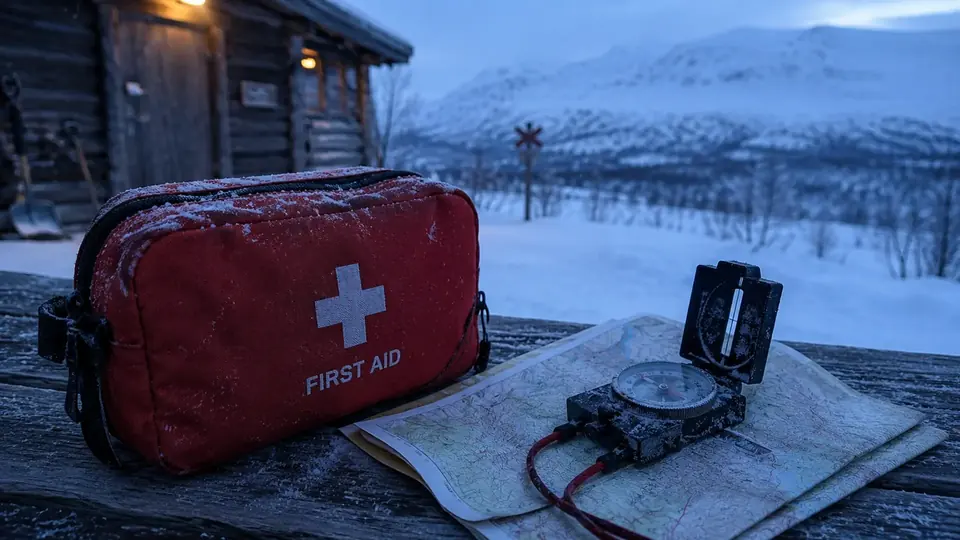
- Tell someone your route and expected return time.
- Check weather warnings before leaving.
- Check road conditions before longer drives.
- Carry warm gloves, hat and insulation layers.
- Charge your phone fully.
- Bring a power bank kept warm inside clothing.
- Download offline maps.
- Keep food and water available during drives.
- Carry reflective gear if driving outside town.
Local Insight: Problems Usually Start Earlier Than Visitors Think
Most winter emergencies begin long before the actual dangerous moment. A weak jacket, delayed start, ignored weather warning or low phone battery creates the conditions that later become serious.
How Do You Drive Safely in Arctic Winter?
Driving around Kiruna requires patience and conservative decisions. Roads may look dry while still being icy, and drifting snow can reduce visibility suddenly even during short drives.
Winter tyres are mandatory in Sweden during winter road conditions. Rental vehicles in Kiruna should normally be prepared for Arctic driving, but you should still confirm tyre type, roadside assistance and charging or fuel planning.
- Drive slower than you normally would.
- Increase distance to other vehicles.
- Avoid sudden braking or steering.
- Use low beams during snowfall.
- Never rush to “beat the weather.”
- Do not blindly follow GPS onto small winter roads.
- Respect snowploughs and poor visibility.
Winter Driving Warning
A road that looks manageable near Kiruna city can become much worse outside town. Darkness, drifting snow and wind exposure often increase quickly on open roads toward Abisko, Nikkaluokta and Jukkasjärvi.
What If Your Car Breaks Down in Winter?
Your vehicle is usually your safest shelter. Leaving the car too early is one of the most dangerous mistakes visitors make during Arctic winter.
Call roadside assistance or the rental company if the situation is stable. Call 112 if there is immediate danger, exposure risk, injury, collision or no safe way to remain sheltered.
Stranded Vehicle: First Actions
- Stay inside the vehicle unless it is unsafe.
- Turn on hazard lights.
- Use the warning triangle if conditions allow.
- Keep the exhaust clear from snow before running the engine.
- Use spare clothing and blankets to stay warm.
- Conserve phone battery after contacting help.
Local Insight: Walking for Help Is Often the Wrong Decision
Visitors often underestimate how quickly wind, darkness and cold affect orientation and judgment. Unless a safe building is clearly visible nearby, remaining with the vehicle is usually safer than walking into unknown conditions.
What Should You Do During a Snowstorm or Whiteout?
Whiteouts remove depth perception and visual references. Roads, snowbanks and terrain become difficult to judge even for experienced drivers.
The safest decision is usually slowing down early or stopping safely before visibility becomes critical.
| Situation | Safer Response | Biggest Mistake |
|---|---|---|
| Driving in whiteout | Slow down and stop safely if necessary | Trying to “push through” quickly |
| Walking in poor visibility | Stay sheltered and visible | Random movement without direction |
| Outdoor activity in storm | Turn back early | Continuing because you are “almost there” |
What If You Get Lost Outdoors?
If you become lost outdoors in Arctic winter, stop before panic creates additional mistakes. Random movement increases cold exposure and often moves people farther away from the last known safe point.
Lost Outdoors: Safer Actions
- Stop moving unless you know the safe route.
- Protect yourself from wind immediately.
- Use GPS carefully to avoid draining the battery.
- Stay visible using light or reflective gear.
- Call for help before the situation becomes severe.
- Do not cross unknown ice or rivers.
How Do You Recognize Frostbite and Hypothermia?
Frostbite damages skin and tissue, while hypothermia affects the entire body. Both become more dangerous when people are tired, wet, hungry or underdressed.
| Condition | Early Signs | What to Do | What Not to Do |
|---|---|---|---|
| Early frostbite | Numbness and pale skin | Warm gently indoors | Do not rub aggressively |
| Serious frostbite | Hard skin and blistering | Seek urgent medical care | Do not expose to strong direct heat |
| Early hypothermia | Shivering and confusion | Warm gradually and seek help | Do not give alcohol |
| Severe hypothermia | Drowsiness and weak movement | Call 112 immediately | Do not delay emergency care |
Medical Warning
This guide is practical travel safety information, not medical diagnosis. Severe numbness, confusion, chest pain, breathing difficulty, collapse or suspected hypothermia should always be treated as emergencies.
How Safe Is Ice in Swedish Lapland?
Frozen lakes and rivers should never be treated casually by visitors. Ice thickness varies because of currents, snow cover, temperature changes and local geography.
If you are inexperienced, avoid going onto unfamiliar ice without a qualified guide or local knowledge.
- Never assume frozen means safe.
- Avoid crossing unknown ice alone.
- Carry proper ice safety equipment if relevant.
- Do not copy locals without understanding conditions.
- Stay away from moving water areas.
Local Insight: Visitors Often Misread Frozen Lakes
A local person may know where currents, weak areas and safe winter routes exist. A visitor usually does not. Ice safety depends on local conditions, not appearance alone.
How Do You Avoid Moose and Reindeer Accidents?
Wildlife collisions are a real road risk in northern Sweden. Moose are extremely large animals and can cause severe vehicle damage and injury.
Reindeer are common near roads around Kiruna, Jukkasjärvi and forest areas and often move in groups.
- Slow down near wildlife warning signs.
- Expect more animals after seeing one.
- Stay alert during darkness and snowfall.
- Do not panic or steer violently.
- Report collisions according to Swedish law.
Are Northern Lights Tours Safe?
Guided Northern Lights tours are usually the safest option for visitors without Arctic experience because guides monitor weather, road conditions, visibility and safe viewing locations.
The main risk comes when travelers leave roads or parking areas without proper footwear, lighting or awareness of cold exposure.
What Are the Biggest Snowmobile Risks?
Snowmobile accidents often happen because visitors underestimate speed, visibility or stopping distance on snow and ice.
- Follow guide instructions carefully.
- Never drive faster than visibility allows.
- Keep distance between snowmobiles.
- Avoid aggressive steering.
- Dress for wind exposure, not only temperature.
How Safe Is Dog Sledding?
Dog sledding is generally safe with professional operators, but it still involves moving sleds, winter surfaces and strong dogs.
Wear proper winter boots and avoid standing directly in front of excited sled teams unless instructed by guides.
Why Do Phones Die So Quickly in Arctic Winter?
Cold temperatures reduce battery efficiency dramatically, especially when phones are exposed to wind or stored in outer pockets.
Keep phones and power banks inside inner clothing layers whenever possible.
Emergency Comparison Tables
| Situation | First Priority | Best Action | Worst Mistake |
|---|---|---|---|
| Stranded car | Shelter and warmth | Stay with the vehicle | Walking away too early |
| Whiteout driving | Avoid collision | Stop safely if needed | Driving faster to escape weather |
| Lost outdoors | Reduce exposure | Stop and shelter | Random movement |
| Weak ice | Avoid immersion | Stay off unknown ice | Assuming frozen means safe |
| Hypothermia signs | Emergency warming | Call 112 if severe | Ignoring confusion symptoms |
Problem: Visitors Treat Kiruna Like a Normal Winter Destination
The biggest safety issue is often not extreme danger itself, but unrealistic assumptions. Arctic winter requires larger safety margins, slower pacing and better preparation than many travelers initially expect.
Solution: Build Safety Margins Into Every Plan
Dress for delays, not ideal conditions. Use guided tours when unsure. Avoid unnecessary risks during storms, darkness or poor visibility. Arctic travel becomes much safer when travelers remove pressure and unrealistic schedules.
Common Mistakes Tourists Make
- Driving with weak winter clothing.
- Ignoring weather warnings.
- Letting phone batteries freeze.
- Walking away from stranded vehicles.
- Trusting GPS blindly in storms.
- Standing too long outside without movement.
- Assuming all frozen lakes are safe.
- Underestimating wind and exposure.
Realistic Expectations for Arctic Safety
Most visitors never experience a major emergency in Kiruna. Guided tours, hotels, roads and infrastructure operate safely through Arctic winter conditions.
The goal is not fear. The goal is respecting an environment where cold, darkness and weather reduce the margin for mistakes much faster than in ordinary winter destinations.
Final Verdict: Is Kiruna Safe in Winter?
Yes, Kiruna is safe for prepared travelers. The infrastructure, guides and emergency services are experienced with Arctic conditions, but safe travel still depends heavily on realistic planning and personal preparation.
The best Arctic safety rule is simple: avoid turning small problems into larger ones. Dress properly, monitor weather, respect distances and make conservative decisions when conditions worsen.
Choose Guided Winter Activities When Conditions Matter
Guided Arctic tours are usually safer for visitors without Arctic winter experience because weather decisions, routing, equipment and emergency planning are handled by people familiar with local conditions.