Short Answer for Travelers
Use a three-layer system: moisture-wicking base layer, insulating mid layer and windproof outer shell. Add insulated boots, wool socks, mittens, hat and face protection. Cotton must always be avoided in Arctic conditions because it traps moisture and increases cold risk.
The most important rule in Swedish Lapland winter is simple: use a 3-layer system, avoid cotton completely, and prioritize warm boots, mittens and face protection over heavy jackets.
The 3-Layer System Explained
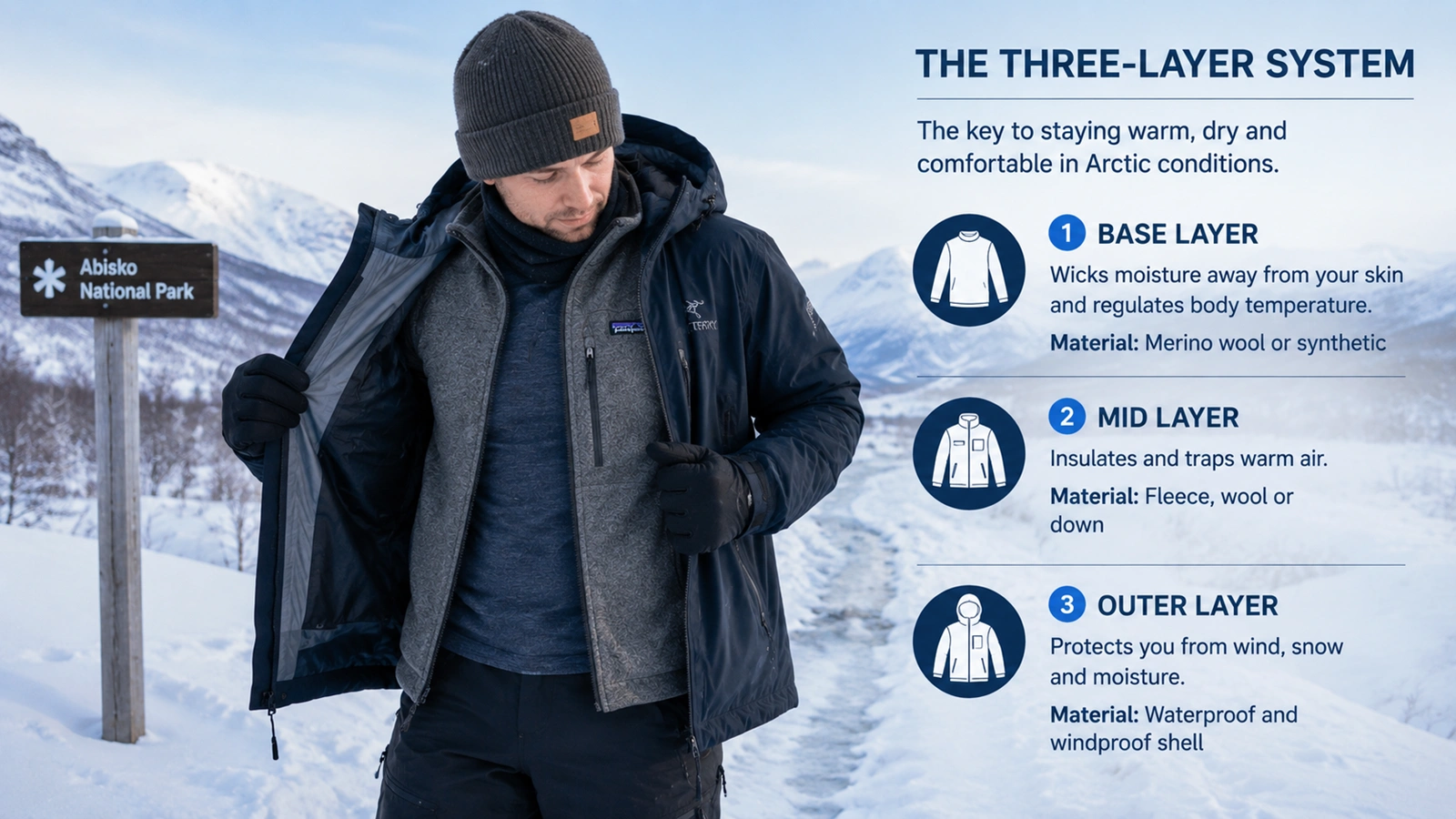
Dressing for Arctic conditions is based on three functional layers that manage moisture, insulation and wind protection. This system is more effective than wearing one thick winter jacket because it allows flexibility between activity, rest and weather changes.
Layer 1 removes moisture from the skin. Layer 2 traps body heat. Layer 3 blocks wind, snow and cold air.
Core Principle
In Kiruna winter conditions, staying dry is more important than staying “thickly dressed.” Moisture is the main cause of rapid heat loss.
Why Cotton Is Dangerous in Arctic Weather
Cotton absorbs moisture and dries slowly. When it gets wet from sweat or snow, it loses insulation and becomes cold against the skin. This is the most common mistake among visitors.
Base Layer
The base layer sits directly on the skin and must manage sweat and moisture. Merino wool is the best option because it stays warm even when damp. Synthetic thermal materials also work well.
Avoid cotton completely in this layer.
Mid Layer
The mid layer provides insulation by trapping warm air. Fleece, wool sweaters and down jackets are commonly used depending on temperature and activity level.
Outer Layer
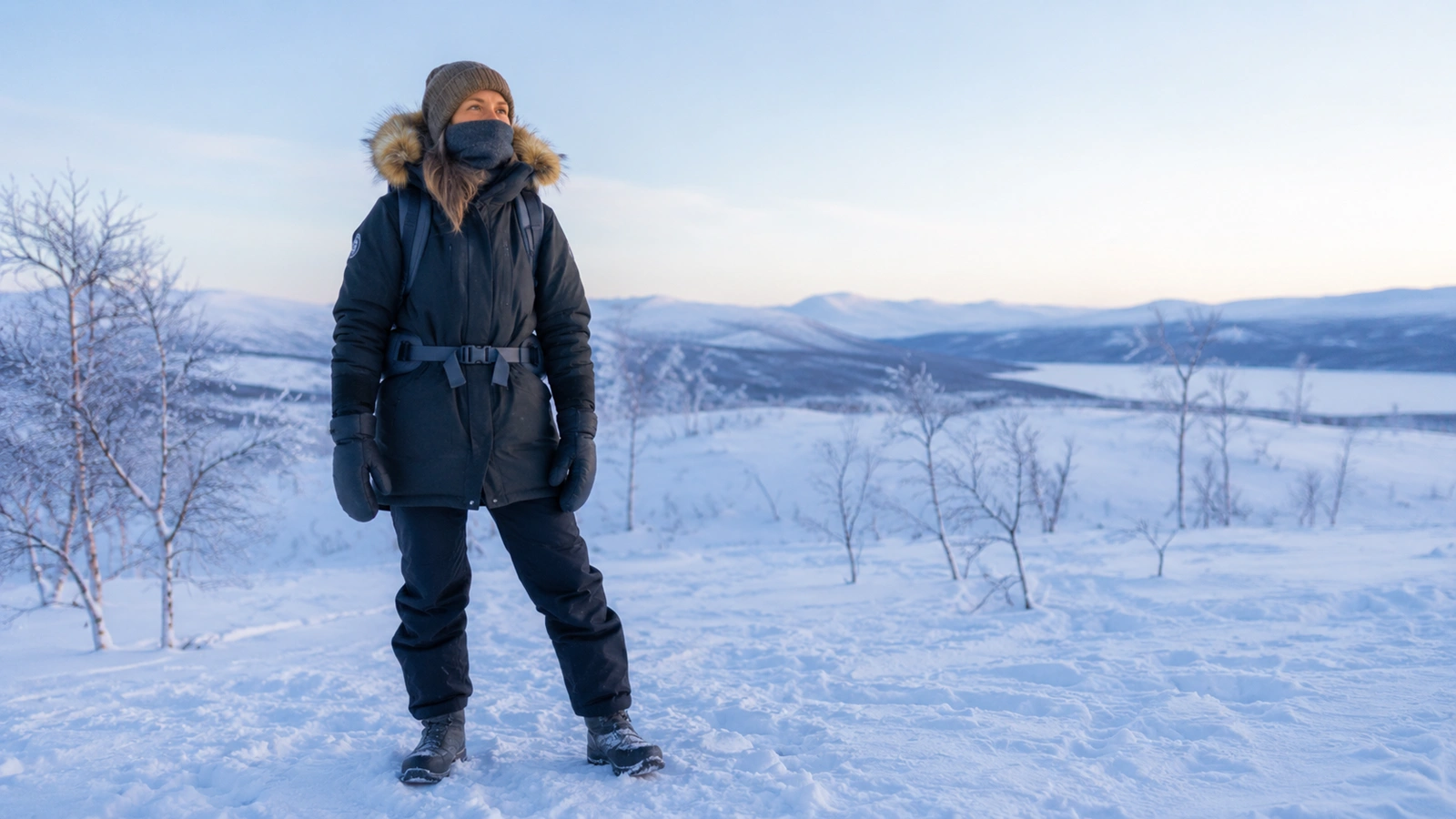
The outer layer protects against wind, snow and moisture. A windproof and waterproof jacket combined with insulated pants is recommended for most winter activities in Swedish Lapland.
Boots and Feet (Highest Priority)
Cold feet reduce comfort faster than any other factor. Insulated winter boots are essential for all outdoor activities.
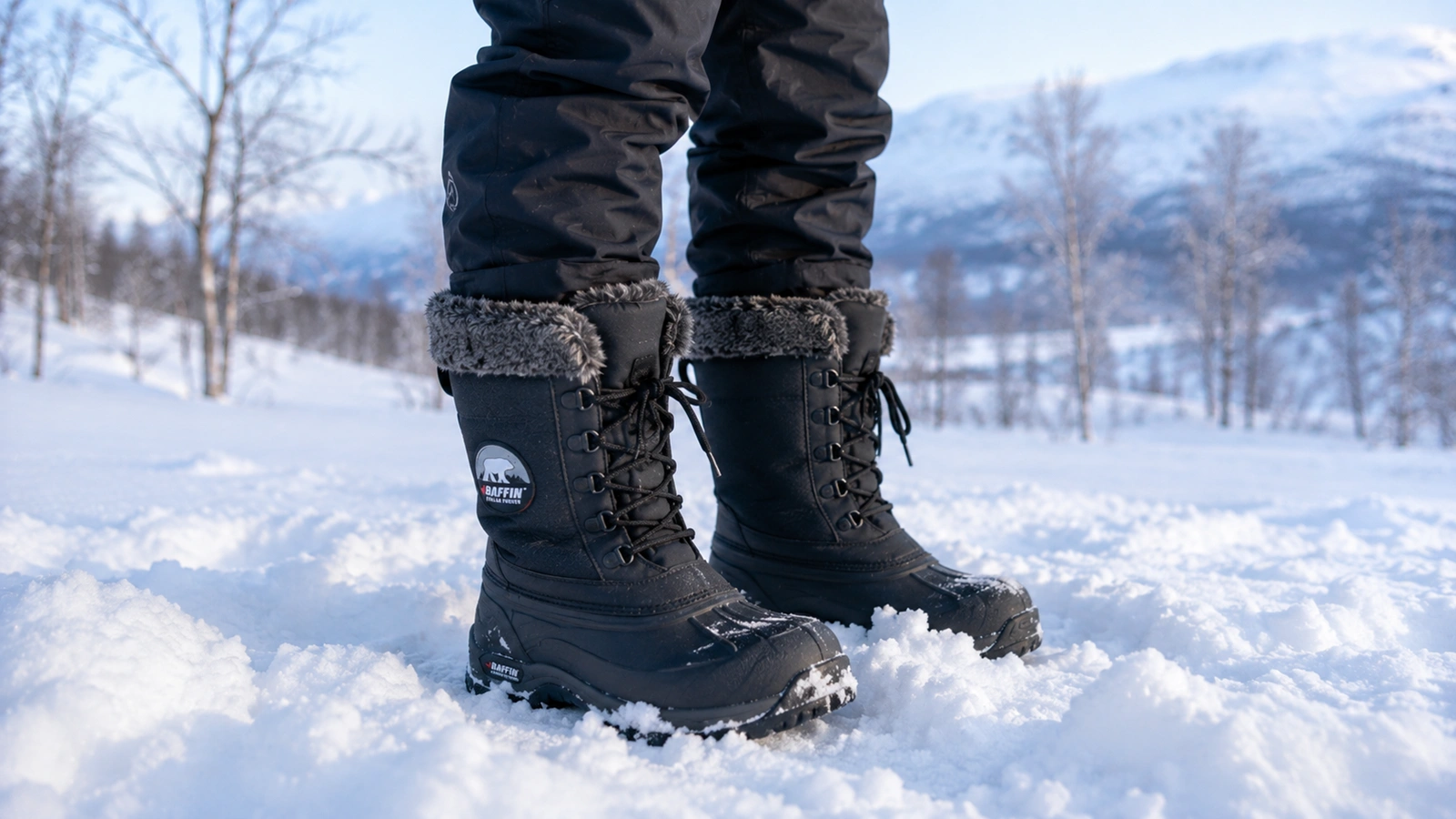
| Footwear | Status | Reason |
|---|---|---|
| Insulated winter boots | Recommended | Warm, stable, suitable for snow and ice |
| Hiking boots | Limited use | Only if insulated and roomy |
| Fashion boots | Not suitable | Insufficient insulation |
| Sneakers | Not suitable | Not designed for Arctic conditions |
Hands and Mittens
Mittens are warmer than gloves because fingers share heat. Gloves can be used for photography but are not sufficient alone in deep winter.
Best system: liner gloves + insulated mittens.
Head and Face Protection
A large amount of heat is lost through the head and face. A warm hat, neck warmer and balaclava are essential during wind exposure and Northern Lights tours.
What to Wear for Activities
Different activities require different clothing focus.
| Activity | Focus | Recommendation |
|---|---|---|
| Northern Lights | Static cold | Maximum insulation + face protection |
| Dog sledding | Wind + sitting | Layer system + operator overalls |
| Snowmobile | Wind chill | Balaclava + windproof shell |
| Snowshoe hiking | Heat + sweat | Breathable layers |
Northern Lights Clothing
Aurora viewing often involves long periods of standing still in cold conditions. Extra insulation is required compared to active daytime activities.
Packing List
- Merino wool base layers
- Fleece or wool mid layers
- Windproof outer jacket and pants
- Insulated winter boots
- Wool socks
- Mittens + liner gloves
- Hat and neck warmer
- Balaclava for extreme cold or snowmobile tours
Common Mistakes
- Wearing cotton base layers
- Choosing fashion boots instead of insulated boots
- Focusing only on jackets and ignoring extremities
- Using gloves instead of mittens in deep winter
- Not dressing for standing still during tours
Icehotel Clothing
Inside Icehotel, guests must wear thermal base layers, wool socks and hats when sleeping. The hotel provides a sleeping bag suitable for Arctic temperatures, but moisture control remains important.
Final Advice
The Arctic clothing system is not about heavy jackets. It is about moisture control, insulation and wind protection working together. If you follow the 3-layer system and protect your extremities, winter conditions in Swedish Lapland become manageable and enjoyable.