Is a Day Trip from Kiruna to Abisko Worth It?
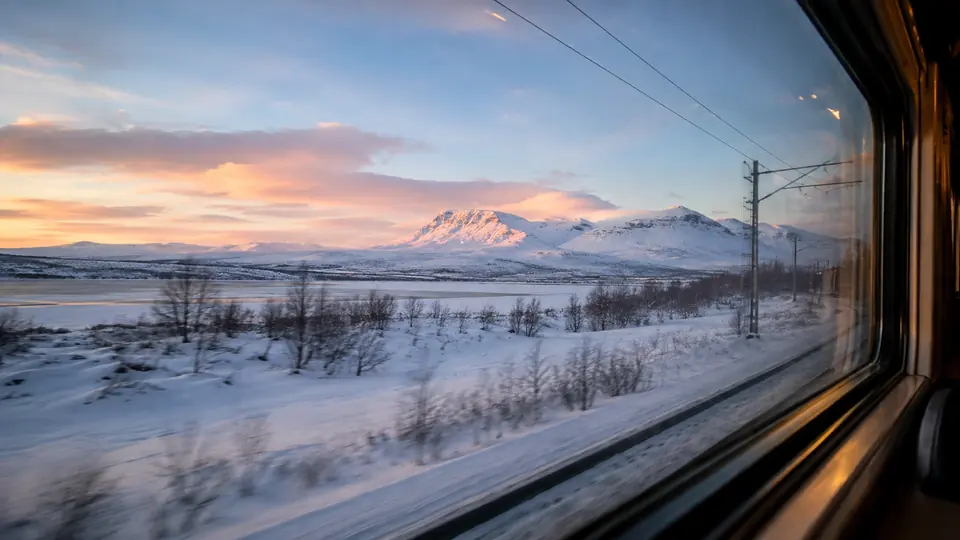
Yes, if your main goal is Abisko National Park, mountain scenery and a manageable outdoor day without changing hotels. Abisko lies roughly 95 km from Kiruna, and the railway follows the Iron Ore Line west toward Narvik. The landscape changes from Kiruna's inland setting to mountains around Lake Torneträsk.
The trade-off is time. A same-day return is well suited to a shorter walk, canyon and lake views, and photography; it is less suitable for a long mountain trek or a spontaneous Northern Lights evening. You must work backwards from the return departure, especially in winter when daylight is limited.
The most useful planning rule
Secure the return connection first, choose Abisko Turiststation for a national park-focused visit, and build the day around one main outdoor activity. Treat other stops as optional rather than essential.
If you want an overview of Abisko beyond a single day, see the Abisko travel guide. If you want a more detailed national park visit, use the Abisko National Park guide.
Kiruna to Abisko: Train, Car or Bus?
Train is usually the simplest choice for a day trip from Kiruna. The journey is commonly described as about 1 hour 15 minutes to 1 hour 30 minutes each way, depending on service and stops; that is a planning estimate, not a timetable. Trains can serve both Abisko Östra and Abisko Turiststation. Check the exact travel date and both directions before deciding how long you can stay.
| Option | Why choose it | Important limitation |
|---|---|---|
| Train | Scenic route, avoids driving and serves the village and national park areas | Your visit depends on actual departures, stops and return connections |
| Rental car | Flexibility to stop and choose a return time | Winter road conditions, darkness and wildlife require suitable driving experience |
| Bus | Possible alternative if a suitable service runs | Routes and departures may not fit a convenient same-day outing |
| Organized excursion | May simplify the day's logistics when its itinerary matches your interests | Confirm the actual pickup point, duration, included transport and return location |
When considering a car, account for the entire road journey rather than assuming summer and winter driving feel alike. Snow, darkness and animals such as reindeer and moose can complicate the drive. If you prefer to avoid that responsibility, a suitable train connection or arranged outing is a more straightforward starting point.
Do not rely on a timetable copied into an article: verify services with SJ or Vy, and consult Trafikverket's traffic information for disruptions. Our Kiruna–Abisko–Narvik train guide covers rail-specific planning in greater depth.
Abisko Östra or Abisko Turiststation?
Choose the stop according to where you actually want to spend your day. The two Abisko stations serve different areas, and choosing the wrong one may take valuable time away from a short visit.
| Station | Best for | Check before traveling |
|---|---|---|
| Abisko Turiststation | Abisko National Park, the Kungsleden trail starting area and STF Abisko Turiststation | Whether your train stops there and which walks are suitable that day |
| Abisko Östra | Abisko village, Abisko Guesthouse, village accommodation and the supermarket area | The distance to your intended activity and any onward transfer |
For a day trip mainly devoted to the national park, Abisko Turiststation is normally the better stop. Abisko Östra makes sense if your main errand or activity is in the village. Do not assume you can effortlessly walk between the station areas, especially with bags, snow, ice or short daylight.
One common mistake is searching simply for “Abisko” and booking the first station shown. Check the full station name on the outward and return tickets, and confirm that the train you choose stops at both locations you need.
What Can You Do in Abisko in One Day?
Plan one substantial experience and at most one or two smaller stops. The appeal of a Kiruna–Abisko day trip is the national park and mountain landscape, not the number of attractions you can fit into it.
- Abisko National Park: choose a short walk appropriate for the season and trail conditions, rather than committing automatically to a longer hike.
- Abisko canyon: consider a canyon-area walk when the route is accessible and conditions permit.
- Lake Torneträsk views: allow time for the lake and mountain scenery, even if you are not planning an ambitious trek.
- Photography: make space for landscape stops instead of scheduling every minute.
- Paddus viewpoint: an optional longer walking objective only when you have sufficient time, current route information, suitable ground conditions and an appropriate experience level.
Some visitors will enjoy a short park walk and a slow lunch more than trying to combine the canyon, Paddus, a distant viewpoint and an inflexible return train. For route-specific decisions, see the Abisko hiking guide, and check the national park's visitor guidance.
Summer Day-Trip Itinerary
Summer and early autumn offer long daylight and generally better conditions for many walks, but rainfall, wind or snow at higher elevation can still alter your plan. The sequence below is intentionally flexible: it does not assume a specific train or attraction opening time.
| Stage | Suggested plan | Decision point |
|---|---|---|
| Before leaving Kiruna | Check the return train, weather and walk you intend to do | If the connection leaves little time, shorten the plan before departure |
| Arrive in Abisko | Use Abisko Turiststation for the national park area and orient yourself | Confirm the return stop and route back to the platform |
| Main activity | Choose a suitable national park or canyon-area walk | Turn back in time rather than pressing on to an optional viewpoint |
| Meal and scenery | Take a break and enjoy Lake Torneträsk or mountain views | Verify where food is actually available |
| Return to Kiruna | Allow a margin to reach the correct platform | Use the departure on your ticket, not a remembered timetable |
If you are especially interested in Kungsleden or a longer hike, prioritize the route and plan the full outing separately. Do not squeeze a demanding trek into the leftover time between two trains.
Winter Day-Trip Itinerary
A winter day trip can be rewarding for snow scenery and photography, but limited daylight, cold and trail conditions change the priorities. A summer walking plan should not be copied directly into winter.
| Stage | Suggested plan | Decision point |
|---|---|---|
| Before departure | Check rail status, daylight, forecast and safe access around your chosen stop | Reduce or change the outing if conditions are poor |
| Arrival | Travel to the station suited to your activity and assess ground conditions | Avoid an improvised cross-area walk in deep snow or darkness |
| Outdoor time | Enjoy an accessible scenic area or a suitable guided winter activity | Do not assume a marked summer trail is safe to walk in winter |
| Food and warm-up | Plan a suitable indoor break if a service is available | Check seasonal opening hours rather than assuming meals are served |
| Return | Reach your departure point with sufficient time and suitable clothing | Prioritize the confirmed return over one last viewpoint |
Bring clothing suitable for standing outdoors in cold conditions, not only for walking between buildings. Check SMHI's forecast and the Swedish Lapland clothing guide. Winter access may require equipment or local guidance beyond what is needed in summer.
Northern Lights are not a normal daytime-day-trip activity. A viewing attempt requires suitable darkness, weather and aurora activity, plus a confirmed way back to Kiruna. A night excursion with arranged return transport or an overnight stay is more appropriate if aurora viewing is the main reason for traveling.
Where to Eat and Buy Food
Food options in Abisko are more limited than in Kiruna. Around STF Abisko Turiststation, restaurant or café service may be available during operating periods. The village around Abisko Östra has a small supermarket. Neither should be treated as a guaranteed meal stop without checking the relevant opening arrangements for your date.
If your return train leaves soon after your walk, buying something suitable before departure from Kiruna can remove the need to detour or wait for a meal service. Carry enough food and drink for your planned outdoor time, especially when visiting in winter or outside normal service hours.
Do not confuse the Turiststation area and the village: choosing accommodation, a restaurant or a shop by its name alone may put it some distance from the railway stop you actually use.
What Does a Kiruna–Abisko Day Trip Cost?
There is no reliable single price for this trip. The total depends on travel date, ticket availability, whether you go independently or book a tour, and how much you spend on food and activities. Compare the complete return journey, not just the outward fare.
| Budget component | What to check |
|---|---|
| Return train tickets | The actual fare, both departure times and station names |
| Car-based trip | Rental, fuel and any applicable extra travel costs |
| Food and refreshments | Whether a meal service is available or you should bring supplies |
| Activities and guiding | Any tour fee, included transfers and equipment requirements |
| Contingency | The consequences of a missed or cancelled return service |
Walking in Abisko National Park does not require a general entrance ticket, but guided activities and other services are separate. Check actual operator prices before booking; avoid relying on old quoted train fares or assuming a taxi will be an inexpensive fallback.
When Is Staying Overnight Better?
A day trip is efficient when you mainly want scenery and a relatively short walk. An overnight stay is the stronger option if you want to watch the Northern Lights, take a longer hike or avoid planning every activity around one return connection.
| Your goal | Day trip from Kiruna | Overnight in Abisko |
|---|---|---|
| See the national park and lake scenery | Often sufficient with a suitable daytime connection | More time and less travel pressure |
| Short scenic walk | Good fit when ground conditions allow | Optional rather than essential |
| Longer hiking day | Can become restricted by the return schedule | More flexibility, though route safety still matters |
| Northern Lights viewing | Requires a carefully confirmed late return or arranged excursion | Gives an evening without the same same-day train constraint |
Staying overnight does not guarantee an aurora sighting: cloud cover, darkness and aurora activity still determine the outcome. If you choose to stay, compare locations in the Abisko accommodation guide and consider the Abisko Northern Lights guide.
What If the Train Is Delayed or You Miss the Return?
On a remote-area day trip, missing the return connection can have larger consequences than missing a frequent city train. Depending on the available services and conditions, you may have to arrange alternative transport or an unplanned overnight stay. Do not assume that a taxi or another train will be immediately available.
Before you leave Kiruna
- Check the exact outward and return services on your chosen travel date, including the correct Abisko station.
- Allow time between the end of your planned walk or activity and the scheduled departure.
- Review weather and transport disruption information before committing to a route.
- Keep enough flexibility to shorten the day if trains are delayed or conditions change.
- Consider whether an overnight fallback would be feasible if your return were disrupted; do not treat it as guaranteed.
For train service information use SJ, Vy and Trafikverket as relevant. If a disruption affects you, follow your transport provider's current instructions rather than relying on a fixed plan from a travel guide.
Common Day-Trip Planning Mistakes
- Choosing the wrong stop: Abisko Östra is for the village area; Abisko Turiststation is the usual choice for a national park-focused day.
- Checking only the outward train: the last practical return defines how much time is really available.
- Overloading the itinerary: one good walk and some lake or canyon scenery are often better than several rushed objectives.
- Assuming all hiking routes are usable in winter: snow, ice, darkness and weather change access and difficulty.
- Relying on an unverified meal stop: Abisko offers fewer food choices than Kiruna and some services are seasonal.
- Planning spontaneous evening aurora viewing: darkness can outlast the available public return transport.
- Trusting an old schedule or fare: actual trains, prices and disruptions must be checked for the specific date.
The simplest way to avoid most of these mistakes is to make the return transport your fixed point, then fit the station, walk, food and weather buffer around it.
How Much Time Do You Need in Abisko?
About four to six hours in Abisko is a useful planning target for a short walk, meal and scenery stops, assuming appropriate conditions. Six to eight hours can make the day more relaxed. These are suggested time budgets on the ground, not guaranteed blocks provided by train services.
| Time on location | Best approach |
|---|---|
| Shorter visit | Choose one nearby scenic objective and protect your train connection |
| Roughly 4–6 hours | One suitable walk, a meal or break, and lake or mountain viewpoints |
| Roughly 6–8 hours | A slower pace with room for photography or a more substantial suitable walk |
| Long hiking objective | Plan the route separately; consider staying overnight if the train window is restrictive |
Calculate your usable time from the actual arrival and departure, then subtract walking between the station and your activity, meal breaks and a return margin. If the resulting window is too small, simplify the plan rather than rushing outdoors.
Final Planning Recommendation
For a first-time visitor based in Kiruna, a daytime train trip to Abisko Turiststation, a suitable national park walk and time for Lake Torneträsk scenery make a coherent outing. The train can be convenient and scenic, but the right choice depends on the day's service and weather.
Choose Abisko Östra only when the village is your actual destination. Keep longer hikes separate from a tightly timed itinerary, and choose an overnight stay or a genuinely arranged evening return when Northern Lights viewing is the priority.