Short Answer Summary
Accessible Arctic travel is realistic, but it should be planned differently from a standard winter adventure trip. Prioritize hotels with elevators or ground-floor access, door-to-door transfers, flexible tour timing, warm indoor breaks and activities that do not require long walking in snow.
Who Is This Type of Arctic Trip Best For?
- Best for: seniors who want Northern Lights, Arctic scenery and guided comfort without physically demanding winter activities.
- Best travel style: hotel-based travel with warm transport and one main activity per day.
- Best Northern Lights strategy: warm vehicle-based tours with short outdoor viewing periods.
- Most comfortable winter months: February and March.
- Most accessible Arctic base: Kiruna.
- Most common mistake: underestimating snow, ice and winter walking conditions.
Is Arctic Travel in Kiruna Accessible for Seniors?
Yes, but accessible does not mean effortless. Kiruna has modern hotels, airport access, taxis, restaurants and guided tour options. At the same time, Arctic winter adds snow, ice, darkness, cold wind and uneven ground.
The key is planning the trip around comfort and control. A senior-friendly Arctic itinerary should use private or door-to-door transport, avoid long outdoor waits and keep one main activity per day. That gives enough energy for the experience instead of spending it on logistics.
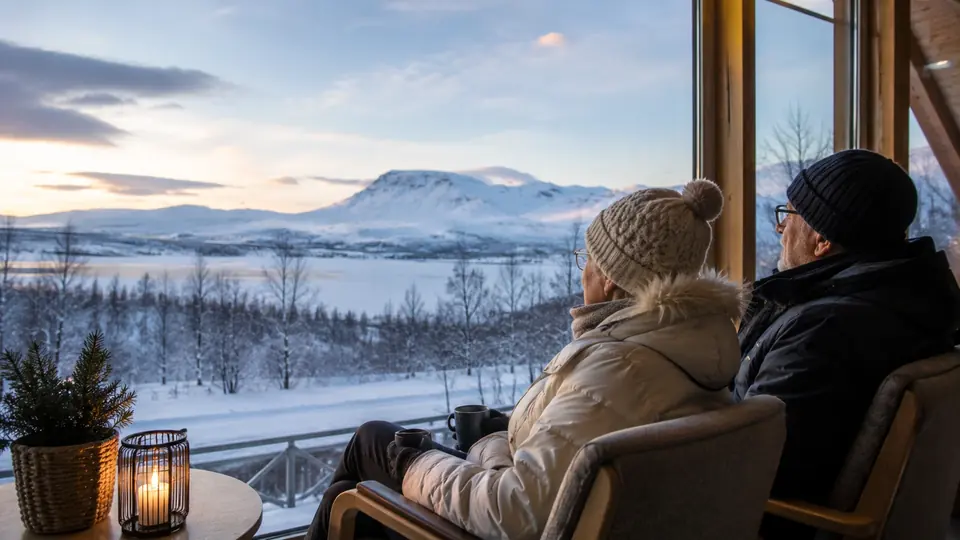
The Arctic is realistic for many senior travelers when the itinerary is built around warm transport, short walking distances and flexible pacing.
Should Seniors Stay in Kiruna or Abisko?
For most seniors, Kiruna is the better base. Kiruna has the airport, more hotels, more restaurants, pharmacies, medical services, taxis and a wider range of guided tours. Abisko is excellent for scenery and Northern Lights, but it is smaller and has fewer backup services.
Abisko works best as a planned day trip or a short overnight add-on if your accommodation and station transfer are confirmed in advance. It is not the easiest place to improvise if mobility, luggage or weather becomes difficult.
| Factor | Kiruna | Abisko | Best Choice for Seniors |
|---|---|---|---|
| Airport access | Direct via Kiruna Airport. | Requires train, bus, car or transfer. | Kiruna |
| Hotels and restaurants | More choice and more services. | Limited village options. | Kiruna |
| Northern Lights setting | Good outside town lights. | Excellent dark-sky reputation. | Depends on mobility and transport |
| Medical and pharmacy access | Better local access. | More limited. | Kiruna |
| Quiet nature | Available by tour or transfer. | Immediate mountain atmosphere. | Abisko |
Local Insight: Use Kiruna for Control, Abisko for a Highlight
A common senior-friendly plan is to sleep in Kiruna, visit Abisko in daylight, and use guided evening tours for Northern Lights. This keeps services close while still giving access to mountain scenery.
What Are the Best Months for Seniors to Visit Kiruna?
February and March are usually the best winter months for many older travelers. They still offer dark evenings for Northern Lights, but the daylight is longer than in December and January. The cold can still be serious, but the trip feels easier to manage.
September is also a strong option for seniors who prefer milder temperatures. It can offer autumn colors, early Northern Lights and less snow or ice underfoot. It does not give the classic deep-winter landscape, but it is often more physically comfortable.
| Month | Accessibility Comfort | Northern Lights | Best For |
|---|---|---|---|
| September | High; little snow risk. | Good late evenings if skies are dark and clear. | Seniors avoiding deep winter cold. |
| October | Moderate; early ice or snow possible. | Good. | Quiet travel with manageable cold. |
| December | Lower; dark, cold and icy. | Excellent darkness. | Travelers comfortable with limited daylight. |
| January | Lower to moderate; coldest period risk. | Excellent darkness. | Experienced winter travelers. |
| February | Good with proper clothing. | Excellent. | Balanced winter trip. |
| March | Very good by winter standards. | Excellent evenings. | Seniors, families and photographers. |
How Should Seniors Travel to Kiruna?
Flying to Kiruna is the simplest route for many senior travelers because it reduces travel time and luggage handling. Kiruna Airport is small, which usually makes arrivals easier than at large airports. Request assistance when booking flights if walking distances, boarding or luggage handling are concerns.
The train can be comfortable if you enjoy slow travel and book the right cabin, but accessible spaces and assistance should be arranged in advance. Do not assume that a standard sleeper booking will meet mobility needs.
| Route | Typical Duration | Accessibility Strength | Main Limitation |
|---|---|---|---|
| Flight Stockholm to Kiruna | About 1 hour 40 minutes | Fastest route, airport assistance possible. | Weather delays can happen in winter. |
| Night train Stockholm to Kiruna | Often 15–16 hours | Comfortable if the correct cabin and assistance are booked. | Limited accessible spaces; advance planning needed. |
| Kiruna to Abisko train | About 1 hour 15 minutes | Scenic, avoids winter driving. | Station choice and luggage handling matter. |
| Private transfer | Varies by route | Door-to-door and flexible. | Higher cost. |
Accessible Hotels and Accommodation in Kiruna and Abisko
Accessible accommodation should be confirmed directly with the property before booking. Ask about entrance steps, lift access, bathroom layout, shower thresholds, bed height, snow-cleared paths and distance from parking or taxi drop-off.
Kiruna is generally easier than Abisko for accessible hotel planning because there are more modern properties and more taxi options. Abisko can work well, but it requires more precise questions before arrival.
| Accommodation Type | Best For | Accessibility Questions to Ask |
|---|---|---|
| Modern hotel in Kiruna centre | Elevator access, restaurants nearby, taxis. | Is there an accessible room with step-free shower and elevator access? |
| Cabin-style accommodation | Privacy and quiet. | How far is the cabin from reception, restaurant and parking in winter? |
| Abisko guesthouse | Station proximity and village access. | Are rooms and bathrooms on the ground floor, and are thresholds manageable? |
| Glass igloo stay | Warm aurora viewing from bed. | How is the winter path managed, and can staff assist with transport? |
| Icehotel warm room | Jukkasjärvi experience with comfort. | Is an accessible warm room available for your exact date? |
Which Arctic Activities Are Most Senior-Friendly?
The most senior-friendly activities are those with warm indoor breaks, short walking distances and door-to-door pickup. Northern Lights vehicle tours, Icehotel day visits, scenic drives, local food experiences and short Abisko viewpoints are usually easier than snowmobile driving, long snowshoe hikes or physically demanding dog sledding.
| Activity | Accessibility Level | Best Format | Main Caution |
|---|---|---|---|
| Northern Lights viewing | High if vehicle-based. | Private warm car or minivan tour. | Cold when stepping outside. |
| Icehotel day visit | Moderate to high with planning. | Daytime visit with transfer. | Cold floors and slippery areas. |
| Abisko day trip | Moderate. | Train or private transfer plus short viewpoints. | Station surfaces and weather. |
| Dog sledding | Variable. | Passenger sled with guide driving. | Low seating, transfer into sled, cold exposure. |
| Snowmobile | Lower for many seniors. | Passenger sled or short route if suitable. | Vibration, cold, helmets, transfers. |
| Snowshoeing | Low to moderate. | Short guided route only. | Balance, stamina and uneven snow. |
Wheelchair Access and Reduced Mobility Reality
Travelers using wheelchairs or walking aids should confirm details directly with every hotel and activity provider before booking. Arctic winter conditions change quickly, and temporary snow buildup, icy ramps or uneven packed snow can affect accessibility from day to day.
Kiruna is generally more manageable than remote mountain areas because hotels, restaurants and transport infrastructure are more concentrated. Abisko can still work for reduced-mobility travelers, but careful planning matters more there because services are fewer and distances between facilities may be longer.
| Accessibility Area | Kiruna | Abisko |
|---|---|---|
| Modern hotels with elevators | More common. | More limited. |
| Taxi access | Better availability. | Limited local flexibility. |
| Winter pavement maintenance | Generally stronger. | More weather-dependent. |
| Independent mobility without car | Moderate. | Lower. |
| Access to pharmacies and services | Good. | Limited. |
How Can Seniors See Northern Lights Comfortably?
The most comfortable way is a warm vehicle-based Northern Lights tour. The guide drives to darker areas and reads cloud conditions, while guests can stay warm until the sky becomes promising. Short outdoor viewing periods are usually enough when conditions are active.
Glass igloo stays can also work well because they reduce cold exposure. The trade-off is that fixed accommodation cannot move away from cloud. A private vehicle tour gives more weather flexibility; an igloo gives more comfort.
For many seniors, the best Northern Lights experience is not the coldest or most remote location. It is a warm and flexible setup where you can step outside briefly when the sky becomes active and return indoors quickly afterward.
Local Insight: Avoid Long Static Waiting in Extreme Cold
Standing still outside is much colder than walking. For seniors, the best aurora plan is usually repeated short outdoor viewing from a warm vehicle, not a long fixed wait in one exposed place.
Is Icehotel Accessible for Seniors?
Icehotel in Jukkasjärvi can be a good senior-friendly day visit when transport is arranged and expectations are realistic. The cold rooms are cold by design, and the surfaces can be slippery or firm underfoot. Visitors with balance concerns should use ice grips and move slowly.
For many older travelers, a daytime Icehotel visit is better than an overnight ice-room stay. You can see the art, take photos and return to warm accommodation without committing to a cold sleeping experience.
For seniors, Icehotel is usually best as a day visit with private transfer, warm clothing and enough time to move slowly.
Can Seniors Visit Abisko from Kiruna?
Yes. Abisko is reachable from Kiruna by train, car or transfer, and it offers excellent scenery. The practical question is not whether Abisko is worth visiting; it is whether your exact plan handles winter surfaces, station access, toilets, meal timing and the return journey.
For many seniors, a daylight Abisko trip is easier than an evening aurora trip. You get mountain views, Lake Torneträsk and the national park atmosphere without the coldest night conditions.
| Abisko Plan | Comfort Level | Best For |
|---|---|---|
| Day trip by train | Moderate | Travelers comfortable with station timing and short walks. |
| Private transfer day trip | High | Travelers who want door-to-door control. |
| Overnight in Abisko | Moderate | Travelers who confirm room and bathroom access in advance. |
| Night aurora trip to Abisko | Variable | Guests with warm transport and flexible return planning. |
What Should Seniors Wear in Arctic Winter?
Good clothing matters more than age. The goal is to stay warm while standing still, sitting in vehicles and moving between indoor and outdoor areas. Avoid cotton base layers because they hold moisture.
- Merino or synthetic thermal base layer.
- Warm fleece or wool mid-layer.
- Insulated winter jacket with wind protection.
- Insulated snow pants or warm outer trousers.
- Winter boots with thick soles and room for wool socks.
- Mittens, not thin gloves, plus liner gloves if needed.
- Warm hat, neck warmer and face protection.
- Ice grips for shoes when walking on packed snow or ice.
Mobility, Health and Safety Planning
Snow and ice change normal walking. A short distance on a summer pavement can feel much longer in winter when the ground is slippery or uneven. Plan routes around the weakest walking day, not the best walking day.
Carry extra medication, keep prescriptions in hand luggage and allow buffer days for winter delays. Sweden has strong emergency services, but remote tours are still easier when guides know about mobility or health needs before departure.
Local Insight: Arctic Travel Is Often More About Energy Than Distance
Many senior travelers discover that winter energy management matters more than physical distance. A short icy walk in strong wind can feel more exhausting than a long indoor walk in normal conditions. This is why spacious pacing improves the overall Arctic experience dramatically.
Accessible Arctic Travel Checklist
- Confirm accessible room details directly with the hotel.
- Book airport, train or hotel assistance in advance.
- Choose door-to-door transfers where possible.
- Use ice grips on winter footwear.
- Plan one main activity per day.
- Tell tour operators about mobility needs before booking.
- Keep medications and medical documents in carry-on luggage.
- Build rest time into every day.
Sample 5-Day Accessible Winter Itinerary
| Day | Plan | Accessibility Logic |
|---|---|---|
| Day 1 | Arrive in Kiruna, private transfer to hotel, early dinner. | No major activity on arrival day. |
| Day 2 | Daytime Icehotel visit in Jukkasjärvi. | Short transfer, indoor/outdoor mix, daylight timing. |
| Day 3 | Restful morning, scenic Kiruna tour, warm Northern Lights vehicle tour in evening. | Energy saved for night viewing. |
| Day 4 | Abisko day trip by private transfer or train, short viewpoints and lunch. | Mountain scenery without night cold. |
| Day 5 | Late breakfast, airport transfer, departure. | No rushed winter logistics. |
Problem: Visitors Underestimate Winter Surfaces
The most common accessibility problem is not the headline temperature. It is the combination of packed snow, hidden ice, darkness, low light and uneven ground. These factors can make short walking distances feel stressful.
Solution: Build the Trip Around Door-to-Door Logistics
Use private transfers, hotel pickup tours, accessible rooms and activities with indoor breaks. Confirm exact walking distances and surface conditions before booking. This makes the trip calmer and safer.
Common Mistakes Seniors Make When Planning Kiruna
- Booking a hotel without confirming elevator or shower access.
- Assuming “short walk” means easy in snow and ice.
- Planning too many activities in one day.
- Choosing December or January without understanding cold and daylight limits.
- Booking Northern Lights tours without asking about warm-vehicle options.
- Forgetting ice grips for shoes.
- Leaving medication or medical devices in checked luggage.
- Assuming Abisko has the same level of services as Kiruna.
Realistic Expectations for Accessible Arctic Travel
Kiruna and Abisko can be comfortable, but winter accessibility is always weather-dependent. Snowfall can change paths overnight. A transfer that is easy one day can be harder after wind, ice or ploughing.
The best trips stay flexible. Plan important outdoor moments, but do not make every day depend on perfect mobility or perfect weather. Use the Arctic setting at a realistic pace.
Final Verdict: Is Kiruna Suitable for Senior Travelers?
Yes. Kiruna is one of the more practical Arctic bases for seniors because it combines airport access, hotels, restaurants, guided tours, dark-sky locations and day trips to Abisko and Jukkasjärvi. It is especially suitable when the trip is built around comfort rather than endurance.
Choose February, March or September if comfort is the priority. Confirm accessibility details early, keep the schedule spacious and use local operators for transfers and Northern Lights viewing. With that approach, Kiruna and Abisko become realistic, not extreme.
Plan a Comfortable Arctic Tour from Kiruna
For senior travelers, the best tours are usually private or small-group experiences with hotel pickup, warm vehicle access and flexible pacing.