What Is Aurora Sky Station?
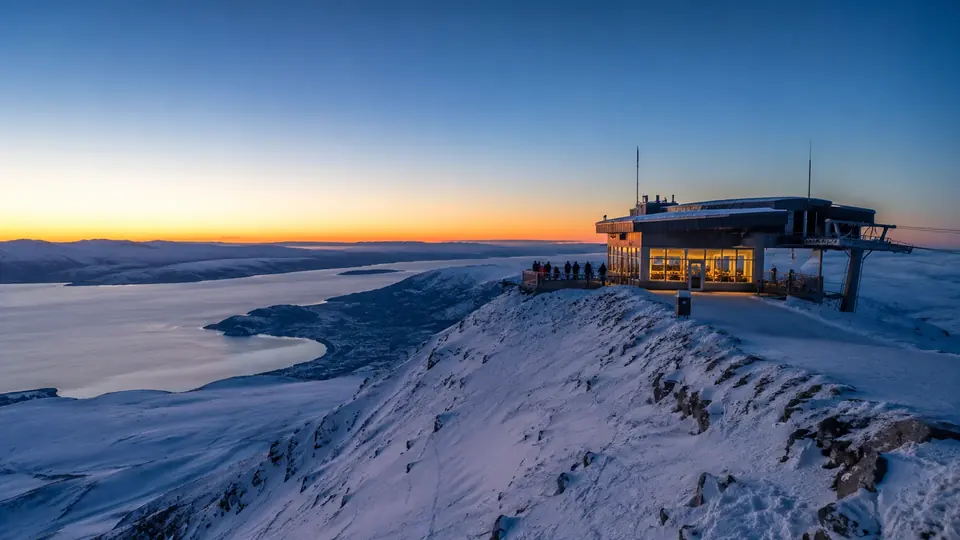
Aurora Sky Station is a mountain visitor attraction on Mount Nuolja above Abisko in Swedish Lapland. Visitors reach the station by chairlift from the Abisko Turiststation area, with views across Abisko, Lake Torneträsk and the surrounding mountain landscape.
Winter visits are centered on Northern Lights viewing and the Arctic night environment. In summer, the emphasis shifts toward mountain scenery, hiking and long daylight. The experience is therefore very different depending on season.
Set the right expectation: Aurora Sky Station is an outdoor mountain experience with indoor shelter, not a glass observatory. The chairlift, exposed mountain setting and time spent outside are central parts of the visit.
For broader destination planning, see the Abisko Travel Guide and Abisko National Park Guide.
Who Is Aurora Sky Station Best For?
| Good Fit | Think Twice If... |
|---|---|
| You want a structured mountain-based aurora experience. | Your only priority is moving between locations to find clearer skies. |
| You value scenery, photography and the chairlift journey as part of the evening. | You are uncomfortable with an exposed chairlift or prolonged cold. |
| You are already staying in Abisko and want an iconic local experience. | You are planning a rushed same-night return to Kiruna without secure transport. |
| You understand that Northern Lights are weather-dependent and never guaranteed. | You expect a guaranteed aurora sighting or a fully indoor observatory. |
The strongest reason to book is the complete setting: the ascent, mountain environment, views and possibility of seeing the aurora from an elevated location. If you would be disappointed unless the Northern Lights appear, a fixed-location attraction carries the same fundamental weather risk as any other aurora viewpoint.
Northern Lights and the Blue Hole of Abisko
Abisko has a long-standing reputation among Northern Lights travelers for periods of clearer sky than some surrounding areas. This local reputation is often described as the Blue Hole of Abisko.
The important practical point is not the name itself: cloud cover still matters. A strong aurora cannot be seen through thick cloud, and Aurora Sky Station cannot guarantee clear weather or aurora activity on the night you visit.
Treat the Blue Hole as a possible local weather advantage, not a promise. Aurora visibility still depends on darkness, cloud conditions and auroral activity.
If Northern Lights are the main purpose of your trip, build in more than one evening and monitor both local weather and space-weather information. The Best Time to Visit Abisko guide provides more seasonal context.
Best Time to Visit Aurora Sky Station
| Season | Main Experience | Planning Priority |
|---|---|---|
| December–March | Northern Lights, snow-covered mountain scenery and winter atmosphere | Dress for exposed cold and allow weather flexibility. |
| June–September | Mountain views, hiking, landscape photography and long summer daylight | Check current seasonal chairlift operations before planning around the visit. |
For aurora-focused travelers, December through March is the clearest fit with the station's best-known winter experience. Summer can still be worthwhile, but it is a different product: the attraction becomes more about the mountain landscape than the Northern Lights.
Tickets and Booking: What to Check Before You Pay
Aurora Sky Station products, prices and operating arrangements can change by season. Rather than planning around an old price or package description, confirm the current experience directly with the official operator before booking.
- Confirm whether your ticket includes the chairlift and any guided or dining component.
- Check the current operating period for your travel date.
- Read the weather and cancellation information carefully.
- Confirm the meeting point and required arrival time.
- Arrange your return transport before committing to an evening visit.
The official Aurora Sky Station and STF Abisko Turiststation sources listed with this guide are the appropriate places to verify current ticket products and seasonal operation.
What Is the Chairlift Experience Like?
The open chairlift is one of the most distinctive parts of Aurora Sky Station. In winter, the ride exposes visitors directly to cold, wind and darkness; in summer, it becomes a scenic ascent above Abisko and toward the mountain environment.
Because you are not enclosed, clothing matters more than many first-time visitors expect. The chairlift should be treated as part of the outdoor experience rather than simply transport between two indoor spaces.
If you tend to get cold easily, prepare for the chairlift more conservatively than you would for a short walk. You may be sitting relatively still while exposed to wind.
What to Expect at the Station
Aurora Sky Station works as a base for viewing the sky and surrounding landscape. Indoor space provides a place to warm up between periods outside, while the main visual experience takes place in the mountain environment.
Educational aurora content and organized experiences can form part of a visit, but the station's appeal is fundamentally the combination of location, scenery and time outdoors. Travelers expecting a large enclosed observatory should adjust that expectation before booking.
Current facilities and inclusions can vary with the operating format, so verify the exact product you are booking rather than relying on older descriptions.
How to Get to Aurora Sky Station from Abisko or Kiruna
The simplest logistics are for travelers already staying near Abisko Turiststation, where the chairlift departure area is close to the accommodation and national park access.
From Kiruna, Abisko is roughly 90 kilometers to the west. The route can be reached by train, car or bus depending on current services and season. If you are planning the journey by rail, the Kiruna–Abisko–Narvik Train Guide helps with the wider route.
| Base | Main Advantage | Main Trade-off |
|---|---|---|
| Stay in Abisko | Simpler evening logistics and easier access to the chairlift. | Requires an overnight stay if Abisko is not already part of your itinerary. |
| Stay in Kiruna | Keeps the same accommodation base for a wider Kiruna trip. | Adds evening transport and return-planning complexity. |
If the Sky Station is a major priority, an overnight stay in Abisko can make the visit less rushed. The Where to Stay in Abisko guide covers the wider accommodation decision.
Aurora Sky Station vs a Mobile Northern Lights Tour
| Factor | Aurora Sky Station | Mobile Aurora Tour |
|---|---|---|
| Viewing strategy | Fixed mountain location | Can change location during the evening |
| Mountain setting | Core part of the experience | Depends on the route chosen that night |
| Weather flexibility | Limited once committed to the location | Greater ability to search for clearer skies |
| Experience style | Structured attraction with chairlift and station | Road-based search focused on changing conditions |
Choose Aurora Sky Station if the mountain setting and chairlift are important parts of what you want to experience. Choose a mobile tour if your priority is flexibility to react to changing cloud conditions.
Neither option can guarantee Northern Lights. The practical difference is fixed-location atmosphere versus mobile weather flexibility.
Aurora Photography at Aurora Sky Station
The elevated setting and open views can make Aurora Sky Station attractive for photography, but winter conditions place extra demands on both the photographer and the equipment.
- Bring a stable tripod.
- Use a wide-angle lens if available.
- Carry spare batteries and keep them warm.
- Use manual focus and check focus before the aurora becomes active.
- Adjust exposure to the brightness and movement of the aurora rather than relying on one fixed setting.
A faster-moving, brighter display usually requires a different exposure than a weak, slow aurora. The most useful preparation is knowing how to change your camera settings in the dark while wearing gloves.
What to Wear for Aurora Sky Station
Winter visitors should dress for standing or sitting outdoors in exposed Arctic conditions, not merely for walking between buildings. Remaining still while watching the sky can feel much colder than active hiking.
| Layer | Practical Choice |
|---|---|
| Base | Thermal layer that manages moisture |
| Insulation | Warm wool, fleece or similar insulating layer |
| Outer layer | Wind-resistant winter jacket and trousers |
| Hands | Insulated mittens or very warm gloves |
| Feet | Insulated winter boots with warm socks |
| Head and neck | Warm hat plus neck and face protection as needed |
If you are planning several winter activities in the region, use the Abisko Travel Guide alongside the current weather forecast to plan clothing and daily logistics.
Common Mistakes When Planning Aurora Sky Station
- Expecting guaranteed Northern Lights: weather and auroral activity remain uncertain.
- Underestimating the chairlift: it is an exposed part of the experience, especially in winter.
- Using old ticket information: prices, products and seasonal operation can change.
- Ignoring return transport: evening logistics from Abisko back to Kiruna need planning in advance.
- Booking a fixed location when flexibility is your only priority: mobile aurora tours have a different advantage.
- Assuming the Blue Hole eliminates cloud risk: it does not.
- Trying to combine too much: Aurora Sky Station is more enjoyable when it is not squeezed into an already overloaded day.
Is Aurora Sky Station Worth It?
Aurora Sky Station can be worth visiting if you want more than a simple aurora viewpoint. The chairlift, mountain landscape and structured experience make it distinct from watching the sky beside a road or joining a mobile chase.
It is a weaker fit if your only goal is to maximize the ability to move away from clouds, or if you would consider the evening unsuccessful without an aurora display. In those cases, a more flexible viewing strategy may suit you better.
The most useful way to evaluate the station is to ask whether you would still value the mountain and chairlift experience on a night with limited aurora. If the answer is yes, the booking is easier to justify.
Aurora Sky Station Planning Checklist
- Check the current official operating period and ticket product.
- Confirm transport to and from Abisko before booking an evening visit.
- Review local weather as well as aurora information.
- Dress for exposed cold and time spent standing still.
- Bring a tripod and spare batteries if photography matters to you.
- Keep expectations realistic: the experience can be memorable without a guaranteed aurora display.
- Consider staying in Abisko if the Sky Station is one of the main priorities of your trip.