Why Lake Torneträsk Matters
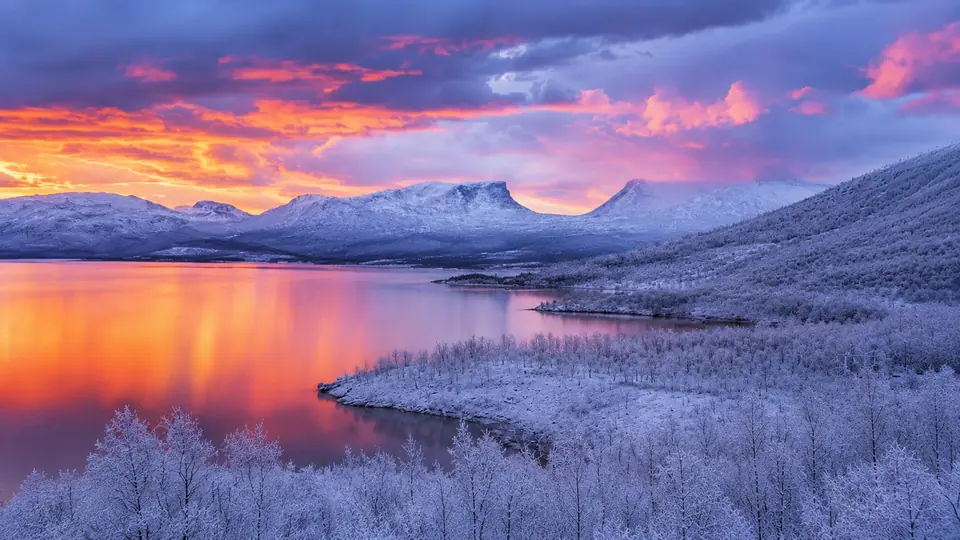
Lake Torneträsk is one of the defining landscapes of the Abisko region. The lake, nearby mountains, Abisko National Park and the distinctive U-shaped Lapporten valley create the wide Arctic scenery that many travelers associate with this part of Swedish Lapland.
For visitors, the lake is less a single attraction than a landscape you experience from several places: from Abisko, along the railway and E10 corridor, from nearby trails, and from viewpoints in the surrounding mountains. In winter it becomes part of the region's Northern Lights and snow-covered scenery; in summer it sits beneath long hours of daylight and the Midnight Sun.
Lake Torneträsk is most useful to think of as the natural backdrop to an Abisko trip: it adds open horizons, mountain views, seasonal photography and access to a very different landscape from central Kiruna.
For broader destination planning, see the Abisko Travel Guide and Abisko National Park Guide.
Where Is Lake Torneträsk?
Lake Torneträsk lies in northern Sweden, approximately 100 km west of Kiruna, beside the Abisko area and close to Abisko National Park. The lake extends through the mountain landscape around Abisko and Björkliden and is accessible from the same transport corridor that connects Kiruna with Abisko and Narvik.
Travelers do not need to build a separate expedition around the lake. If you visit Abisko, travel the Kiruna–Abisko–Narvik railway corridor or explore nearby trails, Lake Torneträsk naturally becomes part of the trip.
If your itinerary already includes Abisko, plan the lake as part of that day or stay rather than as a separate checklist stop. The scenery changes with weather, light and season, so the value is in spending time in the landscape rather than reaching one exact viewpoint.
Lake Torneträsk Facts
| Fact | What to Know |
|---|---|
| Region | Abisko area, Swedish Lapland |
| Distance from Kiruna | Approximately 100 km west |
| Length | Approximately 70 km |
| Maximum depth | Approximately 168 m |
| Known for | Arctic scenery, Northern Lights, Lapporten and seasonal outdoor experiences |
| Nearby base | Abisko |
The lake's scale is important for understanding the landscape. It creates long open views between mountain slopes and gives the Abisko region a sense of space that is very different from forested areas closer to Kiruna.
Northern Lights & the Blue Hole
Lake Torneträsk is closely associated with Abisko's Northern Lights reputation, but the most important factor for aurora viewing is still a clear, dark sky. Strong aurora activity cannot be seen through thick cloud.
The term Blue Hole of Abisko is commonly used for periods when the Abisko area experiences clearer sky than surrounding locations. The effect is associated with the regional mountain weather pattern: moist air arriving from the west can lose moisture as it crosses the Scandinavian mountains, sometimes leaving drier conditions around Abisko.
The Blue Hole should be treated as a local weather advantage, not a guarantee. Cloud cover still varies from night to night, and aurora visibility also depends on darkness and solar activity.
Lake Torneträsk can provide excellent Northern Lights scenery because of its open horizons and dark surroundings, but neither the lake nor the Blue Hole guarantees an aurora display.
For a deeper look at the area's aurora planning, combine this guide with the Aurora Sky Station Guide and the seasonal advice in Best Time to Visit Abisko.
Lapporten & Lake Views
Lapporten is the distinctive U-shaped mountain valley that has become one of the best-known landscape symbols of the Abisko region. From suitable viewpoints around Abisko and Lake Torneträsk, the lake and the mountain profile can appear in the same wide panorama.
The combination changes dramatically through the year. Snow and low winter light create a stark Arctic scene, while summer brings open water, mountain vegetation and long periods of daylight.
| Viewpoint Type | Why It Works |
|---|---|
| Abisko area | Easy access to classic lake and mountain scenery |
| Trails near Abisko | More foreground variety and changing elevation |
| Higher mountain viewpoints | Broader perspective across the lake and surrounding terrain |
| Travel corridor west of Kiruna | Repeated glimpses of the lake during the journey toward Abisko |
Best Time to Visit Lake Torneträsk
There is no single best month because the lake offers two very different main experiences: winter darkness and snow, or summer daylight and hiking. Choose the season based on what you actually want to do.
| Period | Best For | Main Trade-off |
|---|---|---|
| December–March | Northern Lights, winter scenery and snow-based experiences | Cold, darkness and changing winter conditions |
| June–August | Midnight Sun, hiking and landscape photography | No aurora because nights are too bright |
| September | Autumn colors with returning dark skies | More variable weather and shorter days |
| April–May | Transition from winter toward spring | Conditions can change quickly as snow and ice weaken |
If the Northern Lights are your priority, build the trip around several dark nights rather than around one specific viewpoint. If scenery and hiking matter more, summer gives you far more daylight and easier access to the surrounding landscape.
Winter at Lake Torneträsk
Winter transforms the lake into a broad snow-and-ice landscape. The open horizon can be valuable for aurora watching and photography, and the surrounding Abisko area offers access to winter scenery without requiring visitors to travel far from established accommodation and transport.
The crucial planning point is ice safety. Lake ice is not uniformly safe, and conditions vary with weather, currents, inlets, outlets and the stage of the season. Never assume that a frozen-looking surface is safe to walk, ski or travel on.
Only go onto the lake when current local conditions have been confirmed as safe. Stay away from moving water, inlets and outlets, and use local guidance if you do not have experience evaluating Arctic ice.
For most visitors, the safest winter strategy is to enjoy the lake from established access areas, viewpoints or organized activities rather than treating the frozen surface as a self-guided route.
Summer & the Midnight Sun
Summer reveals the lake as open water surrounded by mountain scenery. Long daylight makes it easier to combine a lake visit with hiking, photography and time in Abisko National Park.
Around the height of summer, the Midnight Sun creates exceptionally long periods of usable light. The experience is almost the opposite of winter: instead of waiting for darkness, visitors can walk, photograph and explore late into the evening.
The Abisko National Park Guide is the better reference for trail planning, while this guide is most useful for understanding how the lake fits into the wider landscape.
Water Activities
The lake can look calm from shore, but open-water conditions may change quickly in a mountain environment. Wind, cold water and distance from shelter make self-guided paddling a different risk profile from a small sheltered lake.
If you plan kayaking or canoeing, use appropriate equipment, check local conditions and avoid treating calm-looking water as proof of safe conditions.
Spring & Autumn
Spring
Spring is a transition period. Snow and ice may remain while daylight increases rapidly, but conditions become less predictable as temperatures rise. This is not the time to rely on winter assumptions about frozen surfaces.
Autumn
Autumn combines cooling temperatures, changing vegetation and the return of darker nights. September is especially useful for travelers who want both landscape photography and a realistic possibility of Northern Lights after dark.
Shoulder-season travel can be rewarding, but flexibility matters more than during the most established winter and summer periods.
Photography Planning
Lake Torneträsk works well for photography because the landscape combines open space, water or ice, mountain silhouettes and changing Arctic light. The strongest images usually come from choosing a foreground and using the lake to create scale rather than trying to photograph the entire landscape at once.
| Season | Strongest Subjects | Main Planning Need |
|---|---|---|
| Winter | Aurora, snow, ice and mountain silhouettes | Cold-weather battery management and stable support |
| Summer | Reflections, mountains and long evening light | Time to wait for changing light and wind |
| Autumn | Color, darkening skies and mountain contrast | Flexible timing around fast-changing weather |
For aurora photography, a tripod and manual camera control are more useful than chasing a single famous viewpoint. For summer landscapes, changes in wind can matter as much as changes in light because they determine whether the lake surface reflects the mountains or becomes textured.
Fishing, Wildlife & Nature
Lake Torneträsk and the surrounding region support Arctic and sub-Arctic nature, including fish such as Arctic char and brown trout. Fishing requires the relevant permit, and local rules should be checked before fishing in either summer or winter.
The wider Abisko landscape is also habitat for reindeer and other northern wildlife. Reindeer in the region are part of Sámi reindeer husbandry, so visitors should give animals space and avoid blocking or approaching them for photographs.
Wildlife sightings are never guaranteed. The value of the area is the landscape and ecosystem as a whole rather than a promise of seeing specific animals.
Practical Planning & Safety
| Planning Question | Practical Answer |
|---|---|
| Do you need a car? | No. Abisko can be reached by rail, and the lake is part of the same travel corridor. |
| Can you visit from Kiruna? | Yes. Lake Torneträsk is approximately 100 km west of Kiruna and is commonly combined with Abisko. |
| Should the lake be a separate day trip? | Usually not. It works best as part of an Abisko day or overnight stay. |
| Can conditions change quickly? | Yes. Mountain weather, wind, visibility and winter ice conditions all require current local checks. |
| Is it suitable without Arctic experience? | Yes for established access and viewpoints; use local guidance for higher-risk winter or water activities. |
Rail travel is one of the easiest ways to combine Kiruna, Abisko and the lake without driving. For route planning, see the Kiruna–Abisko–Narvik Train Guide. If you plan to stay overnight, use Where to Stay in Abisko to compare bases.
- Check the current weather before outdoor plans.
- Do not assume lake ice is safe because other people are on it.
- Carry warm layers even in summer because mountain weather can change quickly.
- Plan aurora viewing around darkness and cloud cover, not only forecast activity.
- Keep enough time in Abisko to experience the lake under more than one light or weather condition when possible.
Is Lake Torneträsk Worth Visiting?
Yes, especially if you are already visiting Abisko. Lake Torneträsk gives the region much of its visual scale and helps connect several of the area's best-known experiences: Northern Lights, mountain scenery, Lapporten, hiking and the seasonal contrast between frozen winter landscapes and the Midnight Sun.
The strongest reason to visit is not a single activity. It is the landscape itself. Travelers who allow time for the lake as part of an Abisko stay usually get more from it than visitors who treat it as a quick photo stop.
Choose Lake Torneträsk for wide Arctic scenery and a deeper Abisko experience. In winter, prioritize safe access and dark-sky conditions; in summer, prioritize hiking, daylight and changing mountain light.