What Is Abisko National Park?
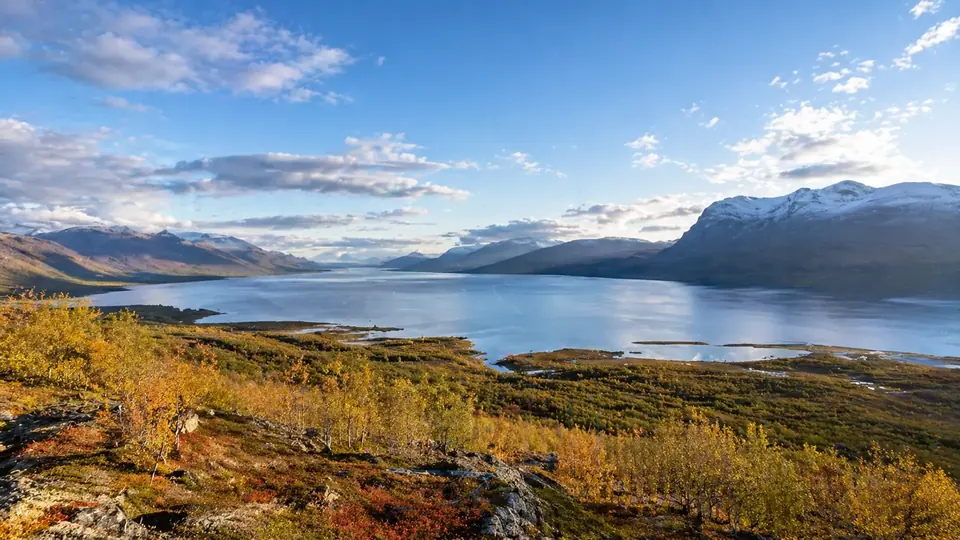
Abisko National Park is a protected mountain and valley landscape in northern Sweden beside Lake Torneträsk. Established in 1909, the park covers about 77 square kilometers and combines mountain birch forest, open fell terrain, river scenery and access to the Swedish mountain region.
Its compact size and rail access make it practical for travelers who want Arctic nature without committing to a long expedition. Some visitors come for a short walk near Abisko Turiststation, while others use the park as the starting point for multi-day hiking on Kungsleden.
For a broader overview of accommodation, transport and trip planning around the village, see the Abisko Travel Guide.
Abisko National Park works for both short visits and longer outdoor trips: choose winter for snow and Northern Lights, or the warmer season for hiking, long daylight and Kungsleden.
Why Visit Abisko National Park?
The park is strongest for travelers who value mountain scenery, hiking, quiet surroundings and seasonal Arctic experiences. It is not a resort-style destination with a large choice of restaurants, shops or indoor attractions, so the experience depends more heavily on weather, daylight and what you plan to do outdoors.
| Priority | Why Abisko Works | Planning Trade-off |
|---|---|---|
| Northern Lights | Dark surroundings and a strong clear-sky reputation. | Aurora is never guaranteed; cloud cover still decides visibility. |
| Hiking | Short walks, mountain routes and the start of Kungsleden. | Trail conditions change by season and weather. |
| Photography | Lake, river, mountain and open Arctic landscapes. | Light and weather can change quickly. |
| Car-free travel | Train access makes the area unusually practical for an Arctic nature destination. | You still need to match transport times to your accommodation and plans. |
Best fit: Abisko suits travelers who are comfortable planning around nature and weather. If restaurant choice, nightlife or a large range of urban services is the priority, Kiruna is the more practical base.
Best Time to Visit Abisko National Park
There is no single best season because winter and summer offer fundamentally different experiences. January to March is the strongest supported period for snow, winter scenery and Northern Lights travel. June to September is the main hiking season, while September can combine autumn color with the return of dark aurora nights.
| Period | Best For | What to Expect |
|---|---|---|
| January–March | Northern Lights and winter landscapes | Snow, cold conditions and long dark periods. |
| Spring winter | Snow landscapes and longer daylight | Brighter days with changing snow conditions. |
| June–September | Hiking and mountain travel | Long daylight, open trails and seasonal weather changes. |
| September | Autumn scenery and early aurora nights | Cooler conditions, darker evenings and fewer summer-style daylight hours. |
If timing is the main decision, the Best Time to Visit Abisko guide gives a broader seasonal comparison.
Northern Lights and the Abisko Blue Hole
Abisko is widely associated with Northern Lights travel because of its dark Arctic setting and a local clear-sky reputation often described as the “Blue Hole” effect. Local mountain geography and Lake Torneträsk can contribute to clearer windows during some weather patterns.
Treat that reputation as an advantage, not a guarantee. The aurora still depends on darkness and space-weather activity, while ground visibility depends on cloud cover. A clear night with moderate activity can be more useful than a stronger aurora forecast hidden behind clouds.
The practical advantage of Abisko is flexibility over several nights. Staying longer gives you more opportunities for a clear window instead of relying on one evening.
For a more focused aurora-planning guide, see Northern Lights in Abisko.
Midnight Sun and Summer in Abisko
Summer changes the character of the park completely. The region experiences the Midnight Sun from roughly late May to mid-July, creating very long periods of daylight for walking, photography and mountain travel.
The wider summer hiking period extends beyond the Midnight Sun itself. June to September is the main hiking season in this guide, with conditions changing through summer and into early autumn.
Bright nights, insects, rain and rapidly changing mountain weather are all part of the summer experience. Plan clothing and daily routes for conditions rather than assuming that “summer” means mild or stable weather.
Lapporten: Abisko's Famous Mountain Landmark
Lapporten, or Čuonjávággi in Northern Sámi, is the distinctive U-shaped valley associated with the Abisko landscape. It is visible from parts of the area and has become one of the best-known visual landmarks in Swedish Lapland.
The scale can be deceptive. Lapporten may look close in photographs or from the railway, but reaching the mountain terrain itself requires proper route planning, suitable equipment and respect for changing weather.
Use Lapporten as a landscape highlight rather than assuming it is a casual roadside walk. The surrounding mountain distances are larger than they often appear from viewpoints and transport routes.
Kungsleden from Abisko
Kungsleden, the King's Trail, begins at Abisko Turiststation and continues south through the Swedish mountain region toward Hemavan. The full trail is roughly 450 kilometers, but many visitors hike only the northern stages or use the trail for a shorter day walk.
A multi-day Kungsleden trip requires a different level of planning from a short national-park visit. Weather, fitness, accommodation or hut logistics, food and route choices all become more important once you move beyond the easily accessible areas near Abisko.
- Short visit: Walk a manageable section close to Abisko Turiststation.
- Full day: Choose a route that matches current trail and weather conditions.
- Multi-day hike: Plan accommodation, food, equipment and daily stages before departure.
- Season: June to September is the main supported hiking period in this guide.
For more trail-focused planning, continue with Hiking in Abisko.
Short Walks and Hikes in Abisko
You do not need to commit to Kungsleden to experience the park. Several shorter options work better for day visitors or travelers with limited time.
Paddus Trail
Paddus is presented as a shorter, relatively easy option with broad views over the Abisko area and Lake Torneträsk. It suits travelers who want a manageable introduction rather than a long mountain route.
Abiskojåkka Canyon
The Abiskojåkka canyon is one of the classic short walks near Abisko Turiststation and gives quick access to river and canyon scenery without requiring a multi-day plan.
Nuolja Area
The Nuolja area offers elevated views over Torneträsk and the surrounding mountains. Access depends on season, trail conditions and lift operations, so current conditions matter before you build a day around it.
A route that feels easy in dry summer conditions can become a different undertaking in snow, wind, ice or poor visibility. Match the walk to the conditions you actually have.
Wildlife, Reindeer and Responsible Viewing
Wildlife mentioned for the Abisko area includes reindeer, moose, mountain hare, foxes, lemmings and a range of northern bird species. Arctic fox can occur in the wider mountain region, but sightings are rare and should not be expected.
Reindeer deserve particular care. Reindeer in the region belong to Sámi herding communities, so they should be treated as working herd animals rather than as wildlife props for photographs. Keep your distance and avoid following or disturbing them.
Birdlife becomes especially noticeable in spring and summer. Binoculars are useful, and visitors should avoid approaching nests, dens or young animals.
Rules in Abisko National Park
Sweden's right of public access, allemansrätten, does not override national-park regulations. Protected areas can have additional rules covering activities such as camping, fires, dogs, motor vehicles and protection of wildlife or natural features.
- Do not damage vegetation, rocks or other natural features.
- Do not disturb wildlife, nests, dens or young animals.
- Follow current park rules for camping and fires.
- Keep dogs under control and follow seasonal restrictions.
- Use permitted routes and roads for motor vehicles.
- Check current official park information before activities that may be restricted.
The simplest rule is to treat the park as protected nature first and recreational space second. Check the current official national-park information when your plan involves camping, fires or other regulated activities.
Getting to Abisko National Park from Kiruna
Abisko is about 95 kilometers west of Kiruna. The supported options in this guide include train, regional bus, rental car and organized transfer. Train travel is particularly useful because rail services stop in the Abisko area.
| Option | Best For | Main Planning Point |
|---|---|---|
| Train | Car-free travelers | Choose the stop that matches your accommodation and park plan. |
| Regional bus | Travelers using public transport | Check the current timetable before building a tight itinerary. |
| Rental car | Flexible regional travel | Winter driving conditions can change the practical difficulty. |
| Organized transfer | Travelers who prefer simpler logistics | Availability and pickup arrangements need to be confirmed in advance. |
Abisko Östra and Abisko Turiststation serve different parts of the area. Abisko Turiststation is the practical stop for the national-park entrance, STF facilities and Kungsleden trailhead, while Abisko Östra is often more relevant for village accommodation.
For rail and regional travel planning, see the Kiruna–Abisko–Narvik Train Guide.
Day Trip or Overnight Stay?
A day trip from Kiruna can work well if your goal is a short walk, scenery and a first introduction to the park. It is less suitable if you want a longer hike or want to rely on one evening for Northern Lights viewing.
| Trip Style | Best For | Main Limitation |
|---|---|---|
| Half day | Short walks and viewpoints | Little margin for changing weather or transport delays. |
| Full day | Park scenery and a more substantial walk | You still need to match the day to return transport. |
| 1–3 nights | Hiking, slower exploration and aurora flexibility | Requires accommodation and meal planning. |
| Multi-day trek | Kungsleden and mountain travel | Needs full hiking logistics rather than day-trip planning. |
If you are specifically deciding whether to visit from Kiruna for one day, see Day Trip from Kiruna to Abisko.
Common Planning Mistakes
- Assuming the Blue Hole guarantees clear skies or Northern Lights.
- Confusing Abisko Östra with Abisko Turiststation.
- Planning a long hike without checking current weather and trail conditions.
- Expecting the service range of a larger town.
- Trying to fit a long hike, sightseeing and aurora viewing into one rushed day.
- Assuming allemansrätten removes the need to follow national-park rules.
- Underestimating how quickly cold, wind or visibility can change the experience.
Choose a day trip for a short park introduction. Stay overnight if Northern Lights or a slower outdoor experience matters. Treat Kungsleden as a separate hiking plan, not an add-on to a rushed sightseeing day.
Final Verdict: Is Abisko National Park Worth Visiting?
Yes. Abisko National Park is one of the strongest nature-focused stops in Swedish Lapland for travelers who want mountain scenery, accessible hiking and seasonal Arctic experiences. Its rail access makes it unusually practical, but it remains a protected mountain environment where weather and planning matter.
Winter visitors should come for snow, darkness and aurora opportunities without expecting guarantees. Summer visitors should come for hiking, long daylight and mountain landscapes. Travelers who want the broadest itinerary often combine Abisko with Kiruna rather than expecting one place to provide every type of Arctic experience.