
This transport guide is part of our Ultimate Abisko Travel Guide, covering Northern Lights, accommodation, hiking, transport and trip planning throughout the Abisko region.
Short Answer Summary
Choose the train if your schedule is flexible and you want the most scenic public transport route west of Kiruna. Choose Bus 91, rental car or private transfer if you have heavy luggage, children, a same-day flight, late arrival or a paid tour connection that cannot be missed.
Is the Kiruna–Abisko–Narvik Train Worth It?
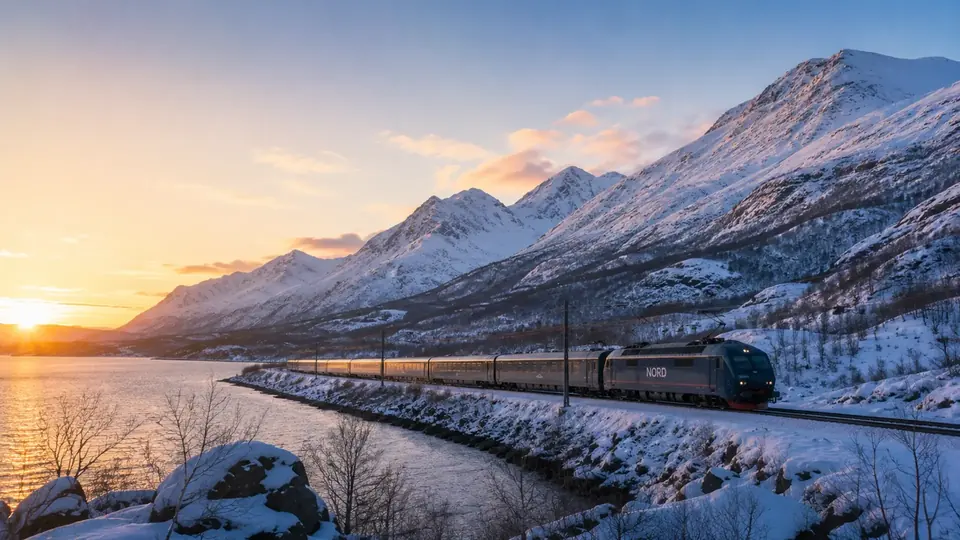
Yes, the Kiruna–Abisko–Narvik railway is worth taking if you want one of Scandinavia’s most scenic Arctic transport routes. The journey becomes especially strong west of Abisko where the landscape changes from Swedish mountain terrain toward the Norwegian fjords near Narvik.
The train works best for travelers with flexible schedules, moderate luggage and enough time margin for winter conditions. Travelers with tight airport connections, children, large winter luggage or expensive fixed-time tours may find Bus 91, rental car or private transfer less stressful.
Best strategy: Use the train for scenery and relaxed Arctic travel, not for fragile same-day connections where one winter delay can damage the entire itinerary.
Travelers comparing transport options should also read how to get to Kiruna and common mistakes tourists make in Kiruna.
Who Should Take the Train?
The railway works best for travelers treating the journey itself as part of the Arctic experience. It is less ideal for tightly scheduled winter itineraries where delays or transfer stress can quickly become expensive.
| Traveler Type | Good Fit? | Why |
|---|---|---|
| Scenic travelers | Excellent | One of the strongest Arctic public transport routes in Scandinavia. |
| Photographers | Strong | Mountain, lake and fjord scenery west of Abisko. |
| Backpackers | Excellent | Good value when schedules fit. |
| Families with heavy luggage | Mixed | Transfers and winter handling can become tiring. |
| Tight itineraries | Weak | Winter delays create stress quickly. |
| Travelers with same-day flights | Weak | Risk level is usually too high in winter. |
Best Direction for the Scenic Route
The strongest scenery usually begins west of Abisko. The route gradually changes from forest and mountain plateau into dramatic Norwegian fjord terrain approaching Narvik.
| Direction | Best Seat Side | Main Highlights |
|---|---|---|
| Kiruna → Narvik | Right-hand side | Fjord descent and Norwegian mountain scenery. |
| Narvik → Kiruna | Left-hand side | Reverse fjord and mountain views. |
| Kiruna → Abisko | Either side | Lake Torneträsk and Arctic mountain landscape. |
Local’s Insight
The most memorable section is usually the Norwegian descent toward Narvik. Many visitors underestimate how dramatic the terrain becomes after the Swedish border region.
Best Time of Day for the Train
Daylight matters greatly on this route. During polar night periods, much of the scenery may disappear into darkness even if the weather is clear.
| Season | Scenery Quality | Best Advice |
|---|---|---|
| December–early January | Limited daylight | Choose departures near midday if scenery matters. |
| February–March | Excellent | Usually the best balance of snow and daylight. |
| April | Very strong | Longer days and snowy mountain terrain. |
| Summer | Clear visibility | Midnight sun changes the atmosphere completely. |
Kiruna Station Reality: Useful, But Not a Full Travel Centre
Kiruna’s railway station is no longer the old central station many older travel articles describe. The current station sits outside the main city centre because of Kiruna’s city transformation and mining-related relocation of infrastructure.
The station works for boarding and leaving trains, but travelers should not treat it like a major city terminal. Plan food, tickets, luggage and transfers before arriving. In winter, this matters because waiting outside or making last-minute transport decisions can quickly become uncomfortable.
| Need | Practical Reality | Best Advice |
|---|---|---|
| Getting from town to station | Use shuttle, taxi or pickup. | Do not assume winter walking with luggage is comfortable. |
| Buying tickets | Best done online before travel. | Use SJ or the listed operator for your departure. |
| Food and drinks | Limited station services. | Buy snacks and water before leaving town. |
| Waiting indoors | Limited compared with large terminals. | Avoid arriving too early in winter. |
Local’s Insight
The biggest mistake is arriving too early because it feels “safer.” In winter, it is usually better to stay in the town centre until delays and transfer timing are clearer.
Free Transfer Bus Between Kiruna Centre and the Railway Station
Kiruna has a free transfer bus between the city centre, Kiruna bus station and the railway station. The service is designed to connect with train arrivals and departures.
Timetables can change, so always check the latest transfer schedule before travel. The shuttle normally takes about 15 minutes depending on conditions and stop pattern.
| Transfer Detail | What to Expect | Traveler Advice |
|---|---|---|
| Route | Kiruna centre, bus station and railway station. | Confirm the current stop location before travel. |
| Cost | Free. | No extra ticket normally required. |
| Timing | Connected to train schedules. | Check how delays are handled. |
| Luggage | Works for normal bags. | Private transfer is easier for large winter luggage. |
The free transfer shuttle is the normal connection between Kiruna town and the railway station. Do not plan the trip as if the station were centrally walkable.
Kiruna Airport to the Train Station: What Actually Works
Kiruna Airport does not have a direct train connection. Most travelers reach the railway station in two steps: airport to Kiruna centre, then station shuttle or taxi.
Budget Route: Airport Bus + Station Shuttle
Use the airport bus into central Kiruna, then continue with the free transfer shuttle if the timing works. This is usually the cheapest option but requires enough schedule margin.
Direct Route: Taxi or Pre-Booked Transfer
Taxi or pre-booked transfer is safer for short connections, late arrivals or heavy luggage. In winter, a connection that looks possible on paper can fail because of delayed baggage, flight timing or shuttle mismatch.
Local’s Insight
Avoid airport-to-train schedules with less than 75–90 minutes of realistic winter margin.
Train Route and Key Stations Between Kiruna, Abisko and Narvik
The railway west of Kiruna follows the Malmbanan corridor, one of northern Scandinavia’s most important Arctic rail routes. Passenger trains normally connect Kiruna with Abisko, Björkliden, Riksgränsen and Narvik.
The landscape changes dramatically west of Abisko. Forest becomes open mountain terrain, snowfields become steeper and the railway eventually descends toward the Norwegian fjords near Narvik.
For many visitors, this section feels less like ordinary transport and more like part of the Arctic experience itself.
| Station | Best For | Important Detail |
|---|---|---|
| Kiruna | Main Arctic rail access point. | Use station shuttle or taxi connection. |
| Abisko Östra | Abisko village stays. | Check accommodation location carefully. |
| Abisko Turiststation | National park access. | Best for hiking and STF area. |
| Björkliden | Mountain hotel and ski area. | Services more limited than Kiruna. |
| Riksgränsen | Border-region skiing. | Demand changes strongly by season. |
| Narvik | Norwegian fjord city. | Strongest scenic section near arrival. |
Why Narvik Feels Completely Different from Kiruna
Narvik feels dramatically different from Kiruna despite the direct railway connection. Kiruna feels inland, snowy and industrial-Arctic, while Narvik feels maritime, mountainous and connected to the Atlantic coast.
The transition itself is part of what makes the route special. Travelers move from Swedish Lapland forests and mountain plateaus into steep Norwegian fjord terrain in only a few hours.
| Topic | Kiruna | Narvik |
|---|---|---|
| Atmosphere | Industrial Arctic town | Fjord-side Norwegian city |
| Landscape | Forest and plateau | Mountains and fjords |
| Climate feeling | Drier inland cold | Milder Atlantic influence |
| Best Experience | Winter tours and aurora | Fjord scenery and rail descent |
Can You Visit Narvik as a Day Trip from Kiruna?
Yes, Narvik can work as a long day trip from Kiruna when train schedules fit and winter conditions remain stable. However, the experience is usually better with an overnight stay instead of rushing back the same evening.
Travelers doing the journey only for scenery often find the route itself more memorable than the time spent inside Narvik.
Narvik works best as either a relaxed overnight stop or a flexible scenic rail day rather than a tightly scheduled “checklist destination.”
Bus 91: The Road Alternative to Abisko and Riksgränsen
Bus 91 follows the E10 corridor west from Kiruna toward Abisko, Björkliden and Riksgränsen. It is useful when train schedules do not fit or when road travel is more practical than railway travel.
Always check the current timetable because frequency changes by weekday and season.
| Route | Best For | Main Limitation |
|---|---|---|
| Kiruna → Abisko | Train alternative | Limited departures. |
| Kiruna → Björkliden | Ski and mountain stays | Seasonal timetable changes. |
| Kiruna → Riksgränsen | Border-region travel | Longer travel time. |
Train vs Bus 91 vs Rental Car vs Private Transfer
| Option | Best For | Main Advantage | Main Limitation |
|---|---|---|---|
| Train | Scenic Arctic travel | Most memorable scenery. | Winter delays and fixed schedules. |
| Bus 91 | Road alternative | Useful backup option. | Separate ticket and limited timetable. |
| Rental car | Independent travelers | Maximum flexibility. | Winter driving risk. |
| Private transfer | Families and luggage-heavy travelers | Door-to-door convenience. | Highest cost. |
Winter Delays and Realistic Buffers
The railway carries both passenger trains and heavy iron ore freight. Winter disruption can come from snow, ice, signalling issues, rolling stock problems or maintenance.
This does not mean you should avoid the train. It means you should avoid fragile same-day connections where one delay damages the entire itinerary.
| Connection | Recommended Buffer | Why It Matters |
|---|---|---|
| Train → Kiruna Airport | Several hours minimum | Delays plus transfer timing create risk. |
| Train → Northern Lights tour | 3–4 hours | Need time for food, clothing and pickup. |
| Train → Hotel | Usually manageable | Hotels are more flexible than flights. |
| Train → Private transfer | Share live train status | Local providers can often adapt. |
Train Day Checklist
- Check live train status before leaving accommodation.
- Confirm the station transfer shuttle timing.
- Buy tickets before boarding.
- Bring snacks and water.
- Keep gloves and warm layers accessible.
- Avoid tight same-day winter flight connections.
Reality of Arctic Rail Travel
- The route is scenic but not high-frequency.
- Winter delays are realistic.
- Darkness affects the scenery experience.
- Transfers matter more than many visitors expect.
- Large winter luggage changes the experience significantly.
- The train is best for flexible schedules, not fragile itineraries.
Train Tickets and Booking Rules
Train tickets should normally be purchased online before travel. Use SJ or the operator listed for your departure.
Do not confuse official replacement buses with ordinary Bus 91 public transport. Regular Bus 91 journeys usually require a separate ticket unless the train operator explicitly states otherwise during disruption handling.
Common Mistakes Tourists Make
- Reading outdated articles about the former central station.
- Arriving too early at the station in winter.
- Confusing Bus 91 with train replacement transport.
- Booking same-day winter flights after train arrivals.
- Choosing the wrong Abisko stop.
- Ignoring luggage realities and transfer timing.
- Expecting city-style train frequency.
- Assuming scenery is guaranteed in all weather.
When the Train Is Not Worth It
The train is often not worth the stress if one delay can destroy the entire day. This includes same-day international flights, expensive fixed-time tours or travelers with very heavy winter luggage.
In those situations, rental car, taxi, transfer or carefully timed Bus 91 connections may be safer despite higher cost.
What Disappoints Visitors?
Visitors are usually disappointed when they expect city-style transport convenience from Arctic infrastructure. The station feels simpler than expected, departures are limited and short map distances can still require careful planning.
Another disappointment comes from expecting guaranteed scenery. Snow, darkness, fog and window reflections can completely change the visual experience.
Final Verdict: Is the Kiruna–Abisko–Narvik Train Worth It?
Yes, the train is worth it if you want one of the strongest scenic Arctic public transport journeys in northern Scandinavia. It is especially valuable for travelers visiting Abisko, Björkliden, Riksgränsen or Narvik with enough flexibility for winter conditions.
The route works best when treated as part of the Arctic experience itself rather than simply transport between two points.
Use the station shuttle correctly, keep realistic schedule buffers and avoid fragile same-day winter connections. For Arctic rail travel, flexibility is often more important than speed.