
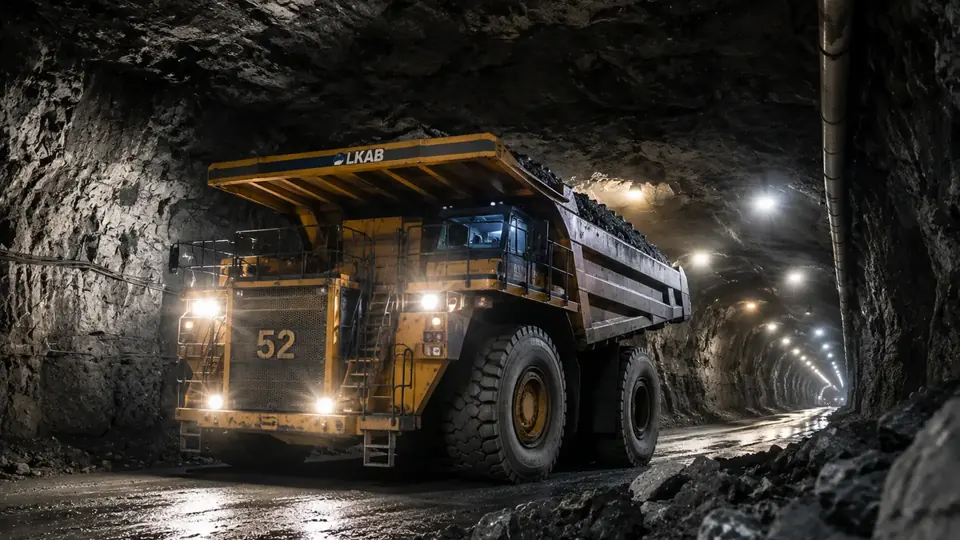
Why the LKAB Mine Matters to Visitors
The LKAB mine is not a side story in Kiruna. It explains why the modern city developed here, why the railway is so important, why parts of the old city have been relocated and why Kiruna feels different from a purpose-built Arctic resort.
Many travelers arrive for Northern Lights, snow and winter activities, then discover that Kiruna is also an active industrial city shaped by the iron ore beneath Kiirunavaara. Understanding that connection gives the city transformation, old and new urban areas and transport links much more meaning.
The simplest way to understand Kiruna is this: the mine helped create the city, and continued mining is also the reason parts of the city have had to move.
For the wider context, see the Kiruna Travel Guide and our guide to why Kiruna is moving.
What Is LKAB?
LKAB, Luossavaara-Kiirunavaara Aktiebolag, is Sweden's state-owned mining company and operates the underground iron ore mine in Kiruna. Mining has been central to Kiruna's development for more than a century and remains closely connected to local employment, infrastructure and urban planning.
| Topic | What It Means for Kiruna |
|---|---|
| LKAB | The state-owned company operating the Kiruna iron ore mine |
| Kiirunavaara | The mountain and ore body that shaped the city's location and development |
| City transformation | Relocation and rebuilding linked to mining-related ground deformation |
| Iron Ore Line | The railway system connecting the mining region with major transport routes, including Narvik |
How the Underground Mine Works
Kiruna is an underground mine rather than an open-pit attraction. Most of the industrial operation is therefore invisible from the city surface. Underground mining depends on a coordinated system of drilling, controlled blasting, loading, transport, crushing, ventilation, rock monitoring and safety procedures.
| Stage | Visitor-Friendly Explanation |
|---|---|
| Drilling | Holes are prepared in the ore body before blasting. |
| Blasting | Controlled blasts break ore from the surrounding rock. |
| Loading | Heavy machinery collects and moves the broken material. |
| Transport | Ore is moved through the underground mining system for further handling. |
| Processing | The mined material enters a larger industrial chain before use in steel production. |
What surprises many visitors is the contrast: Kiruna can feel quiet above ground while a large industrial system operates deep beneath the surrounding mountain.
How Large and Deep Is the Kiruna Mine?
The Kiruna mine is widely described as one of the world's largest underground iron ore mining operations. Mining extends more than 1,000 metres underground in parts of the ore body, although operating levels and active extraction areas change as the mine develops.
For travelers, the exact depth is less important than the scale. The underground operation is large enough to influence transport infrastructure, city planning and the long-term shape of Kiruna itself.
Can Tourists Visit the LKAB Mine?
Mine-related visitor experiences can be available in Kiruna, but access should never be assumed. This is an active industrial environment, so tours depend on current operations, safety requirements, booking availability and any participation restrictions in force at the time.
Plan the mine visit only after confirming current access. Do not build a fixed itinerary around an underground visit until your place is confirmed.
| Question | Practical Answer |
|---|---|
| Is it a real operating mine? | Yes. Visitor access is connected to an active industrial mining environment. |
| Is access available every day? | No assumption should be made; availability can vary. |
| Can restrictions apply? | Yes. Safety rules, age limits or other participation requirements may apply. |
| Should you book ahead? | Yes. Confirm availability before planning the rest of the day around the visit. |
What to Expect from a Mine Visit
The main value of a mine visit is context rather than spectacle. It helps connect the underground operation with the city above: why Kiruna developed where it did, why the railway exists, why ground deformation matters and why the city transformation is so closely tied to mining.
Visitors should approach the experience as industrial tourism, not as a conventional museum visit. Safety and operational rules take priority, and the exact visitor format can change over time.
A mine visit is most useful for travelers who want to understand Kiruna, not only see an underground space.
Why Kiruna Is Moving
Kiruna's urban transformation is a long-term response to ground deformation connected to underground mining. As mining progresses, some areas can no longer remain suitable for long-term urban use, so buildings, streets and public functions have been relocated, rebuilt or replaced in safer areas.
This is why visitors encounter both traces of old Kiruna and a newer city centre. The relocation is not a separate tourism project; it is part of the practical relationship between the mine and the city.
For a more focused explanation, read our Kiruna city relocation history guide.
Ground Deformation Explained
Ground deformation is sometimes misunderstood as a sudden collapse risk. A better way to understand it is as a monitored, long-term change in the ground caused by mining at depth. Urban planning responds before affected areas become unsuitable for continued use.
The useful visitor takeaway is not to look for a dramatic crater. Look instead at how the city has been reorganized: old areas, newer development, moved functions and the changing relationship between Kiruna and Kiirunavaara.
Why the Railway to Narvik Matters
Kiruna's mining history also explains the strategic importance of the railway. The Iron Ore Line connects the mining region with transport routes toward both Sweden and Norway, including the route through the mountains to Narvik.
For travelers, this adds another layer to the journey between Kiruna, Abisko and Narvik. The railway is scenic, but it is also part of the industrial infrastructure that helped Kiruna develop as a mining city.
How to Experience the Mine Story in Kiruna
Even when underground visitor access is unavailable, the mining story can still be understood through the city itself. The strongest approach is to connect the mine with the urban transformation rather than treating them as separate attractions.
| If You Have... | Useful Focus |
|---|---|
| A confirmed mine visit | Use it as the foundation, then compare what you learned underground with the changing city above ground. |
| No mine access | Focus on the city transformation, Kiirunavaara, the railway context and the relationship between old and new Kiruna. |
| Only a short stay | Combine city context with one major Arctic experience rather than trying to fit every attraction into the same day. |
If you are building a broader itinerary, see how many days you need in Kiruna and things to do in Kiruna.
Who Will Enjoy the LKAB Mine Story Most?
| Good Fit | Why |
|---|---|
| First-time visitors to Kiruna | It explains much of the city's history and present-day layout. |
| Engineering and industry travelers | The mine adds real-world context to large-scale underground operations. |
| Travelers interested in urban change | Kiruna's relocation is directly connected to mining-related ground deformation. |
| Families with older children or teens | The story can make geology, infrastructure and city planning tangible, subject to current tour participation rules. |
Travelers whose itinerary is already very short do not need to force an underground visit into the schedule. The key is understanding the mine's role in Kiruna; that can still be done through the city transformation if visitor access is unavailable.
Planning Checklist
- Confirm current mine-visit availability before committing to the day.
- Check any current age or safety requirements for your group.
- Allow enough time to explore the city transformation as a separate part of the experience.
- Use current transport information rather than relying on old Kiruna maps.
- Keep outdoor plans flexible in winter, especially when combining the mine with travel to Jukkasjärvi, Abisko or Narvik.
Common Mistakes Visitors Make
- Assuming underground visitor access is always available.
- Treating the city relocation as a sudden-collapse story rather than a managed long-term process.
- Focusing only on the mine and missing the visible urban transformation above ground.
- Using outdated maps or planning information for central Kiruna.
- Trying to combine the mine, ICEHOTEL in Jukkasjärvi, Abisko and other major experiences in one rushed day.
Final Verdict: Is the LKAB Mine Worth Understanding?
Yes. The mine is essential context for Kiruna because it connects the city's origin, industry, railway and ongoing urban transformation. An underground visit can add depth when available, but the story is still worth learning even if you never enter the mine.
The most rewarding Kiruna itinerary combines both sides of the destination: the Arctic landscape above ground and the industrial history beneath it. That contrast is one of the main reasons Kiruna feels unlike a conventional winter resort.
Explore More of Kiruna
Balance Kiruna's industrial story with Arctic nature and winter experiences elsewhere in the region.