Why Layering Works: The Science of Staying Warm
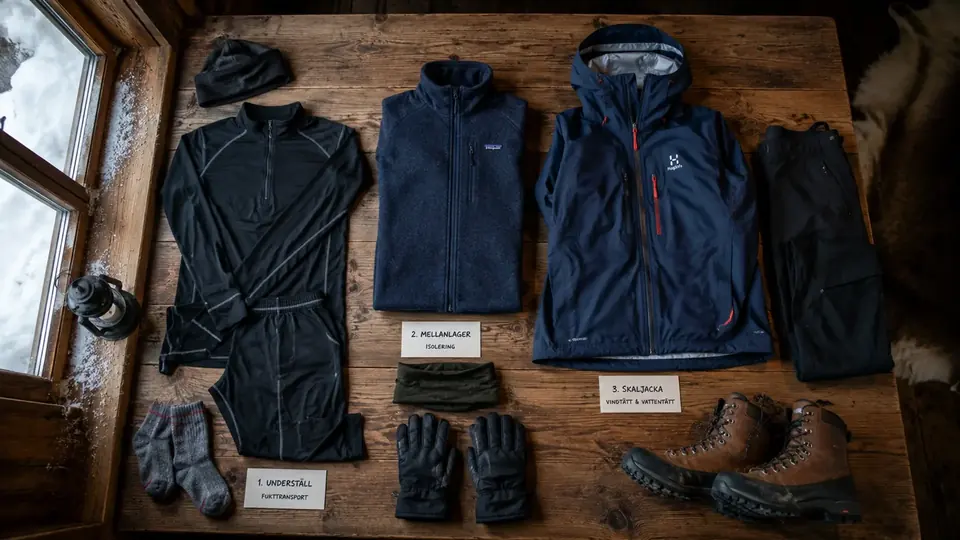
The principle behind layering is simple but powerful: air trapped between layers insulates your body[citation:1]. When you wear several thinner layers instead of one thick coat, you create multiple pockets of warm air that act as insulation. These air spaces both trap heat and allow moisture to escape[citation:1].
Another critical reason for layering is that you will experience different temperatures and activity levels during a single day in Kiruna. You might start the day walking around town (-10°C), then go on a snowmobile tour (moving = warmer), then stand still for an hour watching the Northern Lights (stationary = colder). With layers, you can add or remove clothing to regulate your temperature before you start sweating or shivering[citation:2].
Sweating is dangerous in Arctic conditions. When you sweat, moisture accumulates in your clothing. When you stop moving, that moisture turns cold and draws heat away from your body — a fast track to hypothermia. The layering system with breathable materials prevents this by wicking moisture away from your skin[citation:1][citation:2].
The temperature range you need to handle
Kiruna winter temperatures typically range from -10°C to -25°C, with cold snaps down to -35°C or even -40°C[citation:4][citation:5]. However, wind chill can make it feel significantly colder. Your clothing system must work across this entire range — which is exactly why layering is essential.
"Cotton Kills" — The Most Important Rule in Arctic Dressing
There is a saying among experienced cold-weather travelers: "Cotton kills." This is not an exaggeration[citation:7][citation:9].
Cotton absorbs moisture — up to 27 times its weight in water — and dries very slowly. When you sweat (and you will sweat, even in -20°C), cotton underwear or jeans become wet. That wet cotton then conducts heat away from your body 25 times faster than dry insulation. The result: you get dangerously cold, fast[citation:7][citation:9].
What to avoid: Cotton jeans, cotton t-shirts, cotton socks, cotton underwear, cotton hoodies. What to wear instead: Merino wool, synthetic materials (polypropylene, polyester), or wool blends[citation:1][citation:2][citation:3].
Base Layer: The Foundation of Warmth
The base layer's job is moisture management. It sits directly against your skin and must wick sweat away to keep you dry. If your base layer fails, every layer above it fails[citation:1][citation:2].
Best materials for base layer
- Merino wool (gold standard): Naturally wicking, antibacterial (doesn't smell), warm even when damp, and soft against skin. Merino is expensive but worth every krona[citation:4][citation:6].
- Synthetic (polypropylene, polyester): Cheaper than merino, wicks well, dries fast. The downside: it smells after a day or two of wear[citation:1][citation:3].
- Silk: Lightweight and comfortable but less warm than wool. Good for mild cold (-5°C to -10°C) but not sufficient for Arctic winter[citation:5].
What to buy
- Top: Long-sleeved crew neck or zip-neck. Zip-neck allows venting when you get warm.
- Bottom: Long johns / thermal leggings. Tuck them into your socks[citation:7].
- Weight: For Kiruna winter, choose "mid-weight" or "expedition weight" (200–250 g/m²). Lightweight (150 g/m²) is too thin for -20°C.
Mid Layer: Trapping Body Heat
The mid layer is your primary insulation. Its job is to trap body heat while still allowing moisture to escape to the outer layer. This is where you add serious warmth[citation:1][citation:2].
Best materials for mid layer
- Fleece (polartec or similar): Lightweight, breathable, quick-drying, and reasonably warm. Excellent for most activities. Windproof fleece is even better[citation:1][citation:3].
- Wool sweater (Ivanhoe, Dale of Norway): Traditional, very warm, and naturally wicking. Heavier than fleece but classic Arctic style[citation:4].
- Light down jacket (800-fill): Extremely warm for its weight. Best for low-activity situations (standing around, Northern Lights viewing). Not ideal for high-output activities because down loses insulation when wet[citation:2].
- Synthetic insulated jacket (Primaloft, Thinsulate): Warm even when damp. Good alternative to down for wet conditions[citation:3].
How many mid layers?
In extreme cold (-25°C or lower), you may need two mid layers: a thin fleece under a thicker down jacket or wool sweater. The key is to maintain mobility — you should still be able to move your arms freely[citation:4].
Outer Shell: Blocking Wind, Snow, and Ice
The outer shell's job is protection. It blocks wind, snow, and freezing rain while allowing moisture from your inner layers to escape (breathability). Without a good shell, wind will cut through your insulation layers and freeze you quickly[citation:1][citation:3].
What to look for in an outer shell
- Windproof: Non-negotiable. Wind chill is brutal in Kiruna[citation:1].
- Waterproof or water-resistant: Snow melts from body heat; you do not want that moisture soaking into your layers.
- Breathable (Gore-Tex or similar): Allows moisture to escape. Non-breathable shells trap sweat, which then freezes[citation:1].
- Hood: Adjustable and helmet-compatible (if skiing/snowmobiling).
- Pit zips: Vents under the arms to release heat when you get too warm.
Jacket options
- Insulated winter parka: Many visitors prefer an insulated parka (down or synthetic) that combines mid layer and shell. This works well for everyday wear but is less flexible than a 3‑layer system.
- Shell jacket only: Best for active people who want to adjust insulation independently. You wear your own fleece/down underneath.
Pants (trousers)
Many visitors underestimate leg insulation. Jeans are not sufficient — cotton jeans are dangerous[citation:7]. Options:
- Insulated snow pants / ski pants: Best for outdoor activities. Waterproof, windproof, and insulated[citation:6].
- Shell pants (uninsulated): Worn over base layer + fleece pants. Most flexible system.
- Wool or fleece-lined pants: Good for town wear, not warm enough for extended outdoor activities.
Feet & Boots: The Foundation
Cold feet ruin trips. Your feet are far from your core (harder to keep warm) and are in direct contact with snow and ice. Here is how to keep them warm[citation:2][citation:4].
| Component | Recommendation | Why it matters |
|---|---|---|
| Socks | Merino wool (2 pairs — one thin liner, one thick) | Wool keeps you warm even when damp. Two pairs create insulating air pockets[citation:2][citation:4]. |
| Boot size | One size larger than normal | Room for thick socks + air insulation. Tight boots restrict circulation and cause cold feet[citation:1][citation:2]. |
| Boot insulation | Rated for -30°C or lower. Thinsulate or similar. | Your boots are your foundation. Do not skimp[citation:4]. |
| Boot type | Insulated winter boots with thick, grippy soles | Sorel, Columbia, Kamik, or similar Arctic-grade brands[citation:4][citation:6]. |
| Insoles | Wool felt insoles | Adds an extra layer of insulation between you and the cold ground[citation:2][citation:4]. |
Hands: Mittens vs Gloves
Your hands are highly vulnerable to cold because they have many small blood vessels close to the surface and are often exposed to wind[citation:4].
- Mittens are significantly warmer than gloves because your fingers share heat inside one compartment. For temperatures below -15°C, choose mittens[citation:4].
- Gloves offer more dexterity but less warmth. Useful for photography or handling equipment.
- Liner gloves (thin wool or synthetic) worn under mittens give you the best of both worlds: you can remove the mitten for fine tasks while keeping the liner on[citation:7].
- Heated gloves/mittens are a luxury but genuinely helpful for Northern Lights photographers who stand still for hours[citation:4].
Head & Face: Preventing Heat Loss
A significant amount of body heat escapes through your head and neck. In Arctic conditions, a good hat is non‑negotiable[citation:7].
- Wool hat (beanie/toque): Must cover your ears. Avoid cotton hats. Look for merino wool or a wool blend. Fleece-lined is even warmer[citation:1][citation:4].
- Balaclava or neck gaiter: Protects your face, nose, and neck from wind and frostbite. Essential for snowmobiling or windy days. Merino wool or fleece are best[citation:4][citation:7].
- Scarf: A thick wool scarf adds warmth and can be pulled over your lower face. Versatile and easy to remove indoors[citation:7].
- Hood (on your outer shell): Your jacket hood is your first line of defense against wind. It should be adjustable and large enough to fit over your hat[citation:5].
Expert tip: Face protection
At temperatures below -20°C, exposed skin can freeze in minutes, especially with wind. A balaclava or thick neck gaiter that covers your nose and cheeks is not optional — it is safety equipment[citation:4][citation:7].
Complete Packing List for Kiruna Winter
Use this checklist to pack for a 5‑7 day winter trip to Kiruna. Adjust quantities based on your laundry options.
❄️ Base layer
- □ 2‑3 long-sleeved merino wool or synthetic tops
- □ 2‑3 pairs of merino wool or synthetic long johns (thermal leggings)
- □ 3‑4 pairs of merino wool socks (thin liner socks optional)
- □ 3‑4 pairs of underwear (merino wool or synthetic — no cotton)
🧥 Mid layer
- □ 1‑2 fleece jackets (mid-weight, 200–300 weight fleece)
- □ 1 down jacket or heavy wool sweater (for extreme cold / standing still)
- □ 1 pair fleece pants (to wear under shell pants for cold days)
🧤 Outer shell
- □ Insulated winter parka OR shell jacket + mid layers
- □ Insulated snow pants OR shell pants + fleece pants
- □ Jacket with hood (adjustable, helmet-compatible if skiing)
👢 Footwear
- □ Insulated winter boots rated for -30°C (one size larger than normal)
- □ Wool felt insoles (extra insulation)
- □ Indoor shoes / slippers (hotel floors are cold)
🧣 Accessories
- □ 2 pairs of mittens (warmer than gloves) + thin liner gloves
- □ 2 wool hats (one as backup)
- □ Balaclava or thick neck gaiter (face protection)
- □ Wool scarf
- □ Sunglasses (snow glare is intense on sunny days)
📱 Extras
- □ Hand warmers / toe warmers (disposable or rechargeable)
- □ Power bank (cold drains phone batteries)
- □ Small backpack for carrying extra layers
Material Guide: Wool vs Synthetic vs Down vs Cotton
| Material | Best for | Pros | Cons | Kiruna verdict |
|---|---|---|---|---|
| Merino wool | Base layer, socks, hat | Wicking, antibacterial, warm when wet, natural | Expensive, can be itchy (quality varies) | ✅ Gold standard. Worth the cost[citation:1][citation:2][citation:4] |
| Synthetic (polyester, polypropylene) | Base layer, fleece mid layer | Cheap, wicks well, dries fast | Smells after 1‑2 days, not as warm as wool | ✅ Good budget alternative[citation:1][citation:3] |
| Down | Mid layer (jacket), sleeping bag | Warmest for weight, compressible | Loses insulation when wet, expensive | ✅ Excellent for dry cold (standing still)[citation:2][citation:5] |
| Fleece (Polartec) | Mid layer | Breathable, quick-drying, warm | Bulky, not windproof alone | ✅ Excellent active mid layer[citation:1] |
| Cotton | ❌ Nothing | Cheap, comfortable indoors | Absorbs moisture, dries slowly, dangerous in cold[citation:7] | ❌ NEVER wear in Arctic[citation:1][citation:7][citation:9] |
What Tour Operators Provide (and What You Still Need)
Most winter activity providers in Kiruna provide specialized outerwear for their tours. Here is what you can expect[citation:2][citation:3].
- Dog sledding & snowmobiling: Warm insulated overalls (often snowmobile suits), insulated boots, thick mittens, helmet[citation:2][citation:3].
- Northern Lights tours (with Kiruna Tours): Warm overalls and boots are often provided or available to borrow. Always check when booking.
- Icehotel: For overnight guests, Icehotel provides a very warm sleeping bag rated for -25°C and recommends wearing a wool base layer, wool socks, and a hat inside[citation:2]. For day visits, no clothing is provided — you need your own full winter gear.
What you still need to bring: Your own base layer, mid layer, wool socks, hat, and gloves/mittens. The provided overalls go over your clothing. If you show up in jeans and a cotton hoodie, you will be cold regardless of the overalls[citation:7].
Dressing for Northern Lights Nights: Standing Still in the Cold
Northern Lights viewing is the most challenging situation for clothing because you stand or sit still for hours with minimal movement. Your body produces less heat, yet you are exposed to extreme cold[citation:4].
Add extra layers: Wear everything in your packing list. Base + two mid layers (fleece + down) + insulated parka + snow pants.
Heat packs are essential: Disposable hand and toe warmers can be lifesavers. Put them inside your mittens and boots[citation:4].
Thermos with warm drink: Your tour operator may provide hot lingonberry juice or coffee. Drinking something warm helps maintain core temperature.
Move when you can: Even small movements — wiggling toes, clapping mittened hands — increase circulation and warmth.
Dressing for Dog Sledding & Snowmobiling: Active Cold
These activities generate body heat. The risk is overheating and sweating, which then freezes when you stop[citation:2].
Dress in layers you can remove: Start with base + mid layer + shell. If you get too warm, unzip your jacket or remove the mid layer.
Avoid overdressing: You will be surprised how warm you get while mushing a dog sled or driving a snowmobile. Sweat is dangerous.
Ventilation: Use pit zips on your jacket, unzip your neck, or remove your hat temporarily to release heat.
Face protection is mandatory for snowmobiling: The wind chill at speed can freeze exposed skin in minutes. Wear a balaclava[citation:4].
Dressing for Everyday (Town & Casual)
You do not need full expedition gear to walk from your hotel to a restaurant. However, you still need to respect the cold.
- For short walks (5‑10 minutes): A warm parka, hat, gloves, and insulated boots over normal clothes (jeans + sweater) are fine if it is above -15°C. Avoid cotton jeans if you will be outside longer[citation:6].
- For longer walks or waiting for buses: Add wool long johns under your pants, a wool hat, and a scarf.
- Indoors: Kiruna buildings are very warm (often 20‑22°C). Remove your outer layers immediately to avoid sweating. Most restaurants have coat racks[citation:6].
Sleeping at Icehotel: What to Wear
Spending a night at Icehotel is a bucket-list experience, but it requires special clothing preparation[citation:2].
The temperature inside the ice rooms is a constant -5°C. Icehotel provides a sleeping bag rated for -25°C and a mattress with reindeer hides. However, what you wear inside the bag matters[citation:2].
What to wear to sleep at Icehotel:
- Merino wool base layer (long-sleeved top and long johns) — never cotton[citation:2]
- Wool socks (two pairs recommended)
- Wool hat (essential — much heat escapes through your head)[citation:2]
- A thin fleece or wool sweater (if you tend to get cold)
- Do NOT wear your outdoor parka or snow pants — they trap condensation and will make you cold[citation:2].
Pro tip: Use the sauna before bed to warm your core. Keep your clothes for the night inside the sleeping bag with you so they are warm when you change.
Where to Buy: Budget vs Premium
You do not need to spend a fortune, but you cannot show up in regular winter clothes and expect to be comfortable[citation:4][citation:6].
Budget options
- Uniqlo Heattech: Excellent affordable base layers (synthetic). Good for base layer and long johns[citation:6].
- Decathlon: Very affordable fleece mid layers, down jackets, and base layers. Quality is decent for occasional Arctic use.
- Second-hand / thrift stores: Quality wool sweaters and winter jackets can often be found cheaply. Check before you travel.
- Rent in Kiruna: Several shops rent winter overalls and boots. This is a great option if you do not want to buy[citation:2][citation:3].
Premium options (best performance)
- Smartwool, Icebreaker, Woolpower: Top-tier merino wool base layers[citation:4].
- Patagonia, The North Face, Arc'teryx: High-quality fleece, down, and shell jackets[citation:4].
- Sorel, Kamik, Baffin: Insulated winter boots rated for -30°C or lower[citation:4][citation:6].
- Hestra: Swedish brand famous for high-quality winter gloves and mittens[citation:4].
Buying in Kiruna vs at home
Kiruna has well-stocked outdoor shops (Intersport, Naturkompaniet) with excellent Arctic-grade gear. However, prices are significantly higher than in larger cities — sometimes 20‑30% above Stockholm prices. Buy what you can before you arrive[citation:9].
Pre‑departure checklist
- □ No cotton — check all your tags. Any cotton clothing stays home[citation:7].
- □ Test your boots with thick wool socks — you should be able to wiggle your toes[citation:2].
- □ Pack more layers than you think you need. It is better to have options.
- □ Bring hand warmers and toe warmers — they weigh nothing and help immensely[citation:4].
- □ Remember that most tours provide outerwear (overalls, boots, mittens). Focus on your base and mid layers.
- □ Check the forecast before you pack, but prepare for temperatures 10°C colder than forecasted.
Related Travel Guides
- How Cold Is Kiruna in Winter?
- What -40°C Feels Like in Kiruna
- Common Mistakes Tourists Make in Kiruna
- Kiruna Winter Packing List
- Kiruna's Best Fika & Local Food Spots
Sources & Further Reading
These official sources helped create this guide and provide additional information.
- Kiruna Lappland – Clothing for your arctic adventure [citation:1]
- ICEHOTEL – How to dress [citation:2]
- Camp Ripan – How to Dress [citation:3]
- SMHI – Swedish weather service
- Fjällräven – Swedish outdoor gear
FAQ: Winter Clothing in Kiruna
Is it really necessary to avoid cotton?
Yes — this is the most important rule. Cotton absorbs moisture and stays wet, which then freezes and draws heat from your body. In Arctic conditions, this can become dangerous[citation:7][citation:9].
Can I rent winter clothes in Kiruna?
Yes. Many tour operators provide overalls, boots, and mittens for activities. Some shops also rent full winter clothing sets. However, you should still bring your own base layer, mid layer, and wool socks[citation:2][citation:3].
What temperature rating do I need for boots?
Look for boots rated for -30°C or lower. Brands like Sorel, Kamik, Baffin, and Columbia make suitable boots. The boot should be one size larger than normal to fit thick wool socks[citation:1][citation:2].
Are jeans okay if I wear long johns underneath?
No. The problem is the cotton jeans themselves. Even with long johns underneath, if the jeans get wet or sweaty, the cotton will freeze and become cold. Wear fleece or wool pants instead, or shell pants over your base layer[citation:7].
How many layers do I need for -25°C?
Base layer + mid layer (fleece) + second mid layer (down or heavy wool) + insulated shell jacket. On your legs: base layer + fleece pants + insulated snow pants. Plus thick wool socks, insulated boots, mittens, hat, and balaclava[citation:4][citation:5].
What should I wear to sleep at Icehotel?
Wool base layer (top and bottoms), wool socks, and a wool hat. The hotel provides a sleeping bag rated for -25°C. Do not wear cotton[citation:2].
Are hand warmers worth it?
Yes, especially for Northern Lights viewing (standing still) or for anyone who gets cold easily. They are inexpensive and can make the difference between a magical experience and a miserable one[citation:4].
Can I wear my ski jacket to Kiruna?
Possibly. A ski jacket is usually a shell with light insulation. For Kiruna winter, you will need additional layers underneath (fleece + down) and insulated pants. Ski jackets are generally fine as the outer layer[citation:6][citation:8].
What is the best base layer material?
Merino wool is the gold standard. It wicks moisture, resists odor, and stays warm when damp. Synthetic base layers (Uniqlo Heattech, etc.) are a good budget alternative[citation:1][citation:2][citation:4].