Quick Answer
Kiruna winter packing should focus on Arctic exposure, not normal European city winter. The most important items are thermal base layers, insulated winter boots, mittens, windproof outerwear and face protection. Most visitors underestimate how cold Northern Lights waiting feels compared to normal winter walking.
- Most important item: insulated winter boots
- Biggest mistake: dressing for walking instead of standing still
- Best material: merino wool or thermal synthetic layers
- Main winter risk: cold feet and hands
- Most forgotten item: face protection and spare batteries
Short Answer for Travelers
Kiruna winter packing should be based on real Arctic exposure, not normal city winter. You need warm base layers, insulation, wind protection, proper winter boots, mittens and face protection. If you join guided tours, operators may provide some outer gear, but your own base layers, socks and personal cold protection still matter.
Essential Kiruna Winter Packing List
Kiruna winter can be dry, cold and demanding, especially from December to March. The main issue is not walking between buildings in town. The real test is standing outdoors at night during Northern Lights tours, sitting on a dog sled, riding a snowmobile or waiting near an open viewpoint.
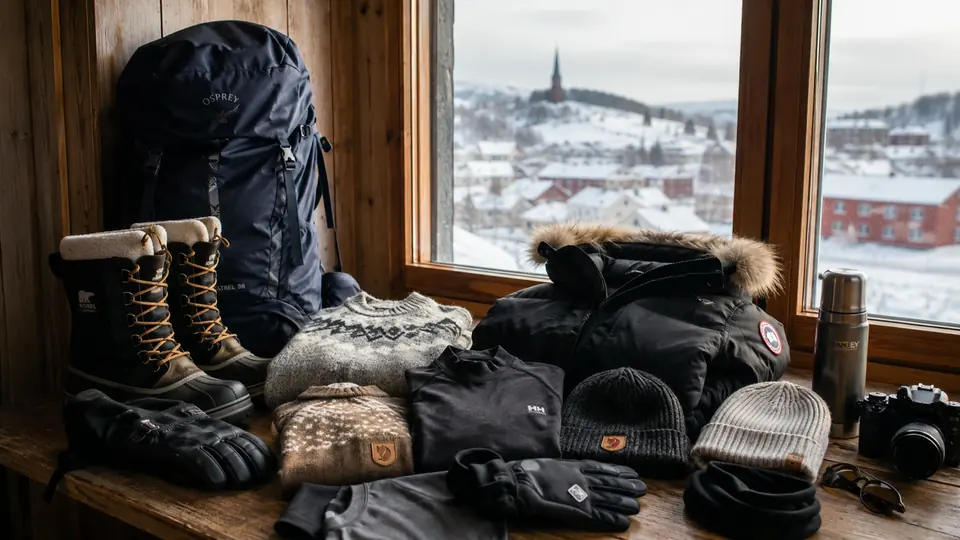
Complete Kiruna Winter Packing Checklist
- Thermal base layer top and bottom.
- Warm mid layer such as fleece, wool or light down.
- Insulated winter jacket or parka.
- Snow pants or insulated winter trousers.
- Insulated winter boots with thick soles.
- Two or three pairs of wool socks.
- Thin liner gloves.
- Warm mittens large enough to fit over liners.
- Warm hat covering ears.
- Neck warmer, buff or balaclava.
- Face protection for cold wind.
- Hand warmers and toe warmers.
- Power bank and spare camera batteries.
- Tripod for Northern Lights photography.
- Headlamp or small torch.
- Lip balm, moisturizer and personal medication.
- Sunglasses for bright snow days in late winter and spring.
The Best Layering System for Kiruna Winter
A proper layering system is more reliable than one heavy jacket. Layers trap warm air, move moisture away from your skin and let you adjust between active movement, heated transfers and long periods of standing still outdoors.
| Layer | Purpose | Best Materials | Avoid |
|---|---|---|---|
| Base layer | Keeps skin dry and adds first warmth. | Merino wool or synthetic thermal fabric. | Cotton T-shirts and cotton leggings. |
| Mid layer | Provides insulation. | Fleece, wool sweater, down or synthetic insulation. | Thin fashion knitwear with little warmth. |
| Outer layer | Blocks wind, snow and cold. | Insulated parka, snow pants, windproof shell. | Short city jackets and thin coats. |
The most common packing error is using one warm-looking jacket over weak layers. In Kiruna, the full system matters.
Best Base Layers for Kiruna
Base layers should sit close to the skin and manage moisture. Merino wool is a strong choice because it insulates well, feels comfortable and works during both active and static outdoor conditions. Synthetic thermal layers can also work well and often dry faster.
Avoid cotton. Cotton absorbs moisture and can make you cold once you stop moving. This matters during snowshoeing, snowmobile transfers and aurora evenings where you may move briefly, then stand still for a long time.
| Base Layer Type | Good for Kiruna? | Why |
|---|---|---|
| Merino wool | Yes | Warm, comfortable and good at handling moisture. |
| Synthetic thermal fabric | Yes | Breathable, quick-drying and often more affordable. |
| Cotton | No | Holds moisture and becomes cold when you stop moving. |
| Normal gym leggings | Sometimes | Only useful if they are thermal and not cotton-based. |
Best Mid Layers
The mid layer is your main insulation. For most travelers, one fleece or wool sweater is not enough for long winter evenings. A stronger setup is often a thermal base layer, a fleece or wool layer, and a light insulated jacket under the outer parka.
- Fleece jacket for breathable warmth.
- Wool sweater for steady insulation.
- Light down jacket for cold, dry conditions.
- Synthetic insulated jacket for mixed conditions.
Outerwear: Jacket and Snow Pants
A warm winter jacket for Kiruna should be insulated, wind-resistant and long enough to cover the hips. A hood is useful, especially when waiting outdoors. The jacket must also leave room for layers underneath.
Snow pants or insulated winter trousers are strongly recommended for winter tours. Jeans and thin city trousers are not enough for dog sledding, snowmobiling, aurora waiting or sitting in cold conditions.
| Outerwear Item | Best For | Main Advantage | Main Limitation |
|---|---|---|---|
| Insulated parka | Aurora tours, city walks, general winter travel. | Strong warmth and wind protection. | Can be too warm for active hiking if heavily insulated. |
| Snow pants | Dog sledding, snowmobiling, aurora viewing. | Protects legs from cold and snow contact. | Bulky for restaurants and indoor travel. |
| Shell jacket | Active snowshoeing or milder spring winter days. | Good wind and moisture protection. | Needs insulation underneath. |
| City coat | Short town walks only. | Looks fine in town. | Usually not warm enough for Arctic tours. |
Best Winter Boots for Kiruna
Winter boots are often the most important item on your packing list. Cold feet can ruin an otherwise good tour, and tight boots can be worse than boots that look less warm but allow proper sock insulation.
Good boots for Kiruna should be insulated, water-resistant, roomy enough for wool socks, high enough for snow and equipped with thick soles that reduce cold transfer from the ground.
| Footwear Type | Suitable? | Why |
|---|---|---|
| Insulated winter boots | Yes | Best all-round choice for snow, cold and standing still. |
| Insulated hiking boots | Sometimes | Can work if genuinely warm and not too tight. |
| Fashion boots | No | Usually too cold, slippery or narrow for wool socks. |
| Sneakers | No | Not suitable for Arctic winter, snow or ice. |
| Rubber boots | No | Too cold unless heavily insulated and designed for winter. |
Local’s Insight: Boots Matter More Than the Jacket
Visitors often focus on buying the warmest-looking jacket and forget their feet. In real Kiruna conditions, cold feet and cold fingers stop people from enjoying the evening faster than almost anything else.
Choose boots that are warm and roomy. If your toes are compressed, circulation drops and your feet get colder. One thick sock is not always better than a good boot with enough space for warm air.
Mittens, Gloves and Hand Warmth
Mittens are usually warmer than gloves because fingers share heat. For Kiruna winter, a good setup is thin liner gloves for using a camera or phone, plus insulated mittens over the top for waiting outside.
- Use liner gloves when handling zippers, phones or camera controls.
- Use insulated mittens for long outdoor waiting.
- Bring hand warmers for aurora nights and photography.
- Avoid thin leather or fashion gloves for outdoor tours.
Hat, Neck Warmer and Face Protection
Ears, cheeks, nose and chin can become cold quickly in Kiruna, especially during wind, snowmobile tours and long static aurora waits. A warm hat that covers the ears is essential. A neck warmer or balaclava is more practical than a loose city scarf.
| Item | Use | When It Matters Most |
|---|---|---|
| Warm hat | Protects ears and head. | Every winter day. |
| Neck warmer | Seals the gap between jacket and face. | Aurora tours and windy days. |
| Balaclava | Protects cheeks, nose and chin. | Snowmobiling and very cold evenings. |
| Sunglasses | Reduces glare from snow. | Bright March and April days. |
What You Should NOT Bring to Kiruna in Winter
- Sneakers or thin fashion boots.
- Cotton jeans as primary outdoor clothing.
- Thin fashion gloves.
- Short city jackets.
- Tight boots with no room for warm air.
- Weak phone batteries without power banks.
- Heavy overpacking focused on fashion outfits.
How Cold Does Kiruna Winter Actually Feel?
Kiruna winter often feels colder during static outdoor activities than the temperature itself suggests. A calm -10°C walk in town can feel manageable, while standing still at -15°C during an aurora evening or snowmobile stop can become uncomfortable very quickly without proper boots, mittens and face protection.
Packing Advice by Traveler Type
| Traveler Type | Main Packing Priority |
|---|---|
| Photographers | Battery management, mittens and standing-still warmth. |
| Families | Extra socks, hand warmers and flexible layering. |
| Budget travelers | Functional layering over expensive outerwear. |
| Luxury travelers | Comfortable layering systems for long outdoor evenings. |
| First-time winter visitors | Warm boots and face protection. |
Why Wind Matters More Than Temperature
Many visitors focus only on the air temperature forecast. In practice, wind often matters more. Snowmobile tours, open aurora locations and exposed viewpoints can feel dramatically colder because moving air removes heat from the body much faster than calm winter conditions.
Can You Rent Winter Clothing in Kiruna?
Some operators provide thermal overalls, boots and gloves during specific activities such as snowmobiling and dog sledding. However, travelers should not rely entirely on rental gear because personal base layers, socks, hats and face protection are still necessary.
Important Rental Clothing Reality
Even when thermal overalls are included, weak base layers underneath still create problems. Rental outer gear works best when combined with proper thermal clothing, wool socks and insulated gloves.
Quick Answer
Kiruna winter packing should focus on Arctic exposure, not normal European city winter. The most important items are thermal base layers, insulated winter boots, mittens, windproof outerwear and face protection. Most visitors underestimate how cold Northern Lights waiting feels compared to normal winter walking.
- Most important item: insulated winter boots
- Biggest mistake: dressing for walking instead of standing still
- Best material: merino wool or thermal synthetic layers
- Main winter risk: cold feet and hands
- Most forgotten item: face protection and spare batteries
Short Answer for Travelers
Kiruna winter packing should be based on real Arctic exposure, not normal city winter. You need warm base layers, insulation, wind protection, proper winter boots, mittens and face protection. If you join guided tours, operators may provide some outer gear, but your own base layers, socks and personal cold protection still matter.
Essential Kiruna Winter Packing List
Kiruna winter can be dry, cold and demanding, especially from December to March. The main issue is not walking between buildings in town. The real test is standing outdoors at night during Northern Lights tours, sitting on a dog sled, riding a snowmobile or waiting near an open viewpoint.
Complete Kiruna Winter Packing Checklist
- Thermal base layer top and bottom.
- Warm mid layer such as fleece, wool or light down.
- Insulated winter jacket or parka.
- Snow pants or insulated winter trousers.
- Insulated winter boots with thick soles.
- Two or three pairs of wool socks.
- Thin liner gloves.
- Warm mittens large enough to fit over liners.
- Warm hat covering ears.
- Neck warmer, buff or balaclava.
- Face protection for cold wind.
- Hand warmers and toe warmers.
- Power bank and spare camera batteries.
- Tripod for Northern Lights photography.
- Headlamp or small torch.
- Lip balm, moisturizer and personal medication.
- Sunglasses for bright snow days in late winter and spring.
The Best Layering System for Kiruna Winter
A proper layering system is more reliable than one heavy jacket. Layers trap warm air, move moisture away from your skin and let you adjust between active movement, heated transfers and long periods of standing still outdoors.
| Layer | Purpose | Best Materials | Avoid |
|---|---|---|---|
| Base layer | Keeps skin dry and adds first warmth. | Merino wool or synthetic thermal fabric. | Cotton T-shirts and cotton leggings. |
| Mid layer | Provides insulation. | Fleece, wool sweater, down or synthetic insulation. | Thin fashion knitwear with little warmth. |
| Outer layer | Blocks wind, snow and cold. | Insulated parka, snow pants, windproof shell. | Short city jackets and thin coats. |
The most common packing error is using one warm-looking jacket over weak layers. In Kiruna, the full system matters.
Best Base Layers for Kiruna
Base layers should sit close to the skin and manage moisture. Merino wool is a strong choice because it insulates well, feels comfortable and works during both active and static outdoor conditions. Synthetic thermal layers can also work well and often dry faster.
Avoid cotton. Cotton absorbs moisture and can make you cold once you stop moving. This matters during snowshoeing, snowmobile transfers and aurora evenings where you may move briefly, then stand still for a long time.
| Base Layer Type | Good for Kiruna? | Why |
|---|---|---|
| Merino wool | Yes | Warm, comfortable and good at handling moisture. |
| Synthetic thermal fabric | Yes | Breathable, quick-drying and often more affordable. |
| Cotton | No | Holds moisture and becomes cold when you stop moving. |
| Normal gym leggings | Sometimes | Only useful if they are thermal and not cotton-based. |
Best Mid Layers
The mid layer is your main insulation. For most travelers, one fleece or wool sweater is not enough for long winter evenings. A stronger setup is often a thermal base layer, a fleece or wool layer, and a light insulated jacket under the outer parka.
- Fleece jacket for breathable warmth.
- Wool sweater for steady insulation.
- Light down jacket for cold, dry conditions.
- Synthetic insulated jacket for mixed conditions.
Outerwear: Jacket and Snow Pants
A warm winter jacket for Kiruna should be insulated, wind-resistant and long enough to cover the hips. A hood is useful, especially when waiting outdoors. The jacket must also leave room for layers underneath.
Snow pants or insulated winter trousers are strongly recommended for winter tours. Jeans and thin city trousers are not enough for dog sledding, snowmobiling, aurora waiting or sitting in cold conditions.
| Outerwear Item | Best For | Main Advantage | Main Limitation |
|---|---|---|---|
| Insulated parka | Aurora tours, city walks, general winter travel. | Strong warmth and wind protection. | Can be too warm for active hiking if heavily insulated. |
| Snow pants | Dog sledding, snowmobiling, aurora viewing. | Protects legs from cold and snow contact. | Bulky for restaurants and indoor travel. |
| Shell jacket | Active snowshoeing or milder spring winter days. | Good wind and moisture protection. | Needs insulation underneath. |
| City coat | Short town walks only. | Looks fine in town. | Usually not warm enough for Arctic tours. |
Best Winter Boots for Kiruna
Winter boots are often the most important item on your packing list. Cold feet can ruin an otherwise good tour, and tight boots can be worse than boots that look less warm but allow proper sock insulation.
Good boots for Kiruna should be insulated, water-resistant, roomy enough for wool socks, high enough for snow and equipped with thick soles that reduce cold transfer from the ground.
| Footwear Type | Suitable? | Why |
|---|---|---|
| Insulated winter boots | Yes | Best all-round choice for snow, cold and standing still. |
| Insulated hiking boots | Sometimes | Can work if genuinely warm and not too tight. |
| Fashion boots | No | Usually too cold, slippery or narrow for wool socks. |
| Sneakers | No | Not suitable for Arctic winter, snow or ice. |
| Rubber boots | No | Too cold unless heavily insulated and designed for winter. |
Local’s Insight: Boots Matter More Than the Jacket
Visitors often focus on buying the warmest-looking jacket and forget their feet. In real Kiruna conditions, cold feet and cold fingers stop people from enjoying the evening faster than almost anything else.
Choose boots that are warm and roomy. If your toes are compressed, circulation drops and your feet get colder. One thick sock is not always better than a good boot with enough space for warm air.
Mittens, Gloves and Hand Warmth
Mittens are usually warmer than gloves because fingers share heat. For Kiruna winter, a good setup is thin liner gloves for using a camera or phone, plus insulated mittens over the top for waiting outside.
- Use liner gloves when handling zippers, phones or camera controls.
- Use insulated mittens for long outdoor waiting.
- Bring hand warmers for aurora nights and photography.
- Avoid thin leather or fashion gloves for outdoor tours.
Hat, Neck Warmer and Face Protection
Ears, cheeks, nose and chin can become cold quickly in Kiruna, especially during wind, snowmobile tours and long static aurora waits. A warm hat that covers the ears is essential. A neck warmer or balaclava is more practical than a loose city scarf.
| Item | Use | When It Matters Most |
|---|---|---|
| Warm hat | Protects ears and head. | Every winter day. |
| Neck warmer | Seals the gap between jacket and face. | Aurora tours and windy days. |
| Balaclava | Protects cheeks, nose and chin. | Snowmobiling and very cold evenings. |
| Sunglasses | Reduces glare from snow. | Bright March and April days. |
What You Should NOT Bring to Kiruna in Winter
- Sneakers or thin fashion boots.
- Cotton jeans as primary outdoor clothing.
- Thin fashion gloves.
- Short city jackets.
- Tight boots with no room for warm air.
- Weak phone batteries without power banks.
- Heavy overpacking focused on fashion outfits.
How Cold Does Kiruna Winter Actually Feel?
Kiruna winter often feels colder during static outdoor activities than the temperature itself suggests. A calm -10°C walk in town can feel manageable, while standing still at -15°C during an aurora evening or snowmobile stop can become uncomfortable very quickly without proper boots, mittens and face protection.
Packing Advice by Traveler Type
| Traveler Type | Main Packing Priority |
|---|---|
| Photographers | Battery management, mittens and standing-still warmth. |
| Families | Extra socks, hand warmers and flexible layering. |
| Budget travelers | Functional layering over expensive outerwear. |
| Luxury travelers | Comfortable layering systems for long outdoor evenings. |
| First-time winter visitors | Warm boots and face protection. |
Why Wind Matters More Than Temperature
Many visitors focus only on the air temperature forecast. In practice, wind often matters more. Snowmobile tours, open aurora locations and exposed viewpoints can feel dramatically colder because moving air removes heat from the body much faster than calm winter conditions.
Can You Rent Winter Clothing in Kiruna?
Some operators provide thermal overalls, boots and gloves during specific activities such as snowmobiling and dog sledding. However, travelers should not rely entirely on rental gear because personal base layers, socks, hats and face protection are still necessary.
Important Rental Clothing Reality
Even when thermal overalls are included, weak base layers underneath still create problems. Rental outer gear works best when combined with proper thermal clothing, wool socks and insulated gloves.