Short Answer Summary
Choose summer if you want long hikes, visible trails and mountain hut trekking. Choose winter if you want snowshoeing, skiing, Northern Lights evenings and a quieter Arctic landscape. Do not treat winter routes as normal hiking trails; snow changes distance, speed, safety and navigation.
Abisko is one of the most accessible hiking areas in Swedish Lapland because it combines easy trail access, national park scenery and both short and long-distance hiking routes.
In summer it is best for visible trails and Kungsleden trekking. In winter it is best for snowshoeing, skiing and guided Arctic hiking experiences.
This guide helps you decide when to visit Abisko, which trails to choose and how hiking conditions change between summer and winter.
Why Is Abisko So Good for Hiking?
Abisko is one of the most practical hiking areas in Swedish Lapland because the mountains begin close to the railway, the national park entrance is easy to reach, and several routes start near accommodation and transport.
The area works for different types of visitors. A first-time hiker can do a short viewpoint walk. A stronger hiker can climb toward Nuolja or explore Kärkevagge. A multi-day trekker can start the northern section of Kungsleden.
Abisko is not only a Northern Lights destination. It is also one of Sweden’s most accessible Arctic hiking areas, with both short trails and major long-distance routes.
How Different Are Summer and Winter Trails in Abisko?
The same landscape behaves like two different destinations. Summer means visible paths, open valleys, stream crossings, mountain huts and long daylight. Winter means snow cover, colder stops, slower movement and routes that often require snowshoes or skis.
This difference matters for planning. A three-hour summer hike can become a much more serious winter outing if wind, snow depth or low visibility arrive.
| Factor | Summer Hiking | Winter Hiking / Snowshoeing |
|---|---|---|
| Typical season | June to September. | December to March, sometimes April. |
| Daylight | Very long, with Midnight Sun from late May to mid-July. | Very short around December; improves strongly in February and March. |
| Trail visibility | Paths and markers are usually visible. | Trails may be buried; poles, GPS and local advice matter. |
| Equipment | Hiking boots, rain shell, map and layers. | Snowshoes or skis, insulated boots, headlamp and serious layers. |
| Main challenge | Weather changes, mud, mosquitoes and river crossings. | Cold, wind, snow depth, avalanches and navigation. |
| Best for | Kungsleden, long walks, photography and hut trekking. | Snowshoeing, cross-country skiing and short scenic outings. |
What Are the Best Months for Hiking in Abisko?
The best month depends on the activity. July and August are the classic hiking months. September is excellent for autumn color and fewer mosquitoes. February and March are usually the best winter months because the snow is established and daylight has returned.
Best overall hiking months in Abisko: July, August, March, February, September
| Month | Trail Conditions | Best For | Planning Note |
|---|---|---|---|
| April | Snow still dominates; spring-winter conditions. | Skiing, snowshoeing, quiet visits. | Check activity availability carefully. |
| May | Mixed snow, thaw and wet ground. | Flexible travelers. | Not ideal for classic hiking. |
| June | Lower trails open; higher snow patches possible. | Early summer hiking. | Expect wet sections and changing conditions. |
| July | Peak summer hiking. | Kungsleden and long days. | Mosquitoes can be intense. |
| August | Strong hiking month. | Multi-day treks and stable routes. | Cooler evenings begin. |
| September | Autumn colors; colder nights. | Photography, quieter trails, early aurora. | Snow can arrive late in the month. |
| December | Deep winter and very short daylight. | Short guided snowshoe outings. | Independent route choice should be conservative. |
| February | Winter trails improve with more light. | Snowshoeing and skiing. | Still very cold; dress for stops. |
| March | Often the best winter balance. | Snow, sun, aurora evenings and ski tours. | Popular for winter outdoor travel. |
What Is Summer Hiking in Abisko Like?
Summer hiking in Abisko is the easiest season for most visitors. Trails are visible, daylight is long and route options range from short loops to multi-day hut trekking. The Midnight Sun period around late May to mid-July gives unusual freedom, but it can also disrupt sleep.
Weather remains Arctic. A warm morning can become a cold, wet afternoon. Pack for wind and rain even when the forecast looks calm.
Local Insight: Summer Does Not Mean Easy Weather
Abisko summer can feel warm in the valley and cold on exposed ridges on the same day. Carry a waterproof shell, warm layer and spare socks even for short hikes.
Can You Hike in Abisko in Winter?
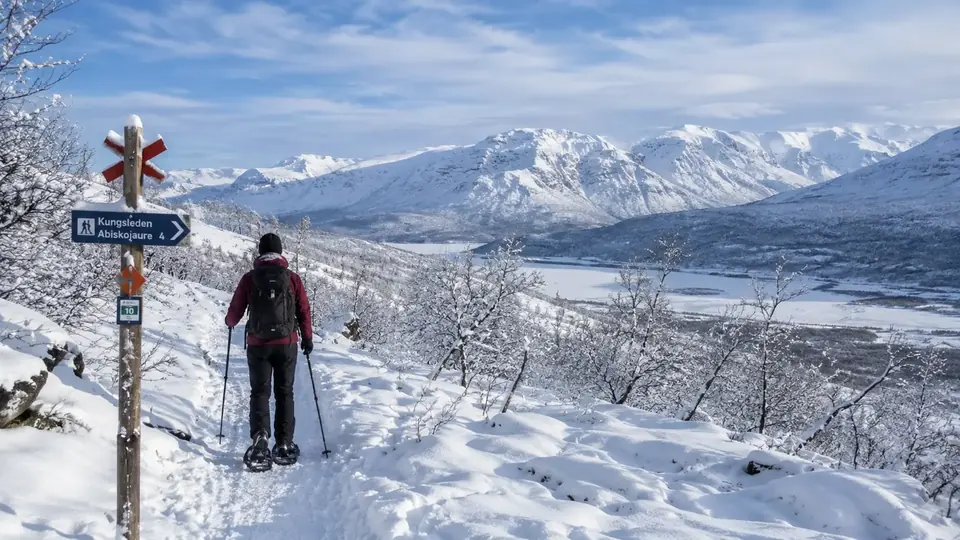
Yes, but winter hiking in Abisko usually means snowshoeing, cross-country skiing or guided winter walking rather than normal hiking boots on bare trails. Snow depth, wind and darkness change the effort level quickly.
Winter hiking in Abisko is only recommended if you treat it as snow travel, not normal hiking.
Snow depth, wind and visibility often matter more than distance.
Winter hiking in Abisko is possible, but it should be treated as winter travel, not a normal walk with extra clothing.
Which Abisko Trails Are Best for Summer and Winter?
| Trail or Route | Summer Use | Winter Use | Difficulty | Best For |
|---|---|---|---|---|
| Paddus Trail | Short viewpoint loop. | Good beginner snowshoe route when conditions allow. | Easy | Families, short stays and first views. |
| Nuolja / Aurora Sky Station area | Moderate mountain hike or chairlift-supported visit. | Winter access depends on weather and operation. | Moderate | Views, Midnight Sun and aurora atmosphere. |
| Kärkevagge and Trollsjön | Strong summer day hike. | Not a casual winter route. | Moderate | Boulder valley, lake views and photography. |
| Kungsleden north from Abisko | Classic multi-day hike. | Only for experienced winter travelers or guided trips. | Moderate to challenging | Long-distance hikers. |
| Lake Torneträsk area | Easy scenic walks near the village. | Winter views are strong, but ice safety matters. | Easy to moderate | Short walks and photography. |
How Does Kungsleden from Abisko Work?
Kungsleden is Sweden’s best-known long-distance mountain trail. The northern section from Abisko toward Nikkaluokta is the classic route many hikers plan first. It is usually treated as a 5–7 day hike depending on pace, weather and hut bookings.
The route starts easily enough, but it should not be underestimated. Distances between huts, weather exposure, pack weight and river or boat logistics can make the trek more demanding than the map suggests.
Local Insight: Book the Huts Before You Build the Dream Itinerary
For summer Kungsleden, hut availability often decides the real itinerary. Do not plan flights and train tickets first, then discover the key huts are full.
What Are the Best Short Hikes in Abisko?
Short hikes are the best choice for many visitors staying one or two nights. They let you experience the park without committing to hut logistics or heavy packs.
- Paddus Trail: a short viewpoint walk with strong reward for modest effort.
- Nuolja area: better for fit hikers who want height and wider views.
- Abiskojåkka canyon area: useful for a short national park walk close to STF Abisko Turiststation.
- Lake Torneträsk viewpoints: best for easy photography, open horizons and sunset or low-light atmosphere.
- Kärkevagge: a stronger day hike for travelers with time, transport and decent weather.
Are Spring and Autumn Good for Hiking in Abisko?
Spring and autumn can be excellent, but they are less predictable. April and May are often still snow-based, while September can be one of the best months for walking, photography and early Northern Lights. October is more uncertain, with cold, mud, ice and early snow possible.
These months also have fewer services. Check accommodation, gear rental, public transport and guided tour availability before relying on a shoulder-season plan.
What Gear Do You Need for Abisko Hiking?
| Need | Summer | Winter |
|---|---|---|
| Footwear | Waterproof hiking boots or strong trail shoes. | Insulated winter boots suitable for snowshoes. |
| Clothing | Layering, rain shell and warm mid-layer. | Thermal base layers, insulation, windproof shell and mittens. |
| Navigation | Map, phone with offline maps and visible trail markers. | GPS/offline maps, compass, poles and conservative route choice. |
| Safety | First aid, snacks, water, power bank and weather check. | Headlamp, power bank, spare gloves, emergency layer and local advice. |
| Special issue | Mosquitoes and wet ground. | Cold battery drain, wind chill and avalanche terrain. |
Abisko Hiking Packing Checklist
- Waterproof outer layer even in summer.
- Warm mid-layer for ridge wind and evening temperatures.
- Offline map and backup power bank.
- Food and water for longer than your planned route.
- Headlamp in winter and shoulder seasons.
- Snowshoes or skis for winter routes, not normal hiking shoes.
- Insect protection for July hiking.
- Clear return plan if using public transport.
How Safe Is Hiking in Abisko?
Abisko is accessible, but it is still Arctic mountain terrain. The most common problems are not dramatic accidents. They are simple planning failures: late starts, wet clothing, weak footwear, no map, dead phone battery or choosing a route that does not match the weather.
In winter, treat low visibility seriously. Snow can hide the trail, erase tracks and make distances feel longer. If wind increases or visibility drops, turning back early is the correct decision.
Problem: Visitors Treat Abisko Trails Like Normal Day Walks
The main problem is underestimation. Abisko is easy to reach by train, so visitors sometimes assume the trails are casual. Some are. Others enter exposed mountain terrain quickly.
Solution: Match the Route to Conditions
Choose the trail after checking weather, daylight, snow conditions and your group’s clothing. A short route in good conditions is better than a famous route that becomes stressful in wind, fog or cold.
Common Mistakes Visitors Make When Hiking in Abisko
- Planning Kungsleden before checking hut availability.
- Trying winter routes in normal hiking shoes.
- Ignoring wind because the village feels calm.
- Forgetting that low visibility can arrive quickly.
- Starting too late in winter when daylight is short.
- Underpacking food and warm layers for a short hike.
- Assuming Midnight Sun removes all planning needs.
- Walking on frozen water without local ice knowledge.
Realistic Expectations for Abisko Hiking
Abisko hiking is rewarding because the landscape changes quickly: birch forest, river canyon, lake views, mountain slopes and open valley terrain can all sit close together. But weather may block views, wind can make ridges uncomfortable and summer mosquitoes can be a real nuisance.
Winter is quieter and visually powerful, but slower. A short snowshoe outing can be more satisfying than forcing a long route. The best Abisko hiking days come from flexible planning, not from completing a route at any cost.
Final Verdict: Is Hiking in Abisko Worth It?
Yes. Abisko is one of the best hiking areas in Swedish Lapland because it offers both easy access and serious mountain routes. Summer is best for classic hiking and Kungsleden. Winter is best for snowshoeing, skiing and quiet Arctic landscapes.
For most visitors, the strongest plan is simple: use Abisko village as a base, choose one short trail and one more ambitious route, then adjust by weather. If you are planning Kungsleden or winter backcountry travel, prepare properly and do not rely on optimism.