Short Answer Summary
Kiruna is excellent for responsible wildlife watching, especially moose, reindeer and northern forest birds. The goal is not close contact. The goal is calm observation, natural behaviour and respect for animals that must conserve energy in a demanding Arctic climate.
Most Important Wildlife Respect Rules
- Best wildlife strategy: observe quietly from distance.
- Most common visitor mistake: walking too close for photos.
- Most important safety rule: never approach moose calves or separate reindeer herds.
- Best wildlife tool: binoculars or zoom lens instead of closer positioning.
- Most realistic large animal: reindeer.
- Rarest major sighting: Arctic fox.
About This Wildlife Guide
This guide focuses on responsible wildlife observation around Kiruna, Abisko and Swedish Lapland. It combines practical Arctic travel experience with ethical wildlife principles, local Sámi context and realistic expectations about wildlife encounters in northern Scandinavia.
Why Does Ethical Wildlife Viewing Matter in the Arctic?
Arctic animals live with a narrow energy margin. Winter is long, food availability changes through the season and survival often depends on conserving energy whenever possible. A single unnecessary disturbance may force an animal to run, abandon feeding or leave a safer resting location.
Responsible wildlife watching is therefore not only about visitor safety. It is also about allowing animals to continue natural behaviour without unnecessary stress or energy loss.
In Kiruna and Swedish Lapland, wildlife ethics also connect directly to Sámi culture and reindeer herding. Reindeer are not public props for tourism photos. They are part of working herds connected to traditional livelihoods and migration routes.
The main wildlife rule is simple: observe from a distance where the animal behaves naturally and does not need to react because of your presence.
Local Insight: Quiet Observation Usually Creates Better Wildlife Experiences
Visitors often believe a better wildlife experience means getting physically closer. In reality, calmer and more distant observation usually creates longer sightings and more natural animal behaviour.
What Are the Basic Rules for All Wildlife Encounters?
These rules apply whether you are watching moose near forest roads, reindeer in open winter landscapes, birds in Abisko National Park or wildlife during a Northern Lights drive.
Universal Wildlife Rules
- Keep respectful distance and use zoom instead of walking closer.
- Never feed wildlife.
- Move slowly and quietly.
- Stay on marked trails whenever possible.
- Never stand between an adult animal and young.
- Do not touch young animals or birds.
- Respect temporary closures and nesting areas.
- Keep dogs controlled near wildlife areas.
- Avoid flash photography at close range.
- Leave immediately if the animal changes behaviour because of you.
| Behaviour | Responsible? | Why |
|---|---|---|
| Watching quietly from distance | Yes | Allows natural behaviour to continue. |
| Walking closer for a photo | Usually no | Creates stress and unnecessary disturbance. |
| Feeding wildlife | No | Changes behaviour and creates dependency. |
| Using binoculars or telephoto lens | Yes | Reduces pressure on the animal. |
| Blocking herd movement | No | Creates stress and confusion. |
Which Animals Can You See Near Kiruna?
Wildlife sightings are never guaranteed, but several species are realistic for visitors who move slowly, observe carefully and accept that ethical wildlife watching often happens from distance.
| Animal | Where You May See It | Best Season | Minimum Respectful Distance | Important Note |
|---|---|---|---|---|
| Moose | Forest edges, wetlands and quieter roads | Year-round | 100m+ | Extra caution around calves. |
| Reindeer | Roadsides and open landscapes | Year-round | 50m+ | Connected to Sámi herding. |
| Arctic fox | Mountain regions near Abisko | Late spring to autumn | 100m+ | Rare and protected species. |
| Ptarmigan | Mountain and birch forest areas | Winter and spring | 30m+ | Camouflage makes them easy to miss. |
| Golden eagle | Mountain valleys and cliffs | Year-round | 200m+ near nests | Nest disturbance is serious. |
How Do You Safely Spot Moose Near Kiruna?
Moose are large, powerful and often underestimated by visitors. They may appear calm from distance, but they can move quickly and become dangerous if they feel trapped or threatened.
The safest way to observe moose is from a vehicle pullout, open trail area or with an experienced local guide. Early morning and evening are often the best times for sightings.
| Moose Behaviour | Meaning | Correct Response |
|---|---|---|
| Calm feeding | Moose feels relatively undisturbed. | Stay quiet and maintain distance. |
| Staring directly at you | Animal is monitoring your behaviour. | Stop approaching and remain calm. |
| Raised hair or stamping | Warning or stress behaviour. | Retreat slowly and increase distance. |
| Calf nearby | Protective mother likely present. | Leave significant extra distance. |
Moose Safety Warning
Never leave the road or vehicle to chase a closer moose photo. Many dangerous moose encounters begin when visitors try to reduce distance after already seeing the animal successfully.
How Should Visitors Behave Around Reindeer?
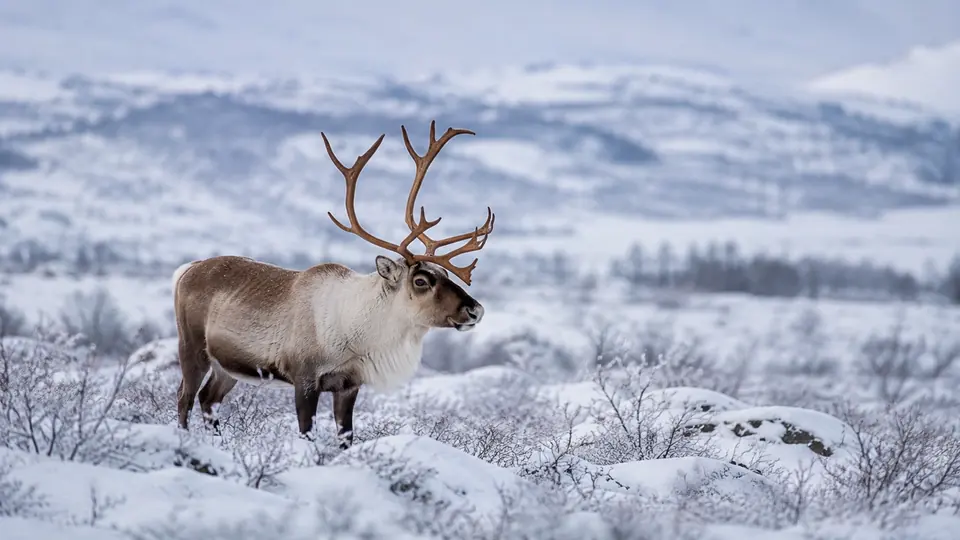
Reindeer in Swedish Lapland are semi-domesticated working animals connected to Sámi reindeer herding communities. Visitors should treat them respectfully and avoid interrupting movement, feeding or migration patterns.
Reindeer are commonly seen around Jukkasjärvi, the E10 corridor, Abisko routes and open winter landscapes. They often appear calm, but visitors should still avoid entering herds or encouraging interaction.
Reindeer should be observed quietly from distance without feeding, chasing or separating animals from the herd.
| Behaviour | Respectful? | Reason |
|---|---|---|
| Waiting quietly inside the vehicle | Yes | Allows the herd to move naturally. |
| Walking toward the herd | No | Creates stress and confusion. |
| Feeding reindeer roadside food | No | Encourages dangerous road behaviour. |
| Joining Sámi-led experiences | Yes | Handled with cultural context and permission. |
For cultural context, also read our guides about respectful Sámi culture experiences and reindeer experiences around Kiruna.
Can You See Arctic Foxes Near Kiruna?
Arctic foxes exist in parts of the Swedish mountain region, but sightings are rare and should never be treated as guaranteed. Most visitors to Kiruna will not see one during a normal trip.
Abisko National Park and mountain regions near Kebnekaise offer stronger possibilities than Kiruna town itself, especially for experienced hikers and nature travelers.
Arctic Fox Protection Warning
Never approach dens or leave food for Arctic foxes. Human food conditioning creates long-term danger for protected wildlife species.
How Do You Watch Arctic Birds Responsibly?
Birdwatching in Swedish Lapland can include ptarmigan, Siberian jay, waxwings, rough-legged buzzards and birds of prey such as golden eagles.
Spring and early summer require additional caution because many species nest on or near the ground where nests are difficult to see.
Responsible Birdwatching Checklist
- Stay on trails during nesting season.
- Do not use recorded calls.
- Never approach nests or chicks.
- Avoid cliff nesting areas.
- Use binoculars instead of closer positioning.
- Leave if birds begin alarm behaviour.
Local Insight: “Injured” Bird Behaviour May Protect a Nest
Some Arctic birds pretend to be injured to distract people away from nests or chicks. If birds circle you repeatedly or behave unusually near the ground, leave the area slowly and carefully.
What Should Drivers Know About Wildlife on Roads?
Wildlife sightings often happen from roadsides, especially during dawn, dusk, snowfall and low-light conditions. Moose and reindeer can appear suddenly near forest edges or open roads.
Drivers should slow down near wildlife warning signs and remain alert even after seeing one animal because more may follow.
| Road Situation | Main Risk | Correct Response |
|---|---|---|
| Single reindeer crossing | More animals following | Slow down and wait patiently. |
| Moose near road edge | Sudden crossing movement | Brake early and avoid close passing. |
| Wildlife collision | Traffic danger and injured animal | Call 112 and follow instructions. |
| Dawn or dusk driving | Higher animal movement | Reduce speed and scan road edges. |
If you plan winter driving independently, also read our Arctic driving and winter safety guides.
How Do You Photograph Wildlife Ethically?
Ethical wildlife photography prioritizes the animal’s welfare over the photo itself. If an image requires chasing, feeding or stressing the animal, it is not responsible wildlife photography.
- Use telephoto lenses instead of moving closer.
- Never bait wildlife with food.
- Avoid flash at close distance.
- Do not chase moving animals.
- Limit time near wildlife.
- Protect sensitive location information.
The best wildlife photo is the one where the animal behaves naturally before, during and after the encounter.
Where Can You See Wildlife Near Kiruna?
Wildlife around Kiruna is often found near ordinary landscapes such as river valleys, forest roads, wetlands and mountain approaches rather than extremely remote wilderness.
| Area | Possible Wildlife | Best For | Respectful Approach |
|---|---|---|---|
| Jukkasjärvi and Torne River valley | Reindeer, moose and birds | Accessible nature observation | Stay on roads and paths. |
| Nikkaluokta road | Moose and reindeer | Scenic wildlife driving | Use safe pullouts only. |
| Abisko National Park | Birds and occasional Arctic fox | Mountain nature | Follow park rules and trails. |
| Kebnekaise region | Mountain birds and fox possibility | Experienced hikers | Avoid sensitive breeding areas. |
| Forest roads near Kiruna | Moose and forest birds | Quiet observation | Respect winter road safety. |
Problem: Visitors Want Close Wildlife Encounters
The biggest wildlife tourism problem is often pressure to create dramatic close-up photos. Social media images frequently hide the disturbance or stress behind the final image.
Solution: Use Distance as Part of the Experience
Bring binoculars, use zoom lenses and allow guides to decide safe stopping points. Wildlife experiences improve when visitors prioritize calm observation over physical proximity.
Ethical Wildlife Viewing Checklist
- Did the animal continue natural behaviour?
- Did you maintain respectful distance?
- Did you avoid feeding or baiting?
- Did you stay away from nests or dens?
- Did you avoid blocking movement routes?
- Would your behaviour be safe if copied by everyone?
Common Mistakes Visitors Make Around Arctic Wildlife
- Walking closer after already seeing the animal successfully.
- Stopping dangerously on roads for photos.
- Feeding wildlife because it appears calm.
- Treating reindeer as public tourist animals.
- Using flash too close to wildlife.
- Ignoring nesting and breeding seasons.
- Expecting guaranteed wildlife sightings.
- Prioritizing social media photos over animal welfare.
What Should You Realistically Expect?
Reindeer are the most realistic larger wildlife sighting during many Kiruna trips. Moose remain possible but less predictable. Arctic fox sightings are rare and should be treated as exceptional luck rather than a planned expectation.
Weather, traffic, season, snow depth and time of day all influence wildlife visibility. Ethical wildlife tours increase your chances, but no responsible guide can guarantee wild animal encounters.
| Expectation | Realistic Version | Better Mindset |
|---|---|---|
| “I want a close moose photo.” | Moose should stay distant. | Use zoom and value calm behaviour. |
| “Reindeer will approach us.” | They should not be encouraged. | Respect herd movement. |
| “We will definitely see Arctic fox.” | Sightings are rare. | Enjoy the mountain environment itself. |
| “Wildlife requires deep wilderness.” | Road edges and valleys are often productive. | Travel slowly and observe carefully. |
Final Verdict: Is Kiruna Good for Arctic Wildlife?
Yes. Kiruna is a strong Arctic wildlife destination because forests, river valleys, mountain landscapes and open winter terrain create opportunities for responsible wildlife observation throughout the year.
The best wildlife experiences happen when visitors respect distance, seasonality and local culture. Arctic wildlife should be observed naturally, not controlled or pressured for entertainment.