Quick Answer
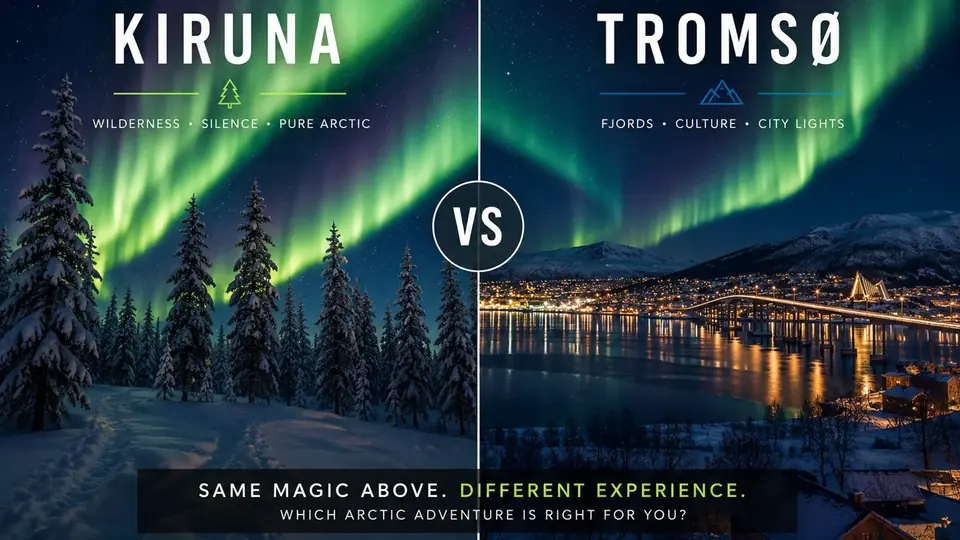
Kiruna is usually better for Northern Lights-focused travelers because it offers darker inland surroundings, quieter Arctic landscapes and easier access to wilderness-style aurora viewing. Tromsø is better for travelers who want a larger Arctic city experience with fjords, restaurants, nightlife and a wider aurora tour market.
- Best for quiet aurora trips: Kiruna
- Best for fjords and Arctic city atmosphere: Tromsø
- Best for photography beginners: Kiruna
- Best for restaurants and nightlife: Tromsø
- Best strategy: Choose by travel style, not only aurora reputation
Short Answer Summary
Choose Kiruna if your main goal is a calm, nature-led Northern Lights trip with snow, darkness, campfires and small-group Arctic activities. Choose Tromsø if you want the aurora as part of a broader city-and-fjord holiday with more restaurants, nightlife, harbour atmosphere and a larger tour market.
| Need | Best Choice |
|---|---|
| Pure aurora atmosphere | Kiruna |
| Fjords and Arctic city life | Tromsø |
| Nightlife and restaurants | Tromsø |
| Quiet dark landscapes | Kiruna |
| Photography simplicity | Kiruna |
Why Travelers Compare Kiruna and Tromsø
Kiruna and Tromsø are two of the best-known Arctic destinations for Northern Lights trips in Europe. Both are far north, both sit in strong aurora latitudes, and both attract travelers between September and March.
In reality, the travel experience is very different. Kiruna is an inland Swedish Lapland destination where the trip often revolves around snow, silence, forests, frozen rivers, small-group tours, ICEHOTEL, Abisko access and a quieter Arctic rhythm. Tromsø is a Norwegian coastal city surrounded by fjords, mountains, islands and a larger urban tourism scene.
The right choice depends less on which destination is “better” in general and more on what kind of Arctic trip you want. A traveler looking for silence and darkness may prefer Kiruna. A traveler looking for a city base with fjords and restaurants may prefer Tromsø.
Travelers comparing Tromsø and Kiruna should also understand how the Northern Lights actually work, since cloud cover and darkness matter more than destination marketing.
Both destinations can be excellent for Northern Lights. The real question is whether you want a quiet inland Arctic experience or a lively coastal Arctic city experience.
Kiruna vs Tromsø: Quick Comparison
| Category | Kiruna | Tromsø | Best Choice |
|---|---|---|---|
| Main aurora advantage | Darker inland surroundings, snow landscapes and easier access to quiet viewing areas. | Large aurora tour market with many operators and long-distance chase options. | Kiruna for calm darkness; Tromsø for chase variety. |
| Weather pattern | Colder, drier and more continental inland winter climate. | Milder coastal climate with more variable cloud movement. | Depends on tolerance: Kiruna colder; Tromsø milder but often cloudier. |
| Light pollution | Lower and easier to escape quickly. | Higher around the city, harbour and surrounding settlements. | Kiruna. |
| Landscape | Forests, frozen rivers, snowfields, cabins and Swedish Lapland inland scenery. | Fjords, sea, mountains, bridges, islands and coastal views. | Depends on photo style. |
| Restaurants and nightlife | Limited compared with larger Arctic cities. | Much stronger restaurant, bar and city scene. | Tromsø. |
| Tour atmosphere | Often quieter, smaller-scale and nature-led. | More varied, more commercial and often chase-oriented. | Kiruna for calm; Tromsø for variety. |
| Best for | Couples, photographers, nature-focused travelers and small-group winter trips. | City-break travelers, fjord lovers and groups wanting urban services. | Depends on trip style. |
Local’s Insight
Many travelers compare Kiruna and Tromsø only by aurora reputation. That is too simple. The Northern Lights can appear above both destinations, but the evenings feel different.
Kiruna is usually better if you want the night to feel quiet, cold, dark and connected to the landscape. Tromsø is usually better if you want the aurora combined with fjords, restaurants and a larger city base. The best choice is not only about visibility — it is about the full experience around the waiting.
Are Kiruna and Tromsø Both in a Good Aurora Zone?
Yes. Both Kiruna and Tromsø are well placed for Northern Lights because they sit in high-latitude areas where aurora can appear regularly during the dark season. You do not need an extreme geomagnetic storm to see aurora in either destination.
This means the difference is rarely about whether aurora exists above one place and not the other. The more important practical factors are cloud cover, local darkness, how easily you can move to a better viewing area, and how many nights you stay.
Kiruna is inland and surrounded by darker land routes, forests and open snow areas. Tromsø is coastal, mountainous and more urban, so tours often focus on driving away from the city to find clearer sky windows.
How Do Weather and Cloud Cover Compare?
Cloud cover is often more important than the aurora forecast. If the sky is covered, even strong aurora activity can be invisible. A moderate aurora under clear sky is usually more rewarding than a strong forecast hidden behind clouds.
Kiruna has a colder inland climate. Winter nights can be very cold, but clear high-pressure weather can bring dry air and sharp visibility. Tromsø is milder because of the coast, but coastal weather can change quickly, and clouds may move through fjords and mountain areas during the evening.
| Weather Factor | Kiruna | Tromsø |
|---|---|---|
| Typical winter feel | Cold, dry, snowy and inland. | Milder, coastal, windy and more variable. |
| Cloud strategy | Often focus on nearby dark inland areas if conditions are clear. | Often involves longer chase routes to find breaks in cloud. |
| Comfort challenge | Very low temperatures. | Wind, damp cold, icy streets and changing weather. |
| Aurora implication | Strong when skies are clear; cold can be intense. | Strong when tours find clear sky windows; drives may be longer. |
Which Destination Has Better Darkness and Less Light Pollution?
Kiruna has a clear advantage for travelers who value dark surroundings. The town is smaller, and dark forest roads, riverside locations and open snow landscapes are easier to reach. This helps with faint aurora, photography and the feeling of being away from artificial light.
Tromsø has more city light because it is a larger Arctic city. This does not make it a poor aurora destination, but it changes the viewing style. Many successful Tromsø aurora experiences depend on driving away from the city to darker areas.
Travelers researching dark-sky viewing should also read the best places to see Northern Lights near Kiruna.
If your priority is low light pollution and a quiet viewing environment, Kiruna is usually the stronger choice.
Which Is Colder, Kiruna or Tromsø?
Kiruna is usually much colder than Tromsø in winter. In midwinter, Kiruna can reach very low temperatures, especially on clear nights. This creates a strong Arctic feeling but requires serious clothing, warm boots and realistic expectations.
Tromsø is milder, but that does not always mean more comfortable. Wind, wet snow, slush and damp coastal air can feel cold in a different way. Tromsø may be easier for travelers nervous about severe cold, while Kiruna is better for those who want classic dry snow and deep winter atmosphere.
Travelers worried about Arctic winter conditions should also read how cold Kiruna becomes in winter.
| Comfort Factor | Kiruna | Tromsø |
|---|---|---|
| Cold intensity | Higher. Proper winter clothing is essential. | Lower temperatures are less extreme, but wind and dampness matter. |
| Walking around town | Quieter and colder; distances require planning. | Easier city walking, but pavements can be icy or wet. |
| Waiting outside for aurora | Very cold but often dry; fireside tours help. | Milder but wind-exposed; long chase stops may feel tiring. |
Landscape and Atmosphere
Kiruna’s Northern Lights atmosphere is inland, snowy and quiet. The visual setting is forests, frozen rivers, cabins, campfires and broad winter darkness. The destination feels more nature-led than city-led.
Tromsø’s atmosphere is coastal and dramatic. Fjords, islands, bridges, harbours and steep mountains create a strong visual identity. It is more urban, more social and more varied for travelers who want both aurora and city life.
Neither atmosphere is automatically better. Kiruna is stronger for silence and dark inland feeling. Tromsø is stronger for fjord scenery and lively Arctic city energy.
Northern Lights Photography: Kiruna vs Tromsø
Kiruna is often easier for clean aurora photography because dark snow foregrounds are simpler to reach. Forest lines, frozen rivers, cabins and open snowfields create strong compositions without needing bright city elements.
Tromsø can produce dramatic images with fjords, mountains and coastal reflections. The challenge is that weather, road conditions and city light often require more movement and more planning. Advanced photographers may enjoy Tromsø’s complexity; beginners may find Kiruna more straightforward.
| Photography Need | Better Choice | Why |
|---|---|---|
| Simple dark-sky foregrounds | Kiruna | Snow, forest and frozen rivers are easier to use without city light. |
| Fjord and mountain drama | Tromsø | The coastal landscape gives stronger fjord-based compositions. |
| Beginner aurora photography | Kiruna | Calmer locations and lower light pollution make setup easier. |
| Advanced landscape work | Tromsø | More complex terrain, weather and compositions can reward experienced photographers. |
Tour Style and Group Feeling
Kiruna tours often feel calmer and more nature-focused. The best experiences combine dark locations with warm clothing advice, campfires, simple food, small groups and realistic aurora expectations. The evening can feel rewarding even before the lights appear.
Tromsø has a larger aurora tour market. That gives more choice, from large bus tours to photography-focused minibus chases. The trade-off is that some experiences can feel more commercial or vehicle-based, especially when cloud cover requires long drives.
Local’s Insight: Calm Waiting Matters
Aurora watching is often more waiting than action. A good location, warm setup, honest guide and smaller group can matter as much as the forecast. Kiruna’s quieter format often works well for travelers who want the waiting itself to feel part of the experience.
Accessibility and Transport
Tromsø is usually easier as an international city base. It has a larger airport, more hotels, more urban services and many tours starting from central meeting points.
Kiruna is smaller and quieter. Flights commonly connect through Stockholm, and the town also has railway access. Kiruna works especially well for Swedish Lapland itineraries that include Jukkasjärvi, ICEHOTEL, Abisko, dog sledding, snowmobiling and guided wilderness activities.
Travelers comparing transport logistics should also read Kiruna public transport and airport transfers.
| Transport Factor | Kiruna | Tromsø |
|---|---|---|
| Airport access | Smaller airport, often via Stockholm. | Larger airport with more Arctic city-break connectivity. |
| Local movement | Requires more planning, transfers or guided pickups. | Easier city walking, taxis and central meeting points. |
| Night aurora transport | Often shorter dark-location transfers when weather allows. | Often longer chase-style drives depending on clouds. |
| Best for no-car travelers | Good with guided tours and planned transfers. | Very good for city convenience. |
Costs and Value
Both destinations are expensive by general European standards. Norway often feels more expensive for restaurants, taxis, alcohol and city services, while Kiruna’s costs can concentrate around guided winter activities, special accommodation and transfers.
The better value depends on what you use. Tromsø gives value if you want restaurants, nightlife, harbour walks and city-based variety. Kiruna gives value if your main goal is winter nature, quiet tours and a more concentrated Arctic atmosphere.
| Cost Category | Kiruna | Tromsø |
|---|---|---|
| Restaurants | Fewer options; self-catering can help. | More choice, but Norway can be costly. |
| Aurora tours | Often smaller-scale and nature-led. | Wide range, from large buses to private chases. |
| Accommodation | Hotels, cabins, guesthouses and special stays near Jukkasjärvi. | More city hotels, apartments and harbour-area options. |
| Overall value | Strong if you want nature, darkness and winter activities. | Strong if you want city comfort and fjord variety. |
Decision Guide by Traveler Type
| Traveler Type | Better Choice | Reason |
|---|---|---|
| Couple focused on quiet aurora evenings | Kiruna | Calmer, darker, more intimate and less city-led. |
| Group wanting restaurants and nightlife | Tromsø | More bars, food options and urban evenings. |
| First-time winter traveler nervous about extreme cold | Tromsø | Milder coastal temperatures and more city fallback options. |
| Traveler wanting deep winter atmosphere | Kiruna | Colder, snowier, quieter and more inland Arctic. |
| Aurora photographer wanting dark snow foregrounds | Kiruna | Low light pollution and simple natural foregrounds. |
| Landscape photographer wanting fjords | Tromsø | More dramatic coastal mountain scenery. |
| Family wanting guided snow activities | Kiruna | Dog sledding, snowmobiling, reindeer, ICEHOTEL and quiet tours work well with planning. |
| Traveler wanting a broader Arctic city break | Tromsø | More museums, restaurants, harbour walks and city-based activities. |
Best Months for Northern Lights
The main Northern Lights season in both destinations runs from late August or September until late March or early April, depending on darkness. For most travelers, September to March is the practical planning window.
Travelers comparing seasonal conditions should also read the best time to see Northern Lights in Kiruna.
| Month | Kiruna | Tromsø | Verdict |
|---|---|---|---|
| September | Autumn color, dark nights returning and milder aurora season. | Good early season with coastal autumn atmosphere. | Both good; Kiruna quieter, Tromsø more coastal. |
| October–November | Increasing darkness, colder nights and early winter feel. | Dark evenings with more variable coastal weather. | Good for flexible travelers. |
| December–January | Deep winter, very cold and strong Arctic darkness. | Short days, milder city winter and possible cloud challenges. | Kiruna for deep winter; Tromsø for city comfort. |
| February–March | Excellent balance of snow, darkness and more daylight. | Strong balance of city, fjords and aurora chances. | Two of the best months for both. |
| April | Nights become too bright later in the month. | Season fades as darkness decreases. | Possible early, but not ideal for aurora-first trips. |
Problem: Famous Does Not Mean Better for Your Trip
Tromsø is internationally famous for Northern Lights tourism, while Kiruna is often quieter in global travel marketing. That can make travelers assume Tromsø is automatically the stronger choice.
Solution: Match the Destination to the Trip Style
Choose Tromsø if you want a city base, fjord scenery, many restaurants and a large tour market. Choose Kiruna if you want low light pollution, snow, stillness, smaller groups and a more nature-led Swedish Lapland trip.
Common Mistakes When Choosing
Comparison Mistakes to Avoid
- Choosing only by aurora reputation and ignoring cloud cover.
- Assuming Tromsø is automatically better because it is famous internationally.
- Assuming Kiruna is better for everyone because it is quieter and darker.
- Booking only one night and expecting a natural phenomenon to appear on schedule.
- Underestimating Kiruna’s cold or Tromsø’s wind and damp weather.
- Comparing tour prices without comparing group size, driving time, warmth and guiding quality.
- Choosing Tromsø when you really want silence, or choosing Kiruna when you really want nightlife.
Why Travelers Regret Choosing the Wrong Destination
Many travelers book Tromsø expecting silent wilderness and become surprised by the city atmosphere, traffic and larger tourism scale. Others book Kiruna expecting restaurants and nightlife comparable to a larger Arctic city and underestimate how quiet and nature-focused the destination really is.
The best Northern Lights trip usually comes from matching the destination to the traveler’s personality, not only to social media reputation.
What Disappoints Visitors?
Kiruna can disappoint visitors who expect a large Arctic city with many restaurants, bars, shopping streets and constant indoor entertainment. It is a small northern town, and its strength is the landscape around it rather than urban variety.
Tromsø can disappoint visitors who expect immediate wilderness and silence. It is a real city with traffic, harbour lights, busy tour logistics and a more commercial aurora tourism market.
Both destinations can disappoint visitors who expect guaranteed Northern Lights. No location can guarantee aurora. Clear sky, darkness, solar activity and time are all required.
Who Should Avoid Kiruna?
- Travelers expecting a large Arctic city.
- Visitors uncomfortable with severe cold.
- People wanting nightlife and many restaurant choices.
- Travelers wanting short indoor-friendly itineraries.
Who Should Avoid Tromsø?
- Travelers mainly searching for silence and low light pollution.
- Visitors wanting a more wilderness-led Arctic experience.
- Photographers prioritizing dark snow landscapes over fjords.
Sample Itineraries
| Trip Type | Kiruna Plan | Tromsø Plan |
|---|---|---|
| 3-night aurora trip | One guided aurora evening, one winter activity and one flexible night near dark skies. | One aurora chase, one fjord or city day and one second weather-flexible aurora attempt. |
| 5-night balanced trip | Dog sledding, ICEHOTEL, Northern Lights, scenic tour and possible Abisko evening. | Fjord tour, cable car or city day, two aurora chases and restaurant evenings. |
| Photography trip | Dark snow locations, frozen rivers, cabins, Abisko option and low-light foregrounds. | Fjords, mountains, islands and coastal compositions with flexible weather chasing. |
Realistic Expectations
Kiruna is not a large entertainment city, and Tromsø is not silent wilderness at the doorstep. Both can be excellent, but they deliver different versions of Arctic travel.
Expect weather uncertainty in both places. Build the trip around several evenings, good clothing and worthwhile daytime plans, not one perfect aurora night.
Final Verdict: Kiruna or Tromsø?
Choose Kiruna if your ideal Northern Lights trip is quiet, snowy, dark and nature-focused. It is the better fit for travelers who want Swedish Lapland atmosphere, small groups, forest landscapes, frozen rivers, campfires and easier access to dark inland viewing areas.
Choose Tromsø if your ideal Northern Lights trip includes a lively Arctic city, fjords, restaurants, museums, harbour walks, nightlife and a larger choice of aurora tours. It is the better fit for travelers who want urban comfort and dramatic coastal scenery.
For pure aurora atmosphere, Kiruna often has the edge. For a broader city-and-fjord holiday, Tromsø has the edge. The best answer is not universal; it depends on whether you want silence and snow or city energy and coastal drama.
Planning Checklist
- Stay at least three nights if Northern Lights are important.
- Check cloud cover before focusing on KP index.
- Choose Kiruna for darkness, snow, silence and inland Arctic feeling.
- Choose Tromsø for fjords, restaurants, nightlife and urban services.
- Book at least one guided aurora tour if it is your first Arctic trip.
- Pack for standing still, not just walking around town.
- Plan daytime activities so the trip works even if one evening is cloudy.
- Do not expect any destination to guarantee the Northern Lights.
Compare More Arctic Destinations
Still comparing destinations for Northern Lights travel? Explore our complete Arctic destination comparison hub covering Kiruna, Abisko, Tromsø, Rovaniemi, Levi and other winter destinations across Swedish and Finnish Lapland.