Why Dog Sledding Works So Well in Kiruna
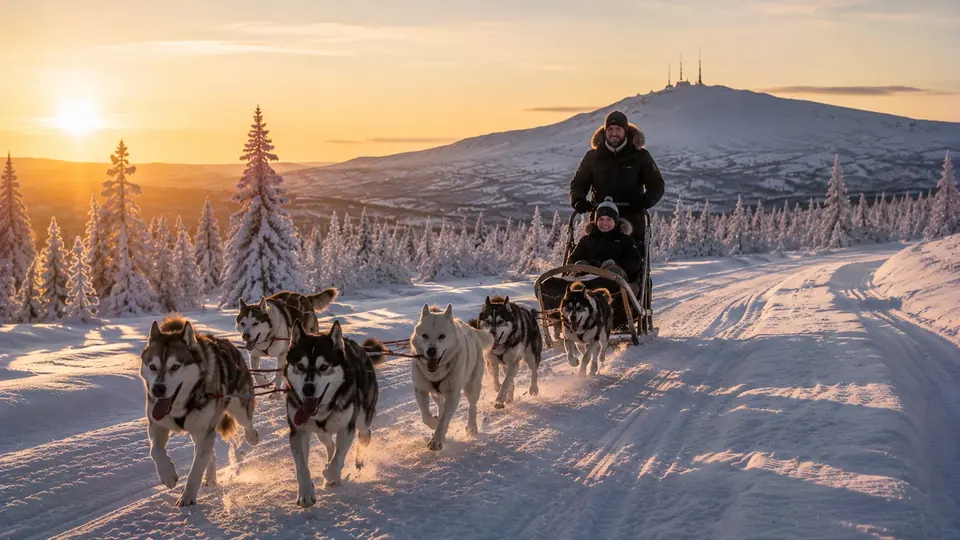
Dog sledding is one of Kiruna's most distinctive winter activities because it combines huskies, snow-covered landscapes and a quieter pace than motorized winter travel. The experience is built around the dogs, the rhythm of the sled and the surrounding Arctic environment rather than speed.
For many first-time winter visitors, that makes dog sledding easier to understand and enjoy than a more technical activity. The main decision is not whether dog sledding is adventurous enough, but whether you want to sit as a passenger or take a more active role on a self-drive tour.
Dog sledding is best suited to travelers who want a nature-based Arctic experience with huskies, winter scenery and a slower, quieter style of travel.
Best Time for Dog Sledding in Kiruna
The main dog sledding season in Kiruna is normally December to March. November and April can sometimes work, but conditions depend more heavily on snow and trail quality.
February and March are particularly strong choices for first-time visitors because they combine winter conditions with more daylight than the deepest part of winter. December and January provide a darker midwinter atmosphere, while late-season conditions can be more variable.
| Period | What It Offers | Main Consideration |
|---|---|---|
| December–January | Deep-winter atmosphere and limited daylight | Cold exposure can be more demanding |
| February–March | Strong balance of snow, daylight and photography conditions | Popular winter dates can have limited capacity |
| November or April | Possible early- or late-season tours | More dependent on snow and trail conditions |
Passenger vs Self-Drive Dog Sledding
Passenger sledding is the simplest choice for most visitors. A professional musher controls the sled while you focus on the dogs, scenery and photography. It is especially suitable for travelers who want a relaxed experience, families and anyone who does not want to manage the sled themselves.
Self-drive tours are more active. Participants take part in controlling the sled after receiving instructions, which makes balance, braking and attention more important. This format is better for travelers who want hands-on involvement rather than a purely passenger experience.
| Tour Type | Best For | Main Advantage | Main Trade-Off |
|---|---|---|---|
| Passenger sled | First-time visitors, families and photographers | Relaxed experience with a professional musher | You have less active control of the sled |
| Self-drive | Active and adventure-focused travelers | More hands-on involvement | Requires closer attention to instructions and sled control |
If you are unsure which format to choose, passenger sledding is usually the safer default. Choose self-drive because you genuinely want the physical and technical involvement, not simply because it sounds more adventurous.
What to Expect on a Dog Sledding Tour
The exact format varies by operator and tour. Passenger experiences focus on riding behind a musher, while self-drive experiences add instruction and active sled control. Tour length, clothing, transfers and other inclusions can also differ, so the booking details matter.
A typical dog sledding experience is more about the dogs, winter landscape and pace of travel than covering large distances quickly. That is one of the biggest differences compared with a snowmobile tour.
Dog sledding tours can range from roughly 1.5 to 4 hours, depending on the format. Individual tours may be shorter or longer, so always use the duration shown for the specific experience you are considering.
How Difficult Is Dog Sledding?
Passenger dog sledding is the easier option for most travelers because the musher handles the sled. The main physical challenge is often cold exposure from sitting still for part of the experience rather than the activity itself.
Self-drive dog sledding is more demanding because you need to follow instructions and manage balance and braking. It is designed as an active experience, so travelers who want a completely relaxed ride should normally choose a passenger tour instead.
For beginners, passenger dog sledding is usually the simplest choice. Self-drive is better for travelers who want an active role and are comfortable following guide instructions closely.
What to Wear for Dog Sledding
Cold hands and feet are among the most important comfort issues on a dog sledding tour, especially when you are sitting still. Dress for sustained outdoor exposure rather than for a short walk around town.
| Item | Recommended Approach |
|---|---|
| Base layers | Thermal layers close to the body |
| Feet | Warm socks and insulated winter boots |
| Legs and body | Warm winter layers with snow trousers and an insulated jacket |
| Hands | Warm mittens or insulated gloves |
| Head and face | Hat plus face or neck protection when needed |
Some operators provide thermal outerwear or other winter equipment, but inclusions vary. Check the specific tour before arrival rather than assuming boots, overalls or gloves are included. For broader winter preparation, see What to Wear in Swedish Lapland.
Dog Sledding with Families and Children
Many dog sledding tours can work well for families, especially shorter daytime passenger experiences. Passenger sledding removes the need for the child or accompanying adult to control the sled and allows the family to focus on the dogs and scenery.
Age limits, seating arrangements and cold-weather rules vary by operator. Families should therefore check the specific tour requirements before booking, particularly for younger children or during very cold conditions.
Can You See the Northern Lights While Dog Sledding?
It is possible on evening dog sledding tours when the sky is dark and clear and aurora activity is present. It should still be treated as a bonus rather than the reason to choose a dog sledding tour.
If seeing the Northern Lights is your main priority, a dedicated Northern Lights tour is usually the more focused choice because dog sledding is primarily an activity experience, not an aurora guarantee.
Choose evening dog sledding for atmosphere, not for a guaranteed aurora sighting. Northern Lights always depend on darkness, clear enough skies and aurora activity.
Animal Welfare and Ethics
Animal welfare should be part of the booking decision. A responsible operator should be transparent about how the dogs are cared for and should prioritize their health, rest, feeding, veterinary care and respectful handling.
- Look for clear information about the dogs and how they are cared for.
- Pay attention to how staff handle and speak about the dogs.
- Prefer operators that explain rest, feeding and welfare routines openly.
- Ask questions if welfare information is unclear before booking.
The goal is not to judge a kennel from a single marketing photo, but to choose an operator that is open about the dogs' working conditions and care.
How to Choose the Right Dog Sledding Tour
The best tour depends more on your travel style than on finding a single "best" dog sledding experience. Start with the role you want to have, then compare duration, clothing, transfers, family rules and current price for the specific departure.
| Your Priority | Best Starting Point |
|---|---|
| Comfort and photography | Passenger sled |
| First dog sledding experience | Passenger sled |
| More active participation | Self-drive |
| Family experience | Shorter daytime passenger tour |
| Evening atmosphere | Evening tour, with aurora treated as a bonus |
Do not compare tours on headline price alone. Check what is included, how long the experience lasts, whether you are a passenger or driver, what winter clothing is provided and whether transfers are part of the booking.
Common Dog Sledding Planning Mistakes
- Choosing self-drive when what you really want is a relaxed passenger experience.
- Underestimating how cold hands and feet can become while sitting still.
- Assuming thermal clothing or boots are always included.
- Expecting Northern Lights simply because the tour runs in the evening.
- Ignoring age, seating or cold-weather rules when booking for children.
- Waiting too long to book popular winter dates when dog, guide and sled capacity is limited.
- Comparing tours only by price instead of role, duration and inclusions.
Final Verdict: Is Dog Sledding in Kiruna Worth It?
Yes. Dog sledding is a strong choice for winter visitors who want huskies, snow scenery and a quieter nature-based experience. It is especially suitable for first-time Arctic travelers who prefer a slower pace than snowmobiling.
Choose passenger sledding for comfort, families and photography. Choose self-drive if active participation is an important part of the experience. February and March offer the strongest overall balance for many first-time visitors, while December and January provide a darker midwinter atmosphere.
The most important practical detail is clothing: cold exposure while sitting still can shape the experience more than many visitors expect. If aurora viewing is your main goal, keep dog sledding and Northern Lights planning as separate decisions.