How to Choose What to Do in Kiruna
Kiruna has enough Arctic activities to overfill a short trip. The strongest itinerary is usually built around variety rather than quantity: combine an aurora experience, one major snow activity, one cultural or local-history experience and one landscape-focused day trip.
| Experience | Best For | Planning Trade-Off |
|---|---|---|
| Northern Lights | First-time Arctic visitors and photographers | Weather-dependent, so keep more than one evening flexible. |
| Glass igloo | Travelers who want accommodation to be part of the experience | A dark location improves sky access but never guarantees aurora. |
| Dog sledding | A classic, quieter winter adventure | Limited-capacity departures can require advance booking. |
| Snowmobile | Adventure and covering more winter terrain | Faster and noisier than dog sledding or snowshoeing. |
| Sámi and reindeer experience | Culture, context and local traditions | Choose for the depth of the cultural content, not only the reindeer encounter. |
| ICEHOTEL | Easy sightseeing and first-time visitors | Can be visited without an overnight stay. |
| Abisko | Mountain scenery, hiking and aurora-focused travel | It deserves enough time to avoid turning the day into transport only. |
| LKAB mine and city transformation | Industrial history and understanding modern Kiruna | These experiences add context that outdoor-only itineraries miss. |
Planning rule: For a first winter trip, one well-chosen activity in each category is usually better than booking every available slot. If your priority is aurora, protect several evenings from rigid plans so changing cloud conditions do not ruin the whole trip.
For season-by-season trip planning, see the Best Time to Visit Kiruna guide.
1. See the Northern Lights
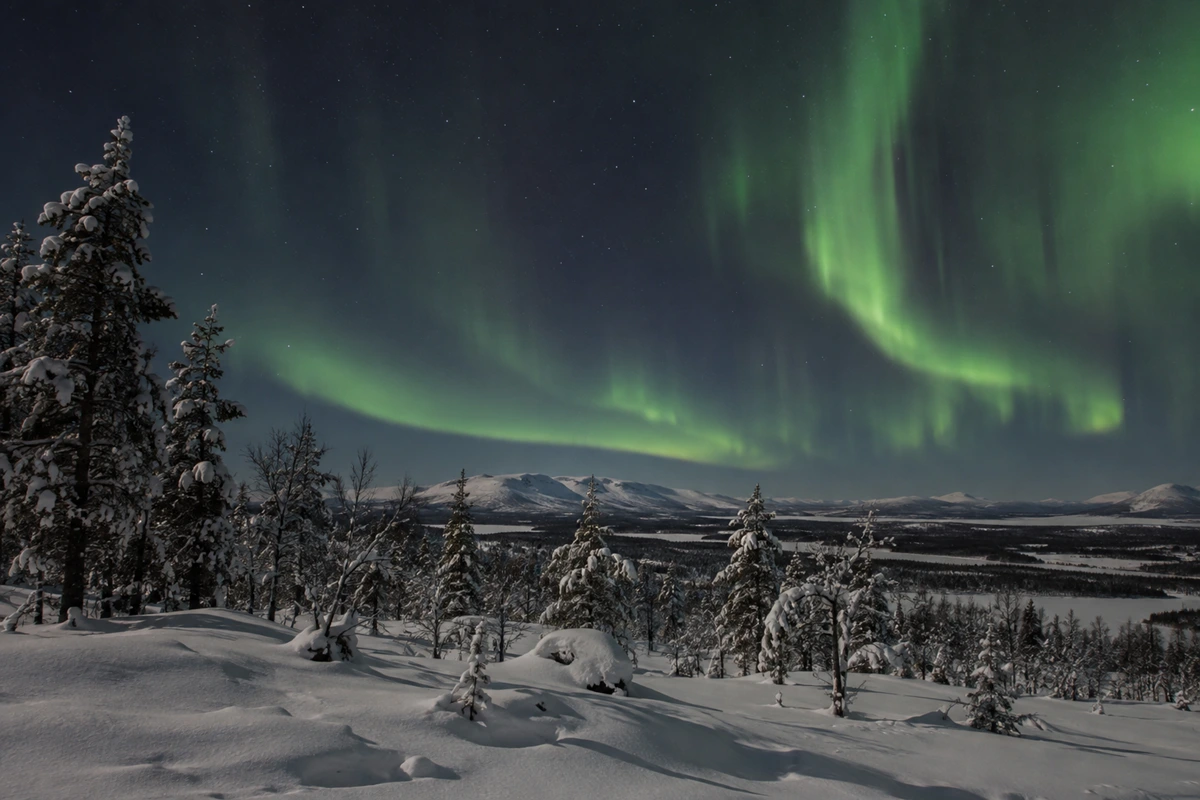
The Northern Lights are one of Kiruna's defining winter attractions. Kiruna lies north of the Arctic Circle, and the darker part of the year provides repeated opportunities to watch the sky when aurora activity and local weather cooperate.
The key practical point is that aurora forecasts do not override cloud cover. A strong display above an overcast sky is still invisible from the ground. Darker locations outside the strongest town lighting generally give better contrast, while guided tours add the ability to adapt to changing conditions.
If Northern Lights are a main reason for your trip, do not rely on a single evening. Build several opportunities into the stay and treat clear sky, darkness and local weather as seriously as the aurora forecast itself.
Continue with the Northern Lights in Kiruna guide.
2. Stay in a Glass Igloo
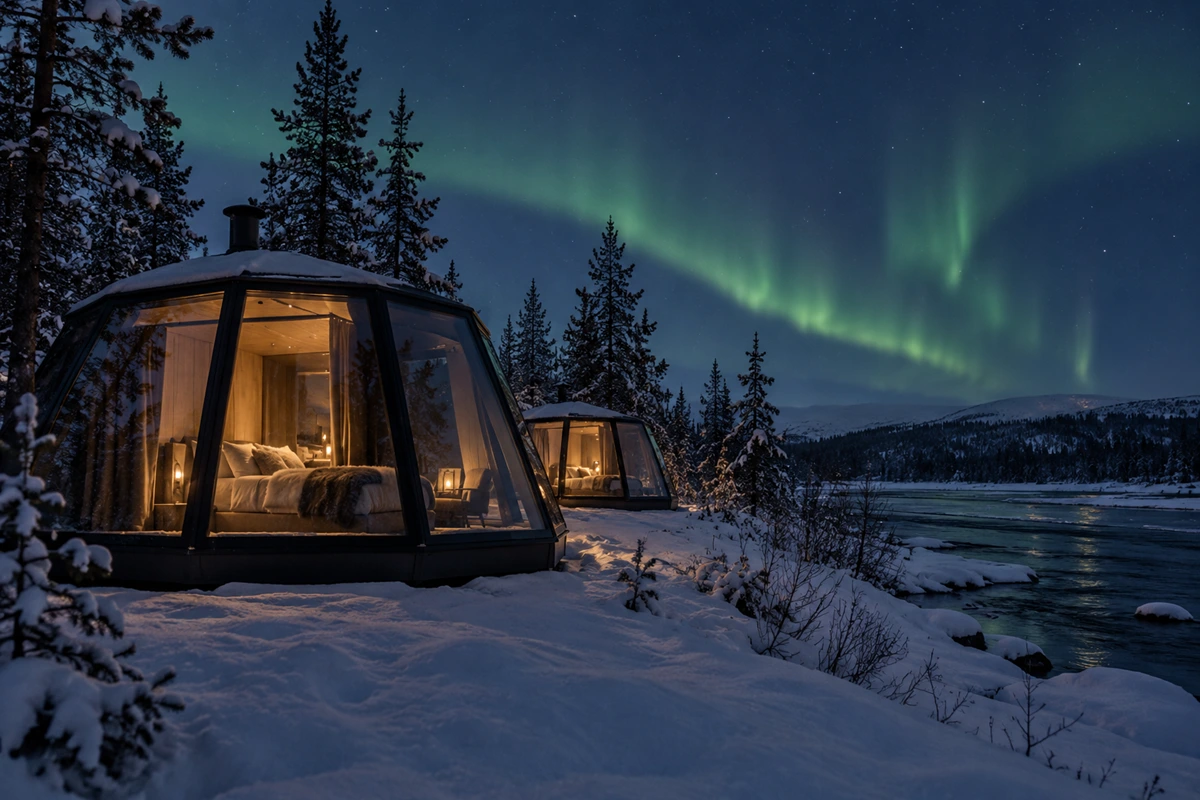
A glass igloo can turn accommodation into part of the Arctic experience. Aurora River Camp is in Poikkijärvi outside Kiruna beside the Torne River, with a setting away from the stronger artificial light of central Kiruna. Its heated glass igloos allow guests to watch the sky from indoors while remaining close enough to combine the stay with other Kiruna activities.
The advantage is convenience rather than certainty. A glass roof does not make cloud disappear and no accommodation can guarantee Northern Lights. The value is being able to check the sky immediately when conditions improve without first arranging transport away from town.
Transparency: Kiruna Tours' founder also manages Aurora River Camp, so this is a commercially connected recommendation. Compare it with other Kiruna-area stays based on location, availability, price and the kind of experience you want.
For a wider accommodation comparison, see Best Glass Igloos in Swedish Lapland.
3. Go Dog Sledding
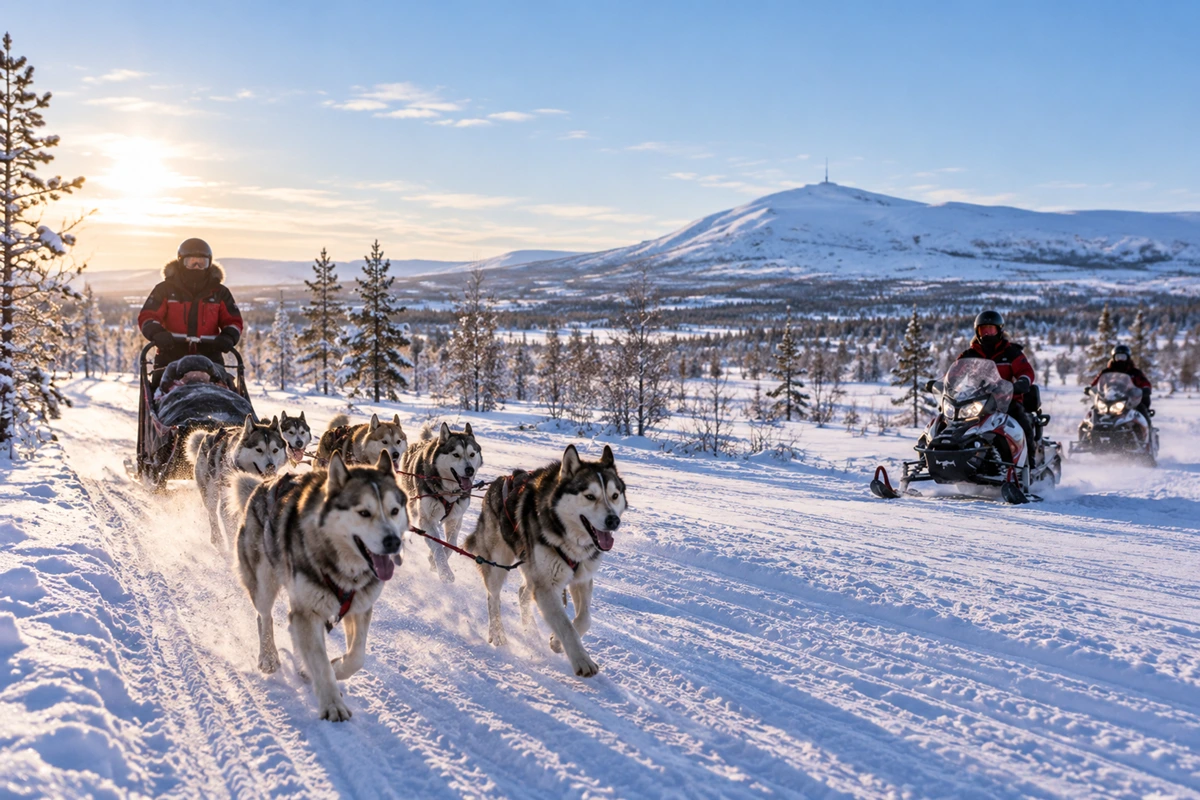
Dog sledding is one of the classic winter experiences around Kiruna. Depending on the tour, you may ride as a passenger or learn to handle a sled team yourself. Passenger tours are usually more relaxed, while self-drive experiences are more active.
Choose dog sledding if you value the interaction with the dogs, the quieter pace and the feeling of moving through winter terrain without an engine. Capacity is often smaller than at major sightseeing attractions, so this is one of the activities worth prioritizing if it is essential to your trip.
Read the Dog Sledding in Kiruna guide before choosing a tour format.
4. Explore the Arctic by Snowmobile
Snowmobiling is better suited to travelers who want to cover more ground and make the driving itself part of the adventure. Guided tours can take visitors farther into forests and winter landscapes than walking-based activities normally allow.
| Factor | Dog Sledding | Snowmobile |
|---|---|---|
| Atmosphere | Quieter and more traditional | Faster and more mechanical |
| Distance covered | Moderate | Larger |
| Participation | Passenger or self-drive depending on tour | Driving is often central to the experience |
| Best fit | Classic Arctic experience | Adventure and wider terrain |
The two activities are different enough that a longer winter stay can reasonably include both without feeling repetitive.
5. Try Snowshoeing
Snowshoeing is one of the simplest ways to slow the trip down. Deep snow can make ordinary walking away from prepared paths difficult, while snowshoes make it possible to move through winter forest at a pace that leaves time for animal tracks, photography and the quiet of the landscape.
It suits travelers who want nature without engines and people who would rather spend time observing the winter environment than covering a large distance. Evening snowshoeing can also be paired with aurora watching when conditions are suitable.
6. Experience Sámi Culture and Reindeer
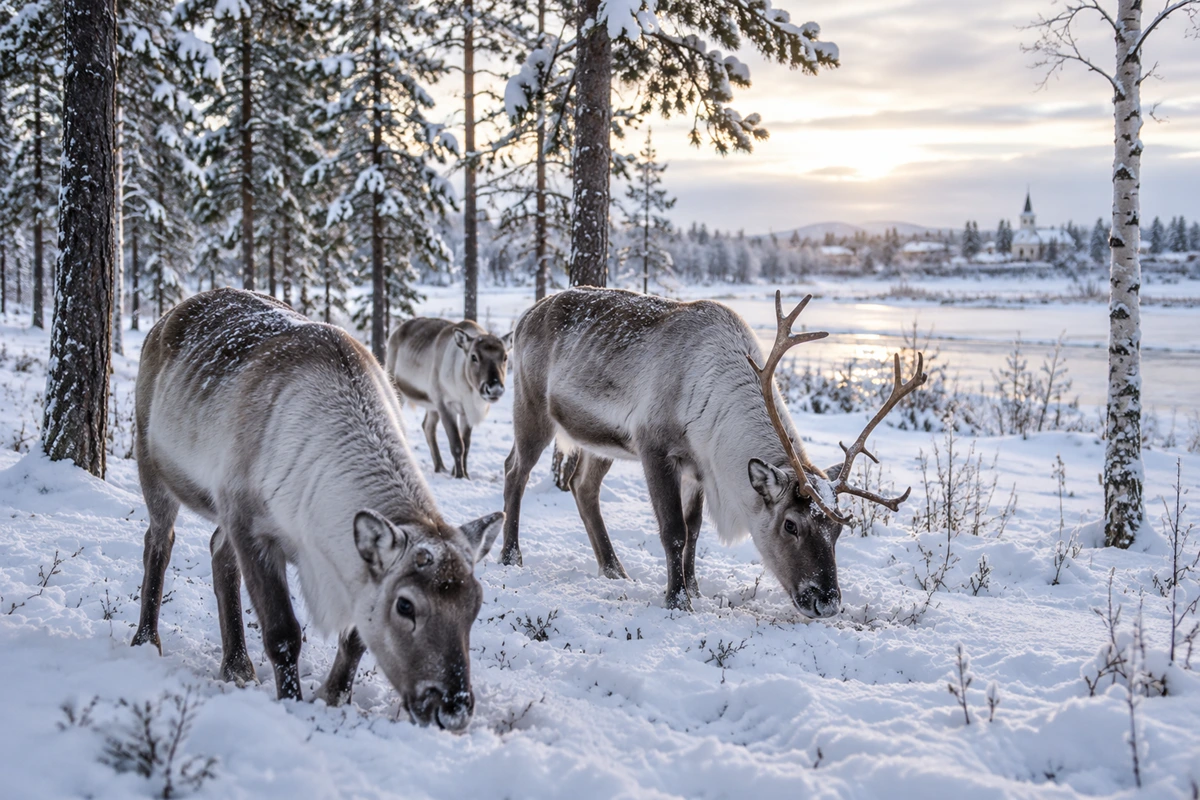
Kiruna lies within Sápmi, the traditional homeland of the Sámi people. Sámi culture is living culture, and reindeer husbandry remains an important cultural and economic activity for many Sámi communities.
Visitor experiences can range from short reindeer encounters to broader programs involving food, storytelling, reindeer herding and local history. If cultural learning is important to you, compare experiences by what they actually teach rather than choosing only by duration or the presence of reindeer.
Reindeer in the region should not be treated as wildlife props. Many belong to Sámi herding communities. Give animals space and choose experiences that present the culture respectfully.
For a more focused cultural and food experience, see Sámi Food Experiences & Reindeer Sledding in Kiruna.
7. Visit ICEHOTEL in Jukkasjärvi
ICEHOTEL in Jukkasjärvi is one of the best-known attractions near Kiruna. The winter hotel is rebuilt from ice and snow each season, while ICEHOTEL 365 provides ice rooms and ice art beyond the traditional winter build.
You do not need to sleep there to make the visit worthwhile. A day visit can be combined with other activities around Jukkasjärvi, which makes it one of the easier major attractions to fit into a shorter itinerary.
Use the ICEHOTEL Jukkasjärvi guide for more detailed planning.
8. Visit the LKAB Mine
Kiruna's development is inseparable from iron ore mining. An organized mine visit adds an industrial and engineering perspective that is completely different from aurora, snow and wilderness activities.
The mine also explains why the city is changing. Understanding the ore body and mining operation makes Kiruna's relocation easier to understand, so the mine and city transformation work particularly well as a paired theme.
See the Inside the LKAB Mine in Kiruna guide for practical visitor information.
9. Understand Kiruna's City Transformation
Parts of Kiruna have been relocated or rebuilt because of mining-related ground deformation. For visitors, the result is an unusual opportunity to see how a modern Arctic city is adapting while daily life continues around the transformation.
Walking through the newer city areas after learning about the mine gives more meaning to what you are seeing. Instead of treating the relocation as a curiosity, it becomes part of the wider story of why Kiruna exists and how the city is changing.
10. Take a Day Trip to Abisko National Park
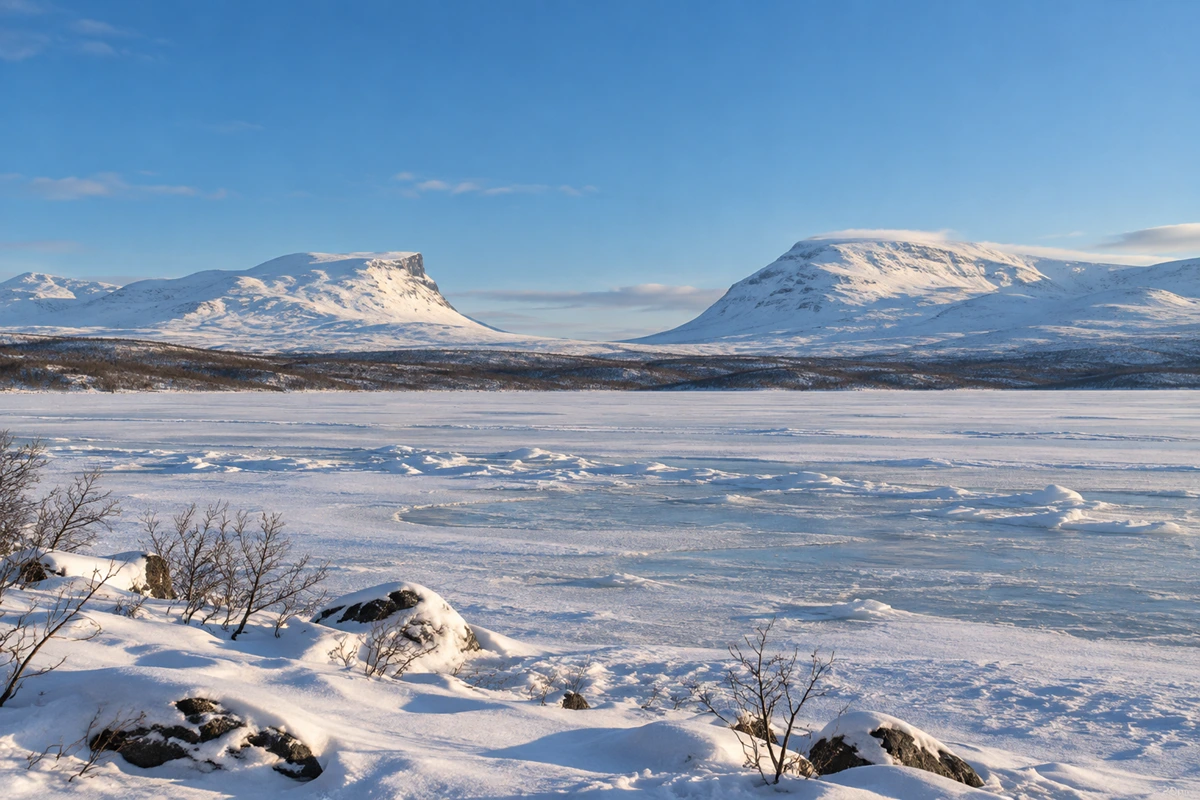
Abisko National Park adds a mountain environment that feels very different from Kiruna. The area combines birch forest, river and canyon scenery, views across Lake Torneträsk and access to the Kungsleden trail.
In winter, travelers often come for snow landscapes, photography and Northern Lights. In summer, hiking and long daylight become the main draw. Kiruna and Abisko therefore work better as complementary destinations than as direct substitutes for many itineraries.
Read the Abisko National Park Guide or the dedicated Kiruna to Abisko day-trip guide.
11. See Lake Torneträsk
Lake Torneträsk is one of the defining landscapes west of Kiruna and naturally fits into an Abisko-focused day. Winter turns the lake and surrounding terrain into a broad snow-and-ice landscape, while the warmer season brings open water and long daylight.
Treat Torneträsk as part of a landscape day rather than a standalone attraction with a fixed program. The best value comes from combining it with Abisko, photography or mountain scenery along the same route.
Continue with the Lake Torneträsk Guide.
12. Look for Arctic Wildlife
The forests, wetlands and mountain areas around Kiruna support northern wildlife, but sightings are never guaranteed. Moose are among the animals visitors hope to see, while reindeer are frequently encountered across the region and often belong to Sámi herding communities.
Wildlife works best as a bonus to a landscape-focused outing rather than something to promise yourself in advance. Keep a safe distance, do not approach animals for photographs and never stop in unsafe places on winter roads.
13. Try Ice Fishing
Ice fishing offers a slower winter experience than dog sledding or snowmobiling. The activity typically involves travelling onto a frozen lake, drilling through the ice and fishing from a small opening while spending time in the winter landscape.
The experience is as much about being on the frozen lake as it is about the catch. Visitors unfamiliar with Arctic ice conditions should use an experienced local guide rather than judging safety from air temperature alone.
14. Taste Local Arctic Food
Food is another way to understand northern Sweden. Restaurants and activity experiences around Kiruna may feature ingredients associated with the region, including reindeer, moose, Arctic char and northern berries.
Choose meals for context as well as ingredients. A dish connected to local traditions, a wilderness meal around a fire or a well-planned restaurant dinner can add a cultural dimension to an itinerary dominated by outdoor activities.
See the Best Restaurants in Kiruna guide for more food planning.
15. Hike Under the Midnight Sun
Kiruna is not only a winter destination. Summer changes the rhythm completely: snow-based activities disappear from lower areas, hiking becomes more important and long daylight allows outdoor plans to stretch far beyond a normal evening.
Around midsummer, Kiruna's location north of the Arctic Circle creates the Midnight Sun. For summer travelers, hiking, fishing, mountain trips, wildlife watching and photography become the main reasons to visit.
If you do not want deep winter conditions, summer Kiruna is a different trip rather than a weaker version of winter. Choose it for hiking, mountain access, fishing, photography and the experience of near-continuous daylight.
What to Do in Kiruna by Season
| Travel Period | Strongest Choices | What Changes |
|---|---|---|
| December–March | Northern Lights, dog sledding, snowmobiling, snowshoeing, reindeer experiences and ice fishing | Winter offers the widest choice of snow-based activities. |
| February–March | Winter activities plus increasing daylight | A strong balance for travelers who want both daytime experiences and dark evenings. |
| Summer | Hiking, fishing, mountain trips, wildlife, photography and Midnight Sun | The trip becomes landscape- and daylight-focused instead of snow-focused. |
Free Activities and Kiruna With Kids
Not every day needs a paid tour. Walking through the changing city, photographing the Arctic landscape and looking for the Northern Lights from safe locations away from strong artificial lighting can all add value without another booking.
Families can consider ICEHOTEL, dog sledding, reindeer experiences, snowshoeing, Northern Lights activities and shorter day trips. The deciding factor is not whether an experience is labeled family-friendly, but whether its duration, cold exposure and participation rules suit the children in your group.
- Check minimum age, height and participation rules before booking.
- Avoid stacking several long outdoor activities without warm indoor breaks.
- Plan clothing for standing still as well as active movement.
- Keep some flexibility for weather-dependent experiences.
For winter clothing, use the What to Wear in Swedish Lapland guide.
How to Build a 3–5 Day Kiruna Itinerary
Three days can cover several major highlights, but four or five days gives much better flexibility for weather, rest and a day trip.
| Trip Length | Good Planning Pattern |
|---|---|
| 3 days | One Northern Lights evening, one major winter activity, one cultural or local-history experience and one flexible slot. |
| 4–5 days | Add Abisko or another landscape day, a second major activity and more than one aurora opportunity. |
A longer stay does not need to mean more bookings. The main advantage is having enough room to move weather-dependent activities, rest after cold outdoor sessions and avoid treating every evening as your only chance to see the aurora.
For broader trip structure, see the Kiruna Travel Guide.
What Should You Book First?
Prioritize experiences with limited capacity or dates that are important to the trip, then build flexible activities around them. Special accommodation, dog sledding, snowmobile tours, Northern Lights experiences, Sámi and reindeer programs and mine visits can all be harder to replace once a preferred departure is full.
- Book the experiences you would be most disappointed to miss.
- Do not compare tours by price alone; compare duration, group format, transfers and what the activity actually includes.
- Leave weather-dependent evenings flexible when aurora is a priority.
- Do not fill every hour: cold, darkness and travel between activities add real fatigue.
Final Verdict: What Is Most Worth Doing in Kiruna?
For a first winter visit, the strongest mix is usually Northern Lights, one major snow activity such as dog sledding or snowmobiling, one cultural or local-history experience and one landscape day around Abisko or Lake Torneträsk. Add a glass-igloo stay if unusual accommodation is a priority rather than treating it as essential for every traveler.
In summer, shift the emphasis toward hiking, mountain landscapes, fishing, wildlife and the Midnight Sun. The best Kiruna trip is not the itinerary with the most bookings; it is the one that combines different sides of Swedish Lapland while leaving enough flexibility for Arctic weather.
If you want guided options, browse Kiruna tours and activities after deciding which experiences matter most to your trip.