Short Answer for Travelers
Polar night is one of Kiruna’s strongest winter experiences if you understand it correctly. Expect long darkness, short twilight, snow-bright landscapes and a slower Arctic rhythm. It is not ideal for travelers who need full daylight every day, but it is excellent for visitors who want winter atmosphere, Northern Lights and low-light photography.
Quick Answer
Polar night in Kiruna means the sun stays below the horizon during part of winter, creating long darkness and a short twilight window instead of complete daytime blackness. The season is excellent for Northern Lights, blue-hour photography and Arctic winter atmosphere, but visitors should expect limited daylight and a slower daily rhythm.
- Darkest period: mid-December.
- Twilight usually appears around midday.
- Snow reflection makes landscapes brighter than expected.
- Polar night improves aurora viewing hours but does not guarantee clear skies.
- Best for: Northern Lights, photography and Arctic atmosphere.
What Polar Night Actually Means in Kiruna
Polar night means the sun does not rise above the horizon for a period during winter. In Kiruna, this happens because the town lies above the Arctic Circle. The important detail is that “no sunrise” does not mean the sky stays completely black for twenty-four hours.
During the lightest part of the day, sunlight still scatters through the atmosphere from below the horizon. This creates twilight. If the ground is covered with snow, the landscape can feel much brighter than visitors expect because snow reflects available light from the sky, moon, buildings and vehicles.
Key Polar Night Facts
- Kiruna sits around 145 km north of the Arctic Circle.
- The sun remains below the horizon during part of December.
- Twilight still appears around midday.
- Snow reflection significantly increases perceived brightness.
- Polar night does not mean total darkness all day.
| Visitor Assumption | Reality in Kiruna | Why It Matters |
|---|---|---|
| It is black all day. | There is usually a period of twilight around midday. | You can still do scenic winter activities and photography. |
| The town shuts down. | Daily life continues with lighting, routines and winter infrastructure. | Hotels, restaurants, tours and transport still operate. |
| Polar night is only negative. | It can be atmospheric, quiet and visually strong. | Many visitors find it one of the most memorable parts of winter. |
| It guarantees Northern Lights. | It gives darkness, but aurora still needs clear sky and activity. | Expect better viewing windows, not a guarantee. |
When Is Polar Night in Kiruna?
Kiruna’s polar night is centered around the winter solstice in December. In practical travel terms, the strongest polar-night feeling is from early December into early January, with the darkest period around mid to late December. Exact sunrise and sunset data should be checked for the specific travel year because dates shift slightly.
Even before and after the technical polar-night period, the days are very short. Late November and January still feel deeply Arctic, while February brings noticeably more daylight but remains a strong winter month.
| Period | Light Conditions | Best For | Main Limitation |
|---|---|---|---|
| Late November | Very short days, but not the deepest darkness. | Early winter mood and increasing aurora darkness. | Snow conditions can vary by year. |
| December | Deepest winter darkness and strongest polar-night atmosphere. | Blue hour, Northern Lights, snow atmosphere and Christmas-season travel. | Low daylight and cold require slower planning. |
| Early January | Still very dark, but daylight slowly begins returning. | Classic Arctic winter with slightly improving light. | Temperatures can be very cold. |
| Late January–February | More daylight, still strong winter nights. | Travelers who want a better balance between light and aurora. | Less extreme polar-night feeling. |
How Dark Does Kiruna Actually Get?
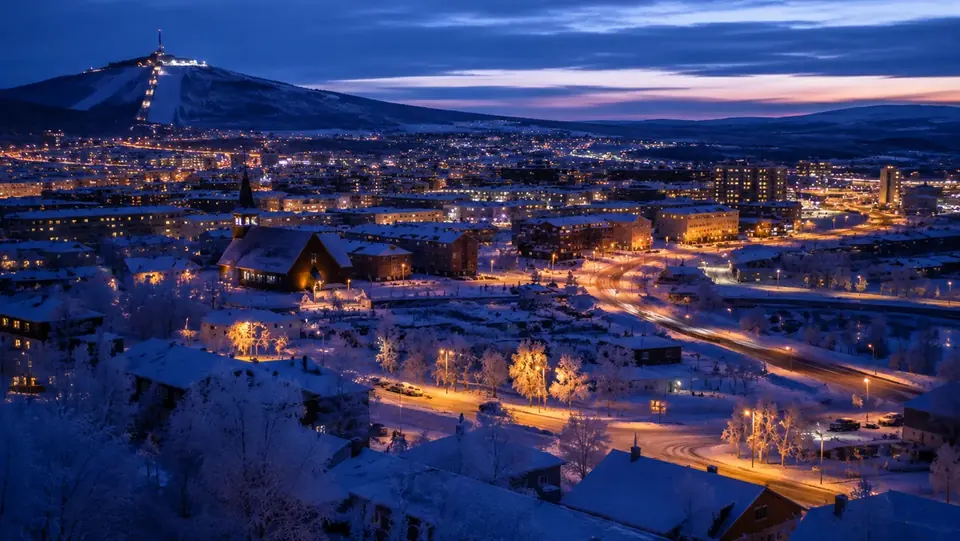
Kiruna gets genuinely dark at night, especially outside town where artificial light is limited. Inside the city, streetlights, buildings and traffic create enough light for daily movement. Around midday, even during the darkest period, twilight can make the sky glow blue, violet or pale pink depending on cloud cover and snow conditions.
The experience also changes with location. A forest road feels darker than an open snowfield. A frozen river valley may reflect more light. A town street feels different from a wilderness viewpoint. This is why the same polar-night day can feel bright in one place and very dark in another.
The most accurate way to describe Kiruna’s polar night is not “complete darkness” but “long darkness with a short, atmospheric twilight window.”
Blue Hour: The Best Light During Polar Night
Blue hour is often the most beautiful part of polar night in Kiruna. Because the sun stays low below the horizon, the landscape can sit in extended blue twilight instead of direct daylight. Snow, forest, cabins and warm windows create strong contrast.
For photography, this light is valuable because it avoids harsh shadows and creates a clear Arctic mood. For travelers, it gives the day a shape: not bright, but not fully dark either. Many visitors arrive for the Northern Lights and leave remembering the blue-hour landscapes just as strongly.
| Light Type | What It Looks Like | Best Use |
|---|---|---|
| Midday twilight | Soft blue or grey-blue glow near the horizon. | Walking, scenic tours, low-light photography. |
| Snow reflection | Snow brightens the landscape by reflecting available light. | Better visibility and stronger winter atmosphere. |
| Town lighting | Warm windows and streetlights against cold blue surroundings. | Evening mood, photography and comfort. |
| Moonlight | Can make snow-covered areas surprisingly bright. | Landscape photography and safer outdoor movement. |
Polar Night vs Regular Arctic Winter
| Condition | Polar Night | February–March |
|---|---|---|
| Daylight | Very limited. | Much longer. |
| Aurora Viewing | Excellent. | Excellent. |
| Atmosphere | Deep Arctic darkness. | More balanced winter light. |
| Photography | Blue-hour focused. | More daylight variety. |
| Travel Pace | Slower and calmer. | Easier for active itineraries. |
Local Insight
The darkness is usually hardest when visitors try to keep a normal city-break pace. Polar night works better when you slow down: go outside during the lightest window, book one strong activity per day, eat properly, warm up indoors and keep evenings flexible for aurora.
Local life does not stop because of polar night. People adapt through routine, winter clothing, warm lighting, outdoor activity and social habits. Visitors enjoy the season more when they copy that rhythm instead of fighting it.
Problem: Visitors Expect Total Darkness or Constant Aurora
The two biggest misunderstandings are opposite extremes. Some visitors expect polar night to be impossible because they imagine complete blackness all day. Others expect it to guarantee Northern Lights every night because the nights are long. Both expectations are wrong.
Solution: Think in Twilight, Weather and Flexible Evenings
Plan polar night as a low-light winter season. Use the twilight window for outdoor activities and photography. Use the long evenings for aurora attempts, but check cloud cover carefully. Build the itinerary with flexibility rather than assuming every night will be clear.
| Problem | Why It Happens | Better Planning Approach |
|---|---|---|
| You feel tired by mid-afternoon. | The sky gives fewer normal time cues. | Keep meal times and sleep times consistent. |
| You miss the best blue-hour light. | You stay indoors too long during the short twilight window. | Plan outdoor time around the lightest part of the day. |
| You expect aurora every night. | You confuse darkness with visibility. | Check cloud cover, aurora activity and stay several nights. |
| You get cold too quickly. | You dress for walking, not standing still. | Use boots, mittens, face protection and warm breaks. |
Polar Night and Northern Lights
Polar night is excellent for Northern Lights travel because it gives long dark viewing windows. The aurora can only be seen when the sky is dark enough, so December and January provide many hours when aurora is theoretically visible.
Darkness alone is not enough. You still need aurora activity, clear sky and limited light pollution. A cloudy polar-night evening will not show the lights, while a moderate aurora under clear skies can be very rewarding.
| Condition | Effect on Aurora Viewing | Practical Advice |
|---|---|---|
| Long darkness | Creates more viewing hours. | Use several evenings rather than relying on one night. |
| Cloud cover | Blocks visibility even if aurora is active. | Check local cloud forecasts and stay mobile when possible. |
| Snow reflection | Makes landscapes more visible under aurora and moonlight. | Useful for photography and atmosphere. |
| Town lights | Reduce contrast for faint aurora. | Move outside strong light pollution for serious viewing. |
Daily Life, Mood and Local Adaptation
Daily life continues during polar night. Schools, work, shops, restaurants and tours operate. The difference is that routines matter more. People rely on lighting, warm clothing, fixed schedules, outdoor movement and social contact to keep the season manageable.
Mood varies from person to person. Some people feel lower energy during long darkness, while others enjoy the calm. For visitors, the experience is usually short enough to feel unusual and atmospheric rather than heavy, especially when the trip includes good food, warm accommodation and outdoor activities.
How to Enjoy Polar Night Comfortably
- Go outside during the lightest twilight window.
- Use warm layers, proper boots, hat and mittens.
- Plan indoor breaks between outdoor activities.
- Do not schedule every evening as a late aurora chase.
- Eat proper meals; cold and darkness feel harder when tired or hungry.
- Use guided tours if you are unfamiliar with Arctic winter conditions.
Photography During Polar Night
Polar night is very strong for photography, but it requires a different mindset than summer travel. The goal is not to make every photo look bright. The strongest images usually preserve the winter mood: blue shadows, warm lights, silhouettes, snow reflection and the possibility of aurora.
A tripod helps for low-light scenes. Phones with night mode can work well if held still. Camera batteries should be kept warm because cold drains them quickly. If photographing aurora, manual settings and a stable tripod are much more reliable than handheld shooting.
| Scene | Best Time | Practical Tip |
|---|---|---|
| Blue-hour landscapes | Lightest part of the day | Do not over-brighten; keep the blue mood. |
| Warm windows and town scenes | Late afternoon and evening | Use contrast between orange light and blue snow. |
| Northern Lights | Clear dark evenings | Use tripod, spare batteries and manual settings if possible. |
| People in winter clothing | Twilight or near warm light | Keep subjects still in low light to avoid blur. |
Who May Not Enjoy Polar Night?
Polar night is not ideal for every traveler. Visitors who strongly prefer long sightseeing days, spontaneous outdoor walking or bright daylight photography may find the season difficult. The darkness changes daily rhythm and requires slower planning.
Travelers who dislike cold weather, icy walking conditions or limited daylight may enjoy late February or March more because daylight increases significantly while winter landscapes and Northern Lights opportunities still remain strong.
What Disappoints Visitors About Polar Night?
Polar night disappoints visitors when expectations are wrong. Travelers who want bright sightseeing days, spontaneous outdoor walking without proper clothing or guaranteed Northern Lights every evening may struggle. The season rewards planning, not rushing.
Another disappointment is poor scheduling. If every day is packed with late nights and early mornings, fatigue builds quickly. If all aurora expectations are placed on one evening, a cloudy night can feel like failure. A better plan spreads attempts across several nights and includes daytime winter experiences that are enjoyable even without aurora.
Common Mistakes Tourists Make During Polar Night
- Assuming polar night means complete darkness all day.
- Expecting Northern Lights because it is dark, without checking clouds.
- Missing the short twilight window by sleeping too late.
- Dressing for city winter instead of Arctic outdoor conditions.
- Trying to walk long distances in cold, dark and icy conditions.
- Booking too few nights for a weather-dependent aurora trip.
- Forgetting that warm indoor time is part of the winter experience.
Who Should Visit Kiruna During Polar Night?
| Traveler Type | Is Polar Night a Good Fit? | Reason |
|---|---|---|
| Aurora-focused travelers | Yes | Long darkness creates strong viewing windows. |
| Photographers | Yes | Blue hour, snow reflection and warm-light contrast are excellent. |
| Families with young children | Sometimes | Works with short activities and warm breaks, but late aurora tours can be tiring. |
| Travelers who need daylight | Maybe not | February or March may be better if daylight matters. |
| Couples seeking quiet atmosphere | Yes | The season is calm, intimate and visually distinctive. |
Final Verdict: Is Polar Night Worth Experiencing?
Yes. Polar night in Kiruna is worth experiencing if you want deep Arctic atmosphere, blue-hour light, long aurora evenings, snow silence and a winter rhythm that feels very different from normal daylight travel.
Choose polar night if you want the most distinctive version of Arctic winter. Choose late January, February or March if you want more daylight while still keeping snow and Northern Lights possibilities. The best choice depends on whether atmosphere or daylight matters more to your trip.
Plan a Polar Night Trip in Kiruna
Polar night is strongest when you combine twilight, warm indoor breaks and well-planned outdoor evenings. Guided tours help with transport, darkness, winter safety and realistic aurora planning.