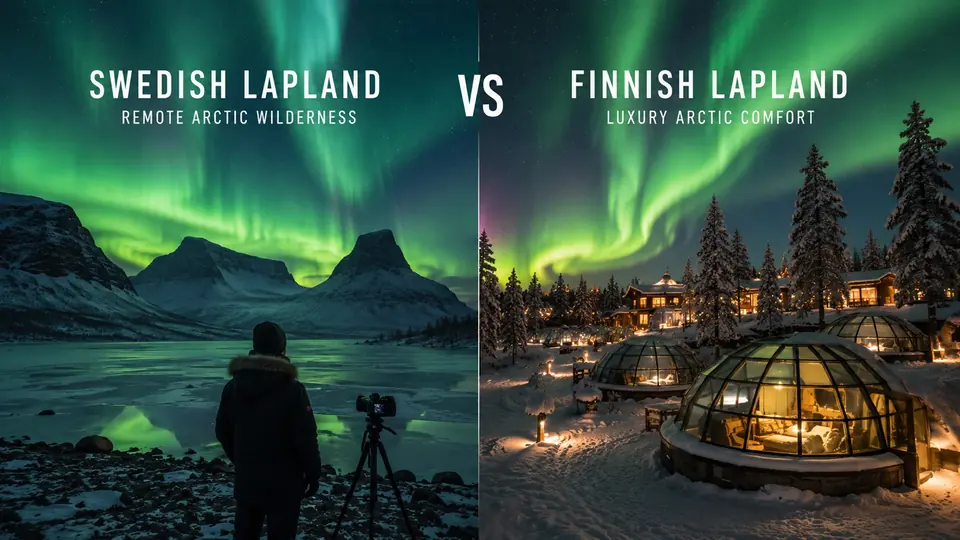
Choosing between Swedish Lapland and Finnish Lapland is one of the biggest decisions for visitors planning an Arctic holiday. Both regions offer snow-covered forests, frozen lakes, reindeer, winter activities and Northern Lights opportunities, yet the overall travel experience can feel surprisingly different.
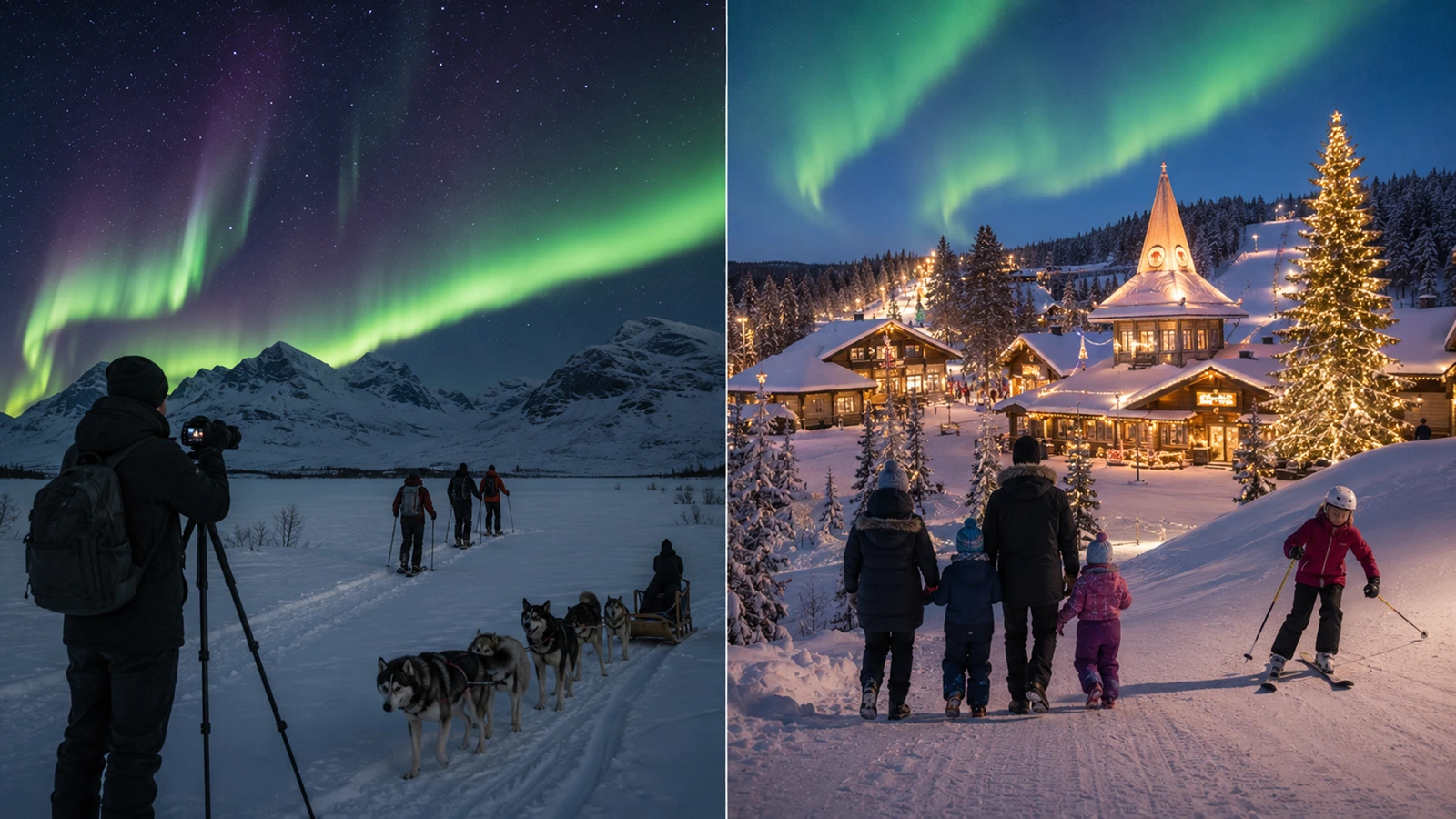
Swedish Lapland is often associated with dramatic mountains, remote wilderness and destinations such as Kiruna, Abisko, Jukkasjärvi and Lake Torneträsk. Finnish Lapland is more commonly associated with glass igloos, Santa Claus Village, ski resorts and destinations such as Rovaniemi, Levi and Saariselkä.
The question is not which destination is objectively better, but which destination matches your expectations, travel style and priorities.
Where Are Swedish and Finnish Lapland?
Swedish Lapland covers the northern part of Sweden and stretches from the Gulf of Bothnia to the Norwegian mountains. It includes destinations such as Kiruna, Abisko, Jukkasjärvi, Björkliden and the Kebnekaise region.
Finnish Lapland covers northern Finland and includes destinations such as Rovaniemi, Levi, Ylläs, Saariselkä and Inari. Compared with Sweden, the landscape is generally flatter and more forested, with rolling fells replacing dramatic mountain scenery.
Although both regions lie above the Arctic Circle, they attract slightly different types of travelers. Visitors choosing Swedish Lapland are often motivated by wilderness, hiking and Northern Lights photography, while visitors choosing Finnish Lapland often prioritise family experiences, luxury accommodation and winter resorts.
Local Insight: Many first-time visitors assume that all parts of Lapland are similar. In reality, Swedish Lapland often feels more remote and wilderness-focused, while Finnish Lapland usually offers easier logistics, more accommodation options and larger tourism infrastructure.
Swedish Lapland vs Finnish Lapland at a Glance
| Factor | Swedish Lapland | Finnish Lapland |
|---|---|---|
| Best Known For | Mountains and wilderness | Glass igloos and family tourism |
| Northern Lights Conditions | Excellent | Excellent |
| Mountain Landscapes | Outstanding | Limited |
| Glass Igloos | Limited selection | Extensive selection |
| Ski Resorts | Limited | Excellent |
| Family Attractions | Moderate | Excellent |
| Wilderness Feel | Very strong | Moderate |
| Accessibility | Moderate | Excellent |
Landscapes and Nature
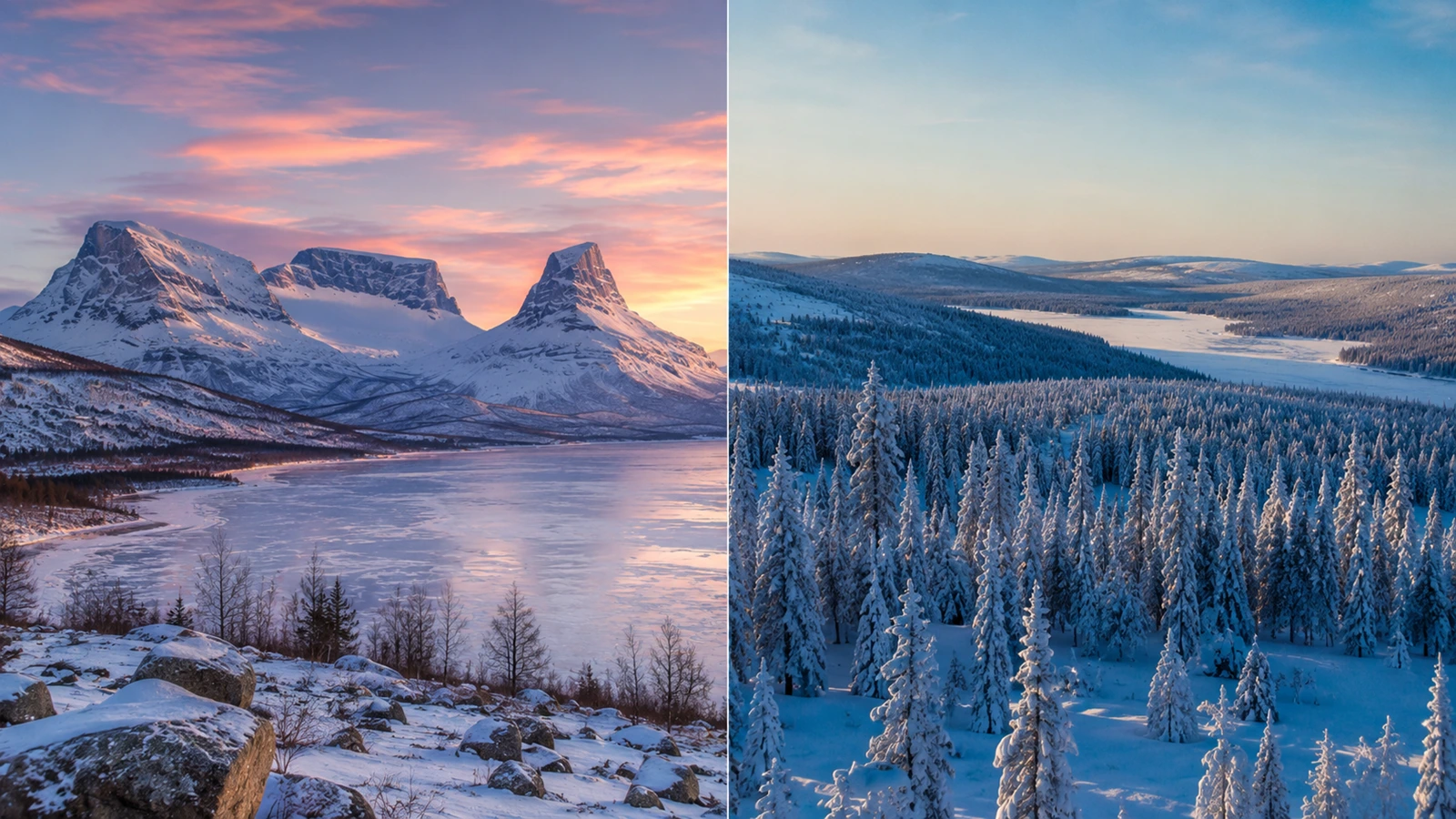
The largest visual difference between Swedish and Finnish Lapland is the landscape itself.
Swedish Lapland is dominated by mountains, alpine valleys and dramatic Arctic scenery. Destinations such as Abisko, Björkliden and the Kebnekaise region offer some of the most spectacular winter landscapes anywhere in Europe. Frozen lakes, steep peaks and wide open valleys create a feeling of wilderness that many visitors associate with the Arctic.
Finnish Lapland looks very different. Instead of mountains, visitors will find endless forests, rolling fells, frozen rivers and snow-covered pine trees stretching toward the horizon. The scenery is beautiful in a quieter and softer way, but it lacks the dramatic mountain environments found around Abisko and northern Sweden.
| Landscape Factor | Swedish Lapland | Finnish Lapland |
|---|---|---|
| Mountain Scenery | Excellent | Limited |
| Forests | Excellent | Excellent |
| Frozen Lakes | Excellent | Excellent |
| Dramatic Photography Locations | Outstanding | Good |
| Wilderness Feel | Very Strong | Strong |
| National Parks | Excellent | Excellent |
Local Insight: Visitors often underestimate how much the landscape affects their overall experience. Travelers dreaming of dramatic mountain scenery usually prefer Swedish Lapland, while visitors imagining snowy forests and cozy cabins often prefer Finland.
Northern Lights and Dark Skies
Both Swedish Lapland and Finnish Lapland are among the best regions in Europe for seeing the Northern Lights. Both sit beneath the auroral oval and both experience long winter nights with excellent viewing opportunities between September and early April.
The biggest difference is not solar activity but geography, weather and local light pollution.
Swedish Lapland, particularly around Abisko and Lake Torneträsk, has developed an international reputation among aurora photographers because of the dark skies and local weather patterns often associated with the so-called Blue Hole effect. Although it cannot guarantee clear skies, the local geography sometimes improves viewing conditions compared with surrounding areas.
Finnish Lapland also offers excellent Northern Lights opportunities, but many visitors stay closer to villages, ski resorts and tourism infrastructure where artificial lighting can reduce visibility slightly compared with remote wilderness locations.
| Aurora Factor | Swedish Lapland | Finnish Lapland |
|---|---|---|
| Dark Sky Conditions | Outstanding | Excellent |
| Light Pollution | Very Low | Low to Moderate |
| Aurora Photography Potential | Outstanding | Excellent |
| Accessibility to Viewing Locations | Moderate | Excellent |
| Chance of Finding Remote Locations | Excellent | Good |
For travelers whose only goal is maximizing Northern Lights opportunities, Swedish Lapland generally has a slight advantage. For visitors who want a wider range of activities while still enjoying excellent aurora conditions, Finnish Lapland remains an exceptional choice.
Glass Igloos and Accommodation
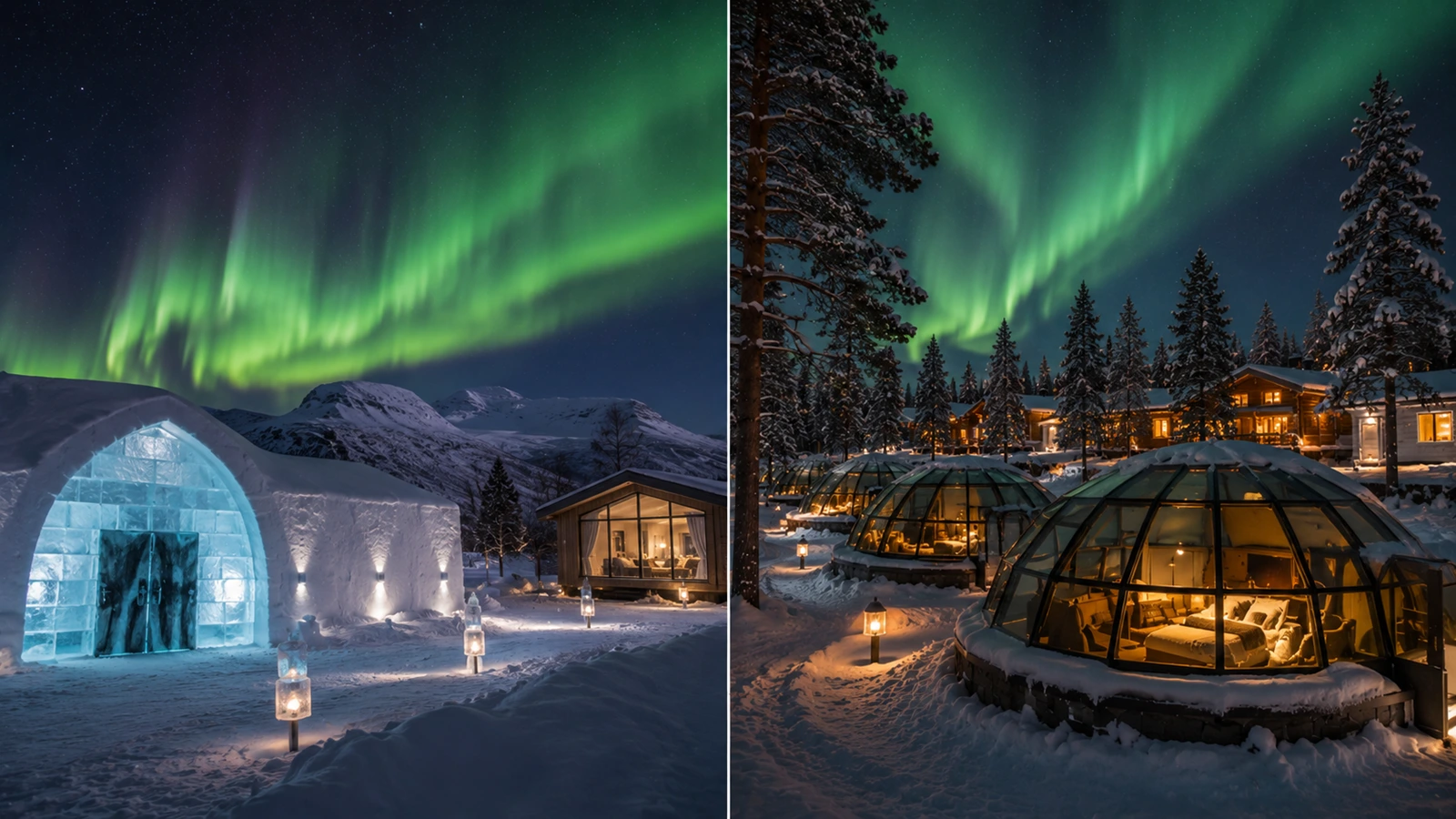
One of the biggest differences between Swedish and Finnish Lapland is the availability and style of accommodation. Finnish Lapland has developed an extensive selection of glass igloos, aurora cabins, ski-resort hotels and family-oriented winter accommodation. Swedish Lapland has fewer glass igloos but offers several internationally recognised accommodation concepts that are difficult to find elsewhere.
Finnish Lapland is home to Kakslauttanen Arctic Resort and numerous other glass igloo properties around Rovaniemi, Levi, Ylläs and Saariselkä. These stays are designed around comfort, convenience and the possibility of watching the night sky through a glass roof.
Swedish Lapland offers a different type of accommodation experience. The ICEHOTEL in Jukkasjärvi is rebuilt each winter using ice and snow from the Torne River, while Treehotel and Arctic Bath provide distinctive design-led stays. Mountain stations, guesthouses, cabins and smaller wilderness properties are also common around Kiruna and Abisko.
| Accommodation Feature | Swedish Lapland | Finnish Lapland |
|---|---|---|
| Glass igloos | Limited selection | Extensive selection |
| Ice hotels | ICEHOTEL in Jukkasjärvi | Several seasonal snow hotels |
| Design accommodation | Treehotel, Arctic Bath and wilderness cabins | Glass resorts, aurora cabins and resort hotels |
| Budget accommodation | Limited, including hostels and mountain stations | Broader selection across resort destinations |
| Aurora viewing from bed | Available at selected properties | Widely available |
| Overall character | Distinctive, small-scale and wilderness-focused | Comfort-focused and highly developed |
Glass roofs improve comfort, but they do not increase aurora activity or remove cloud cover. Travelers should choose a glass igloo because they value the accommodation experience, not because they expect guaranteed Northern Lights.
Activities and Atmosphere
Swedish Lapland feels sparse, quiet and deeply connected to Arctic wilderness. Finnish Lapland feels more like a network of organised winter resorts with extensive tourism services, activity providers and family-friendly infrastructure.
The Atmosphere in Swedish Lapland
Swedish Lapland is generally better suited to travelers who value open landscapes, independent exploration and smaller-scale tourism. Destinations such as Kiruna, Abisko and Jukkasjärvi provide access to national parks, frozen rivers, mountain environments and Sámi cultural experiences without the density of major resort areas.
The region can require more planning because attractions, accommodation and activities are spread across large distances. That same lack of concentration is also what creates the stronger wilderness atmosphere.
The Atmosphere in Finnish Lapland
Finnish Lapland offers a more organised and accessible winter-holiday experience. Destinations such as Rovaniemi, Levi, Ylläs and Saariselkä combine hotels, restaurants, ski infrastructure, activity providers and transfers within clearly developed tourism areas.
This makes Finnish Lapland particularly practical for families, first-time Arctic visitors and travelers who prefer to book accommodation, transport and activities as one coordinated package.
Winter Activities Compared
| Activity | Swedish Lapland | Finnish Lapland |
|---|---|---|
| Northern Lights tours | Excellent, often wilderness-focused | Excellent, with extensive resort departures |
| Alpine skiing | Limited compared with Finland | Excellent, with several developed ski areas |
| Cross-country skiing | Excellent, including routes near Kungsleden | Excellent, with extensive groomed trail networks |
| Snowmobiling | Widely available | Extensive selection |
| Dog sledding | Widely available | Widely available |
| Reindeer experiences | Available, often connected to local Sámi tourism | Widely available, often packaged for visitors |
| Sauna culture | Available | Central to the travel experience |
| Santa Claus attractions | No official Santa destination | Santa Claus Village and related family attractions |
Travelers expecting nightlife, shopping and attractions within walking distance may find Swedish Lapland too spread out. Travelers seeking silence and raw wilderness may find the most developed parts of Finnish Lapland too commercial during peak winter periods.
Costs and Budget Considerations
Both Swedish Lapland and Finnish Lapland are premium winter destinations compared with much of Europe, particularly during the Northern Lights season between December and March. Accommodation, activities and transfers often represent the largest part of the travel budget.
Finnish Lapland is often more expensive during peak winter periods, particularly around Christmas and New Year when demand for Santa experiences and glass igloos reaches its highest levels. Swedish Lapland can also become expensive during the same period, but prices are generally slightly lower outside the most famous accommodation concepts.
| Cost Factor | Swedish Lapland | Finnish Lapland |
|---|---|---|
| Accommodation Prices | High | High to Very High |
| Glass Igloos | Limited Availability | Premium Pricing |
| Restaurant Prices | High | High |
| Winter Activities | Expensive | Expensive |
| Rental Cars | Moderate to High | Moderate |
| Airport Transfers | Often Required | Usually Easier |
Typical Family Budget Comparison
| Example Trip | Swedish Lapland | Finnish Lapland |
|---|---|---|
| Typical 5-night winter trip for a family of four | Approximately €4,000–€7,000 | Approximately €5,000–€9,000+ |
Prices vary enormously depending on accommodation choices, travel dates and activities. Staying in a premium glass igloo during Christmas week can easily double the accommodation budget compared with travelling in late January or March.
Local Insight: January and March often provide the best balance between winter conditions, Northern Lights opportunities and accommodation prices in both countries.
Who Should Probably Avoid Each Destination?
You May Want to Avoid Swedish Lapland If
- You expect attractions, restaurants and activities to be within walking distance.
- You prefer organised resorts with large tourism infrastructure.
- You dislike driving long distances between destinations.
- You want shopping, nightlife and busy town centres.
- You want a dedicated Santa Claus destination.
You May Want to Avoid Finnish Lapland If
- Maximising aurora visibility is your main priority.
- You prefer remote wilderness rather than developed resort areas.
- You want dramatic mountain landscapes rather than forests and fells.
- You dislike busy tourism destinations during peak season.
- You want the strongest possible feeling of Arctic isolation.
Neither destination is objectively better. The most common mistake is choosing the destination that is most famous rather than the destination that best matches your travel goals.
The Combined Lapland Strategy
Travelers with seven days or more available often achieve the best overall Arctic experience by combining both regions in the same trip.
One popular itinerary is to begin in Finnish Lapland with glass igloos, skiing and family attractions before continuing west toward Kiruna and Abisko for darker skies, mountain landscapes and stronger wilderness experiences.
The journey between Swedish and Finnish Lapland is an adventure in itself and allows visitors to experience two very different interpretations of the Arctic during the same holiday.
Which Lapland Should You Choose?
| If You Want... | Best Choice |
|---|---|
| The highest chance of dark skies and wilderness aurora viewing | Swedish Lapland |
| Glass igloos and luxury winter accommodation | Finnish Lapland |
| Mountain landscapes and dramatic scenery | Swedish Lapland |
| Family attractions and Santa experiences | Finnish Lapland |
| Ski resorts and developed winter infrastructure | Finnish Lapland |
| Remote Arctic wilderness experiences | Swedish Lapland |
| The strongest aurora photography conditions | Swedish Lapland |
| The easiest logistics for first-time Arctic visitors | Finnish Lapland |
| A balanced mix of activities and convenience | Finnish Lapland |
| A quieter and less commercial Arctic experience | Swedish Lapland |
Choose Swedish Lapland If
- Your main priority is the Northern Lights.
- You prefer wilderness over resorts.
- You want mountain scenery and dramatic Arctic landscapes.
- You enjoy photography and outdoor activities.
- You want a quieter and less commercial travel experience.
Choose Finnish Lapland If
- You want to stay in a glass igloo.
- You are travelling with children.
- You want Santa Claus experiences.
- You prefer ski resorts and organised winter activities.
- You want easier logistics and a larger tourism infrastructure.
Final Verdict
There is no universally correct answer when choosing between Swedish Lapland and Finnish Lapland because they represent two very different Arctic travel experiences.
Swedish Lapland is generally the stronger choice for travelers who prioritise Northern Lights, wilderness, mountain scenery and photography. The region offers some of Europe's darkest skies together with dramatic landscapes that feel genuinely remote and untouched.
Finnish Lapland is usually the stronger choice for travelers looking for glass igloos, family attractions, skiing and a highly developed winter tourism infrastructure. The region is easier to navigate and often works exceptionally well for first-time Arctic visitors.
Many experienced Arctic travelers eventually discover that the ideal solution is not choosing between the two destinations at all, but combining both regions in a single trip.
Local Insight: Some of the best Northern Lights itineraries in Scandinavia combine a few nights in Finnish Lapland with several nights in Kiruna or Abisko. This approach combines resort comfort with some of Europe's strongest dark-sky conditions.
Planning a Trip to Swedish Lapland?
Kiruna provides access to many of the experiences that make Swedish Lapland famous, including Northern Lights tours, Abisko day trips, Sámi experiences, winter activities and access to the famous ICEHOTEL.
Explore our local travel guides and tours to start planning your Arctic adventure.