Abisko vs Rovaniemi at a Glance
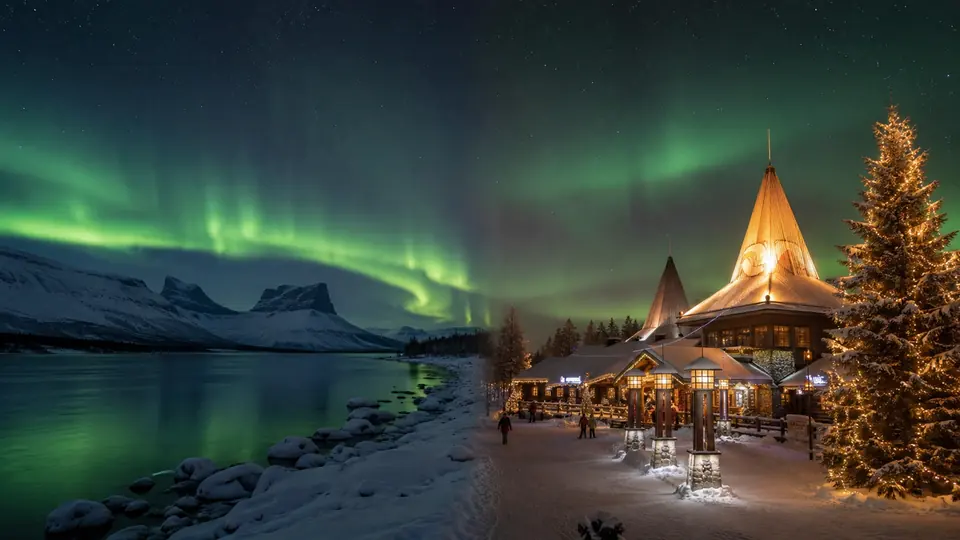
Abisko and Rovaniemi can both work very well for a Northern Lights trip, but they solve different travel problems. Abisko is the stronger fit when aurora viewing, dark surroundings, mountain scenery and a quieter wilderness atmosphere are the priority. Rovaniemi is the stronger fit when you want easier air access, more accommodation and dining choices, Santa Claus Village and a broader family-oriented Lapland holiday.
| Priority | Better Fit | Why |
|---|---|---|
| Aurora-first trip | Abisko | Very dark surroundings, low light pollution and a strong reputation for clear-sky opportunities. |
| Aurora photography | Abisko | Mountain landscapes, Lake Torneträsk and darker viewing environments. |
| Families with younger children | Rovaniemi | Santa Claus Village, broader tourism infrastructure and more indoor or non-aurora options. |
| Glass igloo choice | Rovaniemi | A wider selection of aurora-themed accommodation. |
| Quiet Arctic atmosphere | Abisko | Smaller scale and a stronger nature-first feel. |
| Short, convenient city break | Rovaniemi | Its own airport and more services concentrated around the city. |
If Northern Lights are the main reason for your trip, choose Abisko. If the aurora is one part of a broader family or activity holiday, Rovaniemi is usually the more flexible destination.
Location and Travel Style
Abisko is a small destination in Swedish Lapland beside Lake Torneträsk and Abisko National Park. The experience is built around nature: mountains, dark winter skies, outdoor activities and a limited village environment. Rovaniemi is a regional city in Finnish Lapland on the Arctic Circle, with a much larger tourism infrastructure, more restaurants, more hotels and major attractions such as Santa Claus Village.
That difference in scale matters more than simply comparing latitude. In Abisko, the landscape is the attraction. In Rovaniemi, Arctic nature is combined with a city, family attractions and a larger commercial tourism ecosystem.
For a broader introduction to the Swedish destination, see the Abisko Travel Guide. If you are comparing several aurora bases, the related Kiruna vs Rovaniemi comparison adds another useful Swedish Lapland perspective.
Northern Lights Conditions: Where Is the Advantage?
Both destinations can produce excellent Northern Lights experiences. The aurora itself is driven by space weather, while what travelers actually see from the ground depends heavily on darkness, cloud cover and local viewing conditions. This is why a destination with a clear sky can outperform a more northerly destination covered by cloud.
Abisko: dark skies and the “Blue Hole” reputation
Abisko has long been associated with a local weather pattern commonly called the “Blue Hole of Abisko,” referring to periods when clearer sky can occur around the Abisko and Lake Torneträsk area while nearby areas remain cloudier. It should not be treated as a guarantee, but it is one reason Abisko has developed such a strong reputation among aurora travelers.
The village also has very limited artificial lighting compared with a city. That matters when aurora displays are weak: darker surroundings make it easier to see subtle structure and preserve night vision.
Rovaniemi: strong aurora potential, but city light matters
Rovaniemi also offers regular Northern Lights opportunities during the dark season. The practical difference is that the city has more street lighting and urban development, so travelers often improve their viewing environment by leaving the center for darker countryside locations or joining an aurora-focused excursion.
For aurora planning, cloud cover is usually more important than headline latitude. Neither Abisko nor Rovaniemi can guarantee a sighting, so the strongest itinerary includes several evenings and worthwhile daytime activities.
Aurora Photography and Viewing Environment
Abisko has a clear advantage for travelers who care about the landscape around the Northern Lights. Lake Torneträsk, mountain scenery and the surroundings of Abisko National Park provide strong foregrounds for night photography, while the small village environment reduces the need to travel far simply to escape urban light.
Rovaniemi can still work very well for photography, especially outside the city center. Forests, frozen rivers and countryside settings provide classic Lapland scenes, but the best dark-sky locations are less likely to be immediately outside a central hotel.
| Viewing Factor | Abisko | Rovaniemi |
|---|---|---|
| Darkness near the main destination | Very strong | Better outside the city center |
| Mountain foregrounds | Strong | More limited |
| Open Arctic landscapes | Strong | Available in surrounding countryside |
| Need to travel away from urban light | Lower | Often higher |
| Dedicated aurora tours | Available | Widely available |
Travelers focused specifically on aurora photography can also use the Abisko Northern Lights Guide for more destination-specific planning.
Accommodation and Glass Igloos
Rovaniemi offers the broader accommodation market. Visitors can choose from city hotels, family-focused properties, luxury Arctic resorts, self-catering options and a large range of aurora cabins and glass-igloo-style stays. This breadth makes Rovaniemi easier for travelers who want to compare different comfort levels or accommodation concepts.
Abisko has fewer places to stay and a more concentrated accommodation scene. The trade-off is atmosphere: many stays are close to the natural landscape, trails and dark-sky environment that define the destination.
| Accommodation Priority | Abisko | Rovaniemi |
|---|---|---|
| Overall choice | More limited | Much broader |
| Guesthouses and nature-focused stays | Strong fit | Available |
| Glass igloo variety | More limited | Stronger selection |
| Luxury resort variety | More limited | Stronger selection |
| Stay close to dark wilderness | Natural advantage | Depends more on property location |
A glass roof can make an Arctic stay memorable, but it does not change the weather. Clouds, weak aurora activity, frost or snow can still limit what you see from inside. Choose accommodation for the complete stay rather than treating the room itself as an aurora guarantee.
Activities, Atmosphere and Family Travel
Abisko is a nature-first destination. The strongest reasons to stay are the national park, mountain scenery, winter landscapes, snowshoeing and aurora-focused evenings. It suits travelers who are comfortable with a smaller destination and who do not need a large choice of shops, restaurants or indoor attractions.
Rovaniemi offers a broader holiday structure. Santa Claus Village is a major attraction, and the city has more restaurants, shopping, museums and activity providers. Dog sledding, snowmobiling, reindeer experiences and Northern Lights tours are all part of the wider winter tourism offering.
This is why families with younger children often find Rovaniemi easier: there are more ways to build a full day even when weather changes. Abisko is usually the stronger fit for travelers who want fewer attractions and more time in the landscape itself.
| Travel Style | Better Fit |
|---|---|
| Nature and wilderness first | Abisko |
| Family attractions and Santa Claus Village | Rovaniemi |
| Quiet photography trip | Abisko |
| Large choice of winter activities | Rovaniemi |
| Small destination atmosphere | Abisko |
| Restaurants, shopping and service choice | Rovaniemi |
Access and Getting Around
Rovaniemi is usually the simpler destination for a short international trip because it has its own airport close to the city and a large local tourism infrastructure. That reduces the number of onward connections for many visitors.
Abisko normally requires an additional journey after reaching Swedish Lapland. Many international visitors travel through Kiruna and continue to Abisko by train, transfer, car or bus. The extra transfer is a disadvantage for very short trips, but it is also part of what keeps Abisko smaller and more nature-focused.
A rental car is not essential in either destination. Abisko is compact, while Rovaniemi has more transport and taxi options because of its larger size. In both cases, the key is to check how your accommodation connects with the activities you plan to book.
- Choose Rovaniemi if minimizing transfers is a major priority.
- Choose Abisko if you accept an extra transfer in exchange for a smaller wilderness destination.
- Confirm activity pickup points before choosing accommodation.
- Leave extra flexibility for winter travel conditions.
Best Time to Visit Abisko or Rovaniemi for Northern Lights
The useful Northern Lights season in both destinations extends across the dark part of the year, with opportunities from autumn into early spring. For most winter travelers, February and March provide one of the strongest overall balances: snow remains part of the experience, daylight is more useful for daytime activities, and nights are still dark enough for aurora viewing.
December and January offer deeper midwinter atmosphere and are especially attractive to travelers focused on Christmas experiences, snow and long dark evenings. They can also be busy periods, particularly in Rovaniemi.
September and October can work well for aurora-focused trips before the main winter season is fully established, while April can still provide dark-enough evenings early in the month. Snow and activity conditions vary more at the edges of the season, so travelers should separate “aurora season” from “full winter activity season” when planning.
For the best all-round winter balance, February and March are the strongest months in this comparison. Choose earlier winter for deeper darkness and Christmas atmosphere, or autumn if aurora viewing matters more than guaranteed winter scenery.
Should You Visit Both Abisko and Rovaniemi?
Combining both destinations can make sense on a longer Lapland trip because the experiences are complementary. Abisko adds a quieter Swedish mountain and aurora environment; Rovaniemi adds a larger Finnish tourism hub, Santa Claus attractions and a wider choice of accommodation and activities.
The main trade-off is travel time. Moving between the destinations is not a small local transfer, so a short holiday can become overly fragmented if you try to include both. Travelers with around a week or more can justify the combination more easily than visitors on a long weekend.
- Consider both if you have roughly a week or longer.
- Give each destination several nights rather than changing hotels constantly.
- Use Abisko for wilderness, photography and aurora-focused time.
- Use Rovaniemi for family attractions, activity variety and easier city services.
Which Destination Should You Choose?
| Choose Abisko if... | Choose Rovaniemi if... |
|---|---|
| Northern Lights are the main purpose of the trip. | You want Northern Lights plus a broad Lapland holiday. |
| You value dark surroundings and aurora photography. | You are traveling with younger children. |
| You prefer mountains, national park scenery and quiet evenings. | Santa Claus Village is a priority. |
| You are comfortable with fewer restaurants and services. | You want more hotels, restaurants and activity providers. |
| You prefer a smaller destination over a city. | You want easier airport access and a more convenient short trip. |
The decision becomes much easier once you stop asking which destination is universally “better.” For an aurora-first trip, Abisko has the stronger fit. For a family-first or convenience-first Lapland holiday, Rovaniemi has the stronger fit.
Final Verdict: Abisko or Rovaniemi?
Choose Abisko when Northern Lights, photography, dark skies and Arctic landscape are the center of the trip. Its smaller scale, mountain setting and low-light environment make it especially attractive to travelers who are willing to accept fewer services in exchange for a more nature-focused stay.
Choose Rovaniemi when you want a broader winter holiday with easier access, more accommodation, more dining, more organized activities and Santa Claus Village. It is especially practical for families and first-time Lapland visitors who want several different experiences in one base.
Neither destination can guarantee the aurora. The strongest plan is to stay several nights, keep more than one evening available for Northern Lights, and choose a destination you would still enjoy if cloud cover blocks the sky.
Continue Planning Your Northern Lights Trip
Compare Abisko with other Arctic bases in our Abisko vs Tromsø, Abisko vs Levi and Abisko vs Saariselkä guides.