Where Are Swedish and Norwegian Lapland?
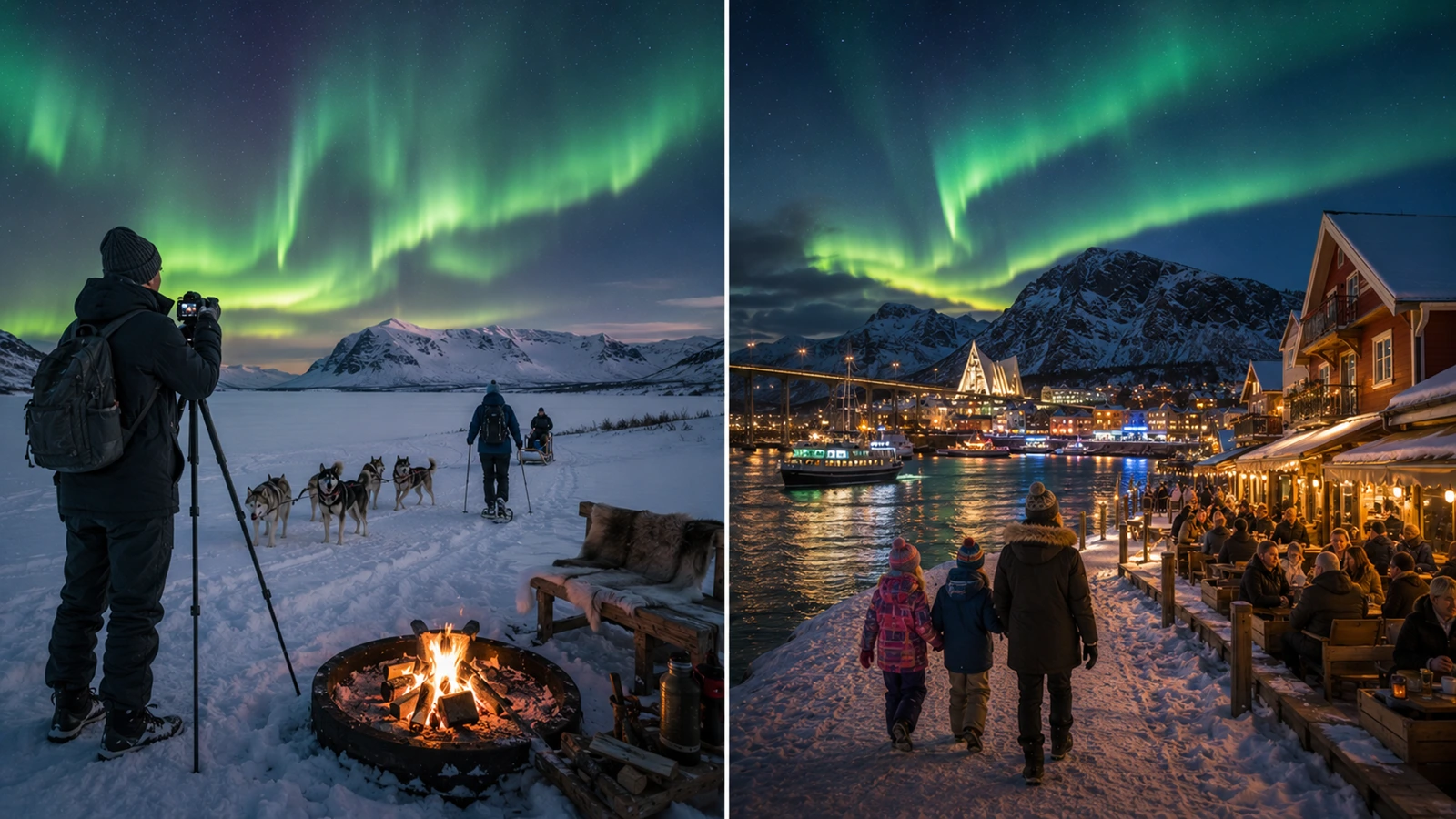
Swedish Lapland covers the northernmost part of Sweden and includes destinations such as Kiruna, Abisko, Jukkasjärvi and the world-famous ICEHOTEL. The region is known for mountain scenery, vast wilderness areas, Sámi culture and some of Europe's darkest skies.
Norwegian Lapland covers northern Norway and includes destinations such as Tromsø, Alta, Kirkenes and the spectacular Arctic coastline stretching toward the Barents Sea. The region is famous for its fjords, coastal mountains, whale watching and larger Arctic cities.
Although both regions sit beneath the auroral oval and experience similar winter conditions, the landscapes and travel experiences differ considerably. Swedish Lapland feels larger, quieter and more remote, while Norwegian Lapland feels more connected to the sea and offers more urban infrastructure, restaurants and nightlife.
Local Insight: Many travelers focus too heavily on the KP index when planning their trip. In reality, cloud cover and local weather conditions often matter far more than aurora intensity. A moderate aurora under a clear sky will almost always outperform a strong geomagnetic storm hidden behind clouds.
Swedish Lapland vs Norwegian Lapland at a Glance
| Factor | Swedish Lapland | Norwegian Lapland |
|---|---|---|
| Best for Northern Lights | Excellent dark skies and low light pollution | Excellent coastal viewing opportunities |
| Best for Landscapes | Mountains, tundra and frozen lakes | Fjords, coastal mountains and sea views |
| Best for Photography | Aurora and wilderness photography | Aurora with fjords and coastal scenery |
| Best for Families | Very good | Very good |
| Best for Budget Travelers | Generally more affordable | Often more expensive |
| Best for Wilderness | Outstanding | Strong but less remote |
| Best for Cities and Restaurants | Limited options outside Kiruna | Much wider selection in Tromsø and Alta |
| Best for First-Time Arctic Visitors | Excellent | Excellent |
Landscapes and Nature
The biggest difference between Swedish and Norwegian Lapland is the landscape itself. While both regions lie north of the Arctic Circle and share long winters, snow-covered forests and Northern Lights, they feel remarkably different once you arrive.
The Landscape of Swedish Lapland
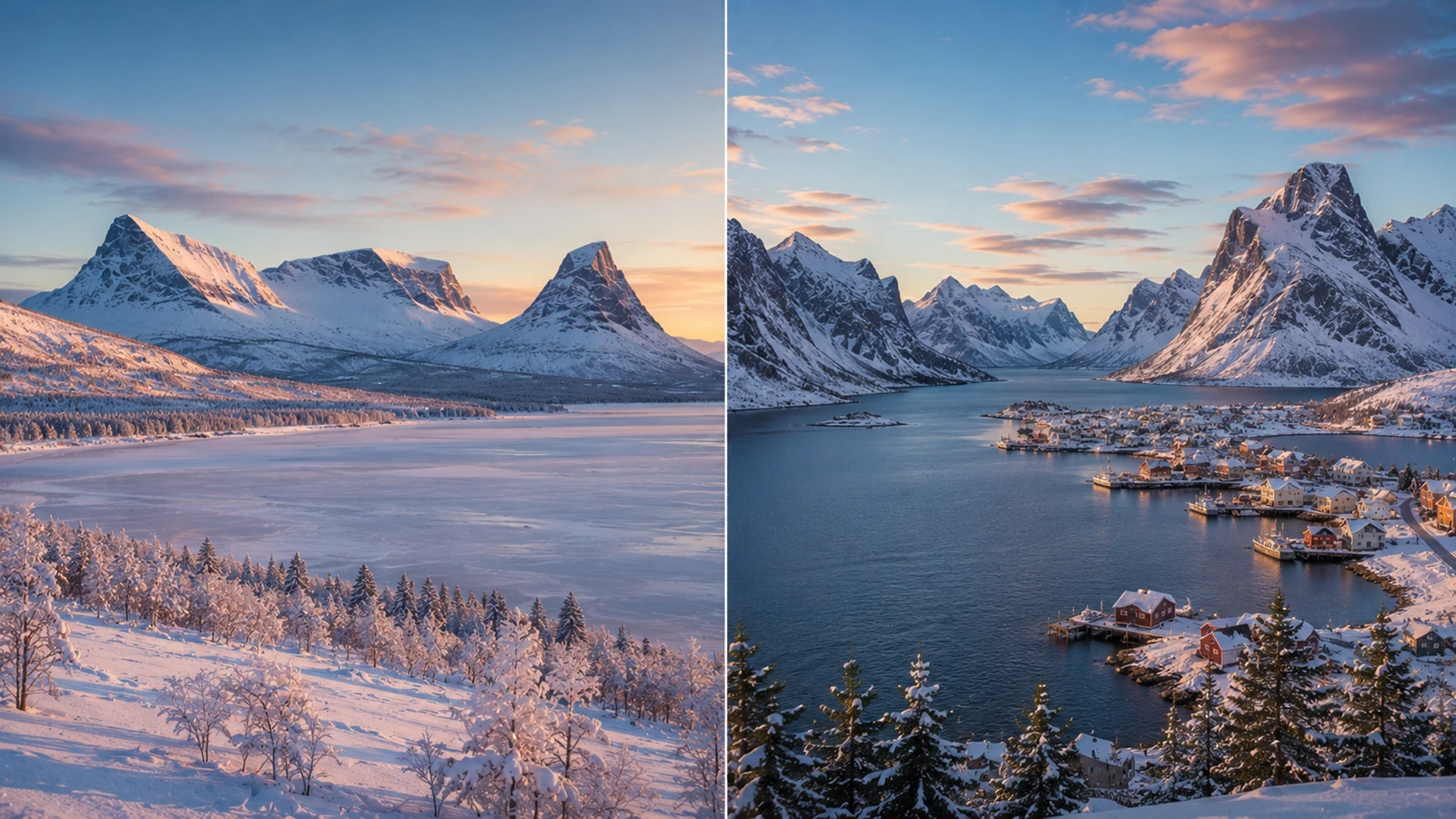
Swedish Lapland is dominated by mountains, vast forests, frozen lakes and enormous wilderness areas. Around Abisko and Kiruna, visitors find some of Scandinavia's most dramatic mountain scenery including Lapporten, Lake Torneträsk and the foothills of the Scandinavian mountain range.
Distances between settlements are often large and many locations feel genuinely remote. This creates a strong sense of wilderness that many travelers associate with the classic Arctic experience.
- Large wilderness areas with very low population density
- Mountain scenery and frozen lakes
- Excellent opportunities for solitude and nature experiences
- Some of Europe's darkest accessible skies
- Strong Sámi cultural presence throughout the region
The Landscape of Norwegian Lapland
Norwegian Lapland offers a completely different type of Arctic scenery. Instead of large inland wilderness areas, much of northern Norway is shaped by the coastline, the Norwegian Sea and deep fjords cutting into steep mountains.
Tromsø, Alta and the coastal regions combine Arctic mountains with ocean views, fishing villages and dramatic winter light conditions that create a unique atmosphere found nowhere else in Europe.
- Fjords and coastal mountains
- Ocean views and fishing villages
- More varied terrain over shorter distances
- Strong maritime influence on weather and climate
- Excellent opportunities for whale watching and coastal excursions
Local Insight: Travelers who imagine the Arctic as endless snowy wilderness usually prefer Swedish Lapland. Travelers dreaming of dramatic fjords and coastal scenery often fall in love with northern Norway instead.
Northern Lights and Dark Skies
Both Swedish and Norwegian Lapland sit directly beneath the auroral oval and offer excellent opportunities to see the Northern Lights during winter. The difference lies less in latitude and more in local geography, weather patterns and light pollution.
Why Swedish Lapland Often Performs Better
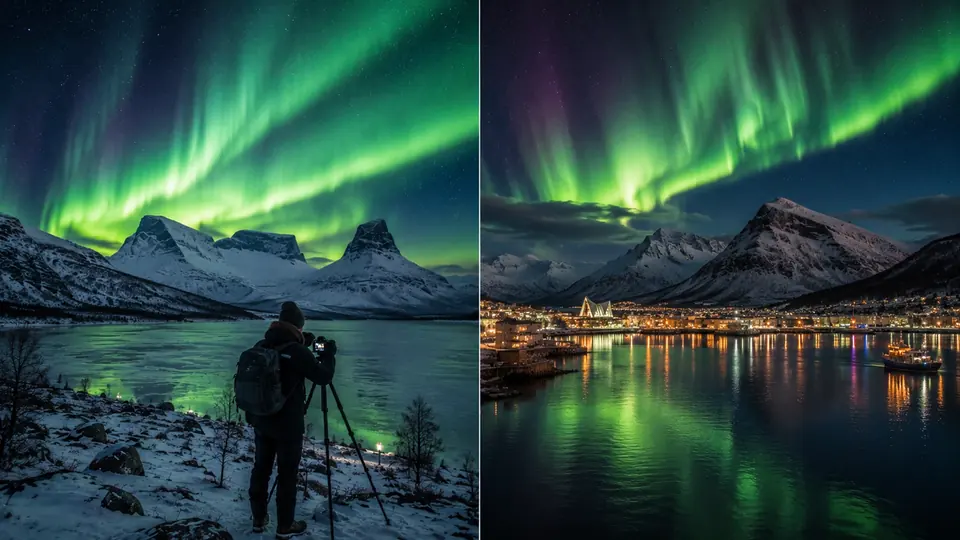
Swedish Lapland has become internationally famous among aurora photographers because of locations such as Abisko National Park and Lake Torneträsk. The region combines very low light pollution with wide open landscapes and dark horizons that make aurora viewing exceptionally rewarding.
Abisko is also known for the local weather phenomenon often referred to as the Blue Hole effect. The surrounding mountains can sometimes help create clearer local conditions compared with surrounding areas, although this should never be considered a guarantee of clear skies.
Long-term meteorological observations and local experience suggest that Abisko frequently experiences fewer cloudy nights than coastal destinations such as Tromsø during the winter season.
The Strengths of Norwegian Lapland
Norwegian Lapland offers some of the world's most spectacular aurora photography opportunities thanks to the combination of Northern Lights, fjords and coastal mountains. Few places can match the visual impact of green aurora curtains reflected in Arctic waters surrounded by snow-covered peaks.
The challenge is that coastal weather tends to change rapidly. Storm systems from the Atlantic can move in quickly and cloud cover is generally more variable than in inland Swedish Lapland.
| Factor | Swedish Lapland | Norwegian Lapland |
|---|---|---|
| Dark-sky conditions | Excellent | Very good |
| Light pollution | Very low | Moderate near cities |
| Weather stability | Generally more stable inland | More variable coastal weather |
| Aurora photography | Mountains and frozen lakes | Fjords and coastal scenery |
| Best known destination | Abisko | Tromsø |
Accommodation and Unique Stays
Both regions offer memorable Arctic accommodation, but the experiences are very different. Swedish Lapland focuses more on wilderness lodges, design hotels and unique architectural experiences, while Norwegian Lapland offers fjord hotels, coastal lodges and larger city accommodation.
Accommodation in Swedish Lapland
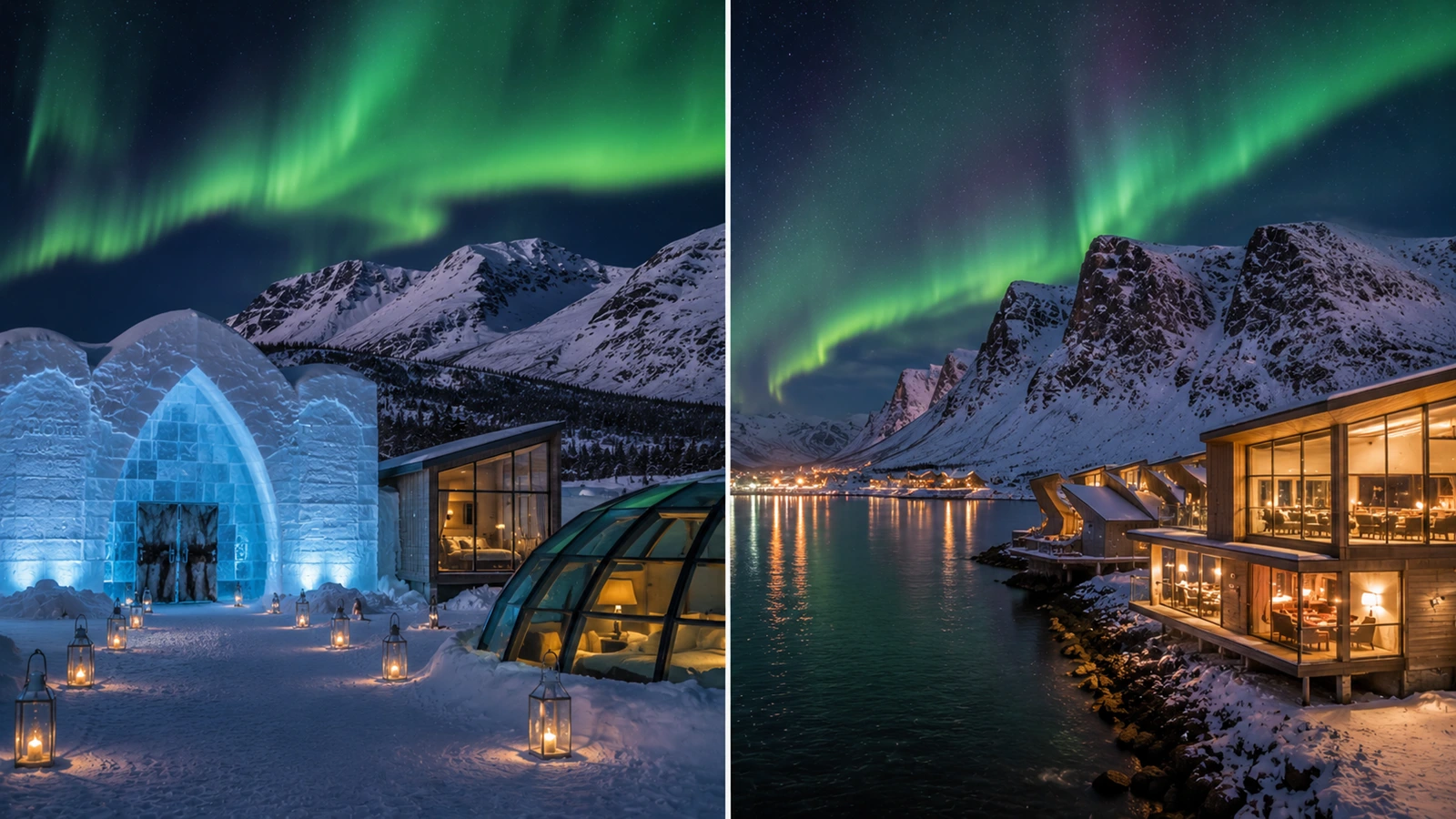
Swedish Lapland has become internationally famous for accommodation experiences that are closely connected to nature and Arctic design. The most famous example is the ICEHOTEL in Jukkasjärvi, rebuilt every winter entirely from ice and snow.
The region also offers wilderness lodges, mountain stations, glass igloos and smaller boutique properties that prioritise silence, dark skies and direct access to nature.
- ICEHOTEL in Jukkasjärvi
- Treehotel near Harads
- Arctic Bath floating spa hotel
- Glass igloos and aurora cabins
- Remote wilderness lodges
Accommodation in Norwegian Lapland
Norwegian Lapland offers a broader range of traditional hotels thanks to larger cities such as Tromsø and Alta. Visitors can choose between city hotels, fjord-side cabins, fishing lodges and Arctic resorts.
Several unique winter accommodation concepts have also emerged in recent years, including snow hotels and luxury lodges overlooking fjords and coastal mountains.
- Snowhotel Kirkenes
- Sorrisniva Igloo Hotel in Alta
- Fjord hotels with mountain views
- Traditional fishing lodges
- Large city hotels in Tromsø
| Accommodation Type | Swedish Lapland | Norwegian Lapland |
|---|---|---|
| Ice hotels | Excellent | Very good |
| Glass igloos | Limited but growing | Limited availability |
| Luxury hotels | Moderate selection | Strong selection |
| Wilderness lodges | Excellent | Very good |
| City hotels | Limited | Excellent |
Activities and Atmosphere
Both regions offer many of the same winter activities including dog sledding, snowmobiling, snowshoeing and Northern Lights tours. The difference lies primarily in the overall atmosphere and the type of Arctic experience visitors are seeking.
The Atmosphere in Swedish Lapland
Swedish Lapland feels quieter, more remote and more closely connected to wilderness. Many visitors spend their evenings in silence beneath dark skies rather than in busy city centres or tourist districts.
The pace is generally slower and the distances between attractions are larger. For many travelers this sense of isolation is exactly what makes Swedish Lapland special.
- Northern Lights photography
- Dog sledding across frozen lakes
- Snowshoe hikes in national parks
- Cross-country skiing
- Sámi cultural experiences
The Atmosphere in Norwegian Lapland
Norwegian Lapland offers a more social and urban Arctic experience. Cities such as Tromsø combine Northern Lights tourism with restaurants, museums, nightlife and cultural events throughout winter.
Visitors can spend the morning whale watching, the afternoon exploring the city and the evening searching for aurora above the fjords.
- Whale watching tours
- Fjord cruises
- Arctic city experiences
- Museums and cultural attractions
- Restaurants and nightlife
Local Insight: Travelers who imagine themselves sitting alone beneath a dark sky surrounded by mountains usually prefer Swedish Lapland. Travelers who want to combine the Arctic with restaurants, nightlife and city life often prefer Tromsø and northern Norway.
Costs and Budget Considerations
Both Swedish and Norwegian Lapland rank among Europe's most expensive winter destinations, but there are still meaningful differences that can influence trip planning and overall budget.
Norway is generally considered one of Europe's most expensive countries for accommodation, restaurants and alcohol. Travelers visiting Tromsø or other coastal cities should expect higher daily costs compared with most destinations in Swedish Lapland.
Swedish Lapland is not inexpensive, particularly during the Northern Lights season between December and March, but accommodation and restaurant prices are often slightly lower than equivalent options in northern Norway.
| Typical Expense | Swedish Lapland | Norwegian Lapland |
|---|---|---|
| Mid-range hotel room | Lower average price | Higher average price |
| Restaurants | Expensive | Very expensive |
| Alcohol | Expensive | Extremely expensive |
| Northern Lights tours | Similar pricing | Similar pricing |
| Car rental | Slightly cheaper | Slightly more expensive |
| Overall budget | Generally lower | Generally higher |
Travelers prioritising value for money often find Swedish Lapland slightly easier on the budget, while visitors who prioritise fjords, coastal scenery and larger cities may find Norwegian Lapland worth the additional cost.
Who Should Probably Avoid Each Destination?
Neither destination is objectively better. The right choice depends entirely on the type of Arctic experience you are looking for.
You May Want to Avoid Swedish Lapland If
- You want large cities and nightlife.
- You dislike long distances between attractions.
- You prefer organised resort environments.
- You want fjords and coastal scenery.
- You prefer extensive restaurant and shopping options.
You May Want to Avoid Norwegian Lapland If
- Your main goal is maximising Northern Lights probability.
- You want the darkest skies possible.
- You are travelling on a strict budget.
- You prefer remote wilderness experiences.
- You want large mountain landscapes and frozen lakes rather than coastal scenery.
Local Insight: Many visitors choose destinations based purely on Instagram photos. In practice, weather patterns, travel style and personal preferences often matter much more than the destination itself. The best Arctic destination is usually the one that matches your expectations before you arrive.
The Combined Lapland Strategy
Many experienced Arctic travelers eventually realise that Swedish and Norwegian Lapland complement each other extremely well rather than competing directly.
One popular strategy is to spend several days in Swedish Lapland focusing on wilderness, Northern Lights and mountain landscapes before continuing west toward Tromsø and the Norwegian coast for fjords, whale watching and coastal scenery.
This approach allows travelers to experience two completely different Arctic environments during the same holiday while reducing the risk that poor weather in one location affects the entire trip.
| Suggested Itinerary | Duration |
|---|---|
| Kiruna and Abisko | 3–4 nights |
| Tromsø and Norwegian Fjords | 2–4 nights |
| Total recommended trip length | 6–8 nights |
Local Insight: Travelers staying for at least a week often achieve better Northern Lights results by remaining flexible and moving between weather systems rather than staying in a single destination for the entire trip.
Which Lapland Should You Choose?
Choose Swedish Lapland If
- Your main goal is maximising your chances of seeing the Northern Lights.
- You prefer dark skies and minimal light pollution.
- You enjoy mountains, wilderness and remote landscapes.
- You are interested in aurora photography.
- You prefer quieter destinations with fewer visitors.
- You want to experience ICEHOTEL or traditional Sámi culture.
Choose Norwegian Lapland If
- You dream of fjords and coastal scenery.
- You prefer cities, restaurants and nightlife.
- You want to combine Northern Lights with whale watching.
- You enjoy a wider range of urban activities.
- You prefer easier access to shopping and services.
- You want to experience the Arctic from the coastline rather than inland wilderness.
Choose Both If
- You have at least one week available.
- You want the most complete Arctic experience possible.
- You enjoy photography and changing landscapes.
- You want to reduce weather-related risks during your trip.
- You want to experience both mountains and fjords during the same holiday.
Final Verdict
For pure Northern Lights travel, wilderness and mountain scenery, Swedish Lapland is generally the stronger destination. Locations such as Abisko and Kiruna combine dark skies, low light pollution and some of Europe's most impressive Arctic landscapes.
For fjords, coastal scenery and urban Arctic experiences, Norwegian Lapland offers something unique that few other destinations in the world can match. Tromsø in particular combines Northern Lights tourism with restaurants, culture and easy access to the sea.
Rather than asking which destination is objectively better, the more useful question is which Arctic experience you are looking for. For many travelers, the perfect answer is ultimately both.
Planning a trip to Kiruna and Swedish Lapland?
Explore our local travel guides covering Northern Lights, Abisko, ICEHOTEL, winter activities and practical travel planning throughout Swedish Lapland.
Explore Kiruna and Swedish Lapland